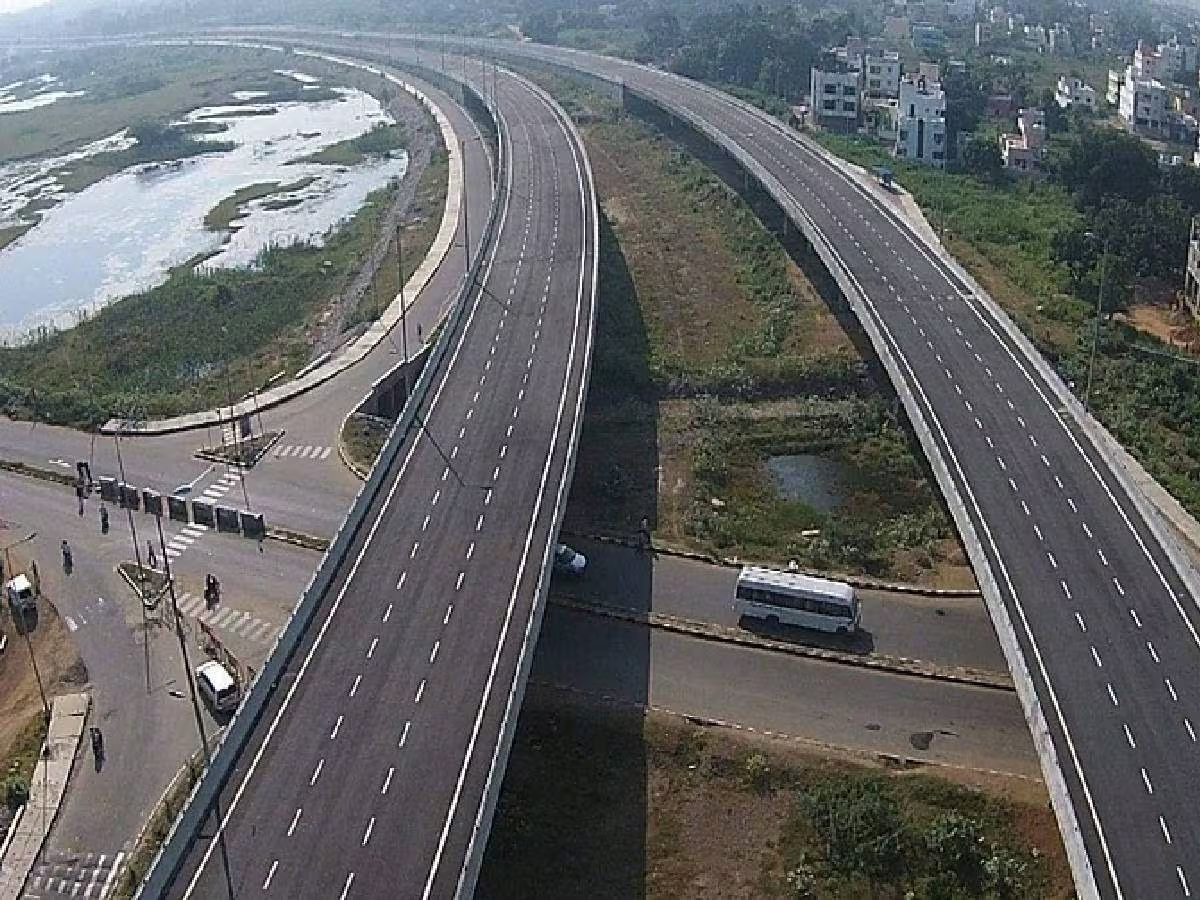
Pune is preparing to launch a set of elevated road corridors designed to reduce congestion across key growth corridors of the metropolitan region. The projects, expected to begin construction soon, are part of a broader strategy to manage rising traffic volumes in one of India’s fastest-expanding urban economies and to improve mobility between residential suburbs, industrial zones and national highway links.
Officials from the Union transport ministry and highway authorities confirmed that tendering for three elevated routes has already been completed.
The planned corridors will connect eastern and northern growth belts including the Kharadi–Shirur stretch, the Bhairobanala–Yavat section and the Talegaon–Chakan–Shikrapur industrial route. Together, these routes form crucial connectors between Pune’s expanding IT hubs, manufacturing clusters and intercity highway networks. Urban planners say the proposed Pune elevated corridors could significantly reduce travel time for daily commuters moving between employment zones and rapidly urbanising peri-urban districts.
The projects had been delayed for several months due to land acquisition requirements linked to central infrastructure policy. Under current guidelines, construction cannot begin until the majority of land required for a project is secured. Senior officials involved in the review process indicated that most acquisition hurdles have now been addressed, allowing agencies to move toward the ground-breaking phase.
The three corridors are being implemented through a collaboration between national highway authorities and state infrastructure agencies. Transport economists note that the projects are expected to play a crucial role in easing pressure on Pune’s arterial roads, which currently struggle with mixed traffic from heavy freight vehicles, commuter traffic and intercity transport.
Beyond the three elevated routes, government planners are also studying a wider programme of road infrastructure investments worth tens of thousands of crores. Proposals under discussion include multi-lane highways and stacked flyover structures intended to separate long-distance traffic from local commuter flows.
Urban mobility experts caution, however, that road expansion alone cannot resolve congestion in rapidly growing cities. They emphasise that the Pune elevated corridors must be integrated with public transport networks, pedestrian infrastructure and sustainable mobility systems if the city hopes to curb rising emissions and improve urban liveability. Alongside these road developments, authorities are progressing plans for a greenfield expressway linking Pune with Chhatrapati Sambhajinagar. The proposed highway would run parallel to the existing route and significantly shorten travel time across the region’s industrial and logistics belt. The project is expected to strengthen economic ties between western Maharashtra’s manufacturing clusters and emerging logistics hubs in the Marathwada region.
Additional upgrades are also planned on the Nashik Phata–Khed highway corridor, where land acquisition has largely been completed. Meanwhile, large pilgrimage routes connecting Dehu and Alandi to Pandharpur have been redeveloped as dedicated corridors to improve safety and crowd movement during annual religious events. As Pune continues to expand beyond its historic core, mobility infrastructure is becoming a defining factor in shaping the city’s urban future. Elevated corridors, highway upgrades and regional expressways are expected to influence property development patterns, logistics growth and commuter behaviour across the wider metropolitan region in the coming decade.
Pune Elevated Corridors Plan Targets Traffic Relief