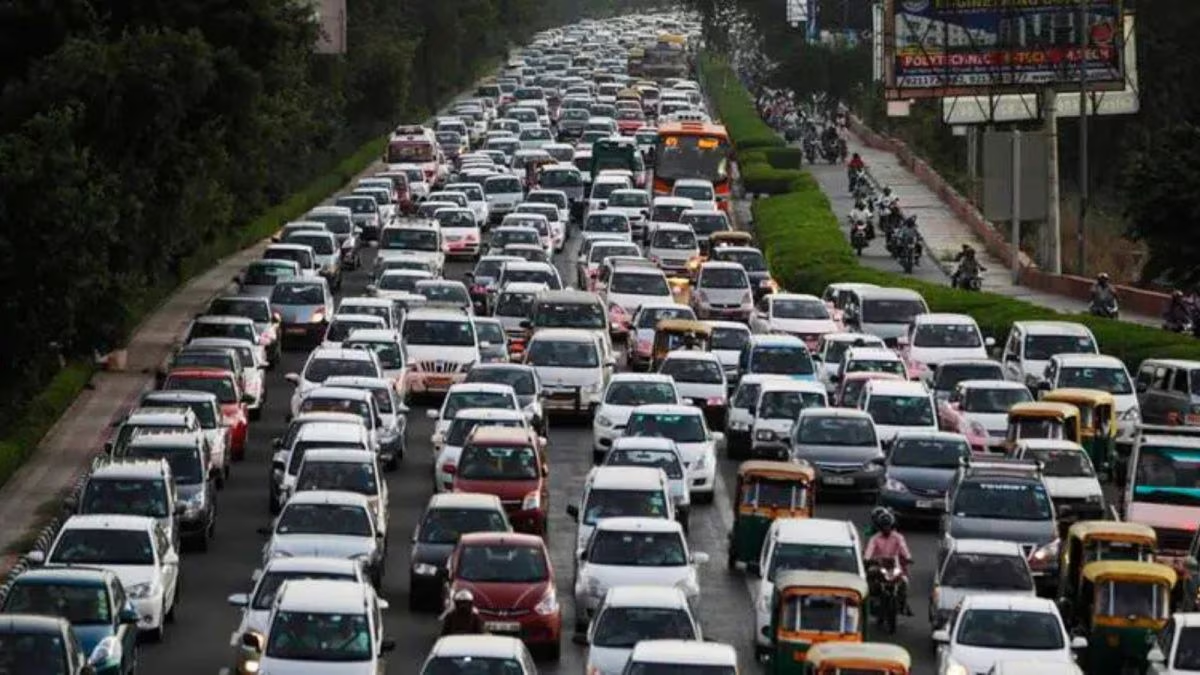
Pune’s urban mobility network will operate under temporary constraints this week as the city prepares for municipal elections, with traffic controls enforced across key corridors between January 14 and 16. The Pune civic traffic restrictions are designed to facilitate polling logistics, voter movement and security, but they also underline the growing challenge of managing democratic processes within a dense and rapidly expanding urban environment.
Traffic authorities have confirmed that regulated road closures and diversions will be implemented daily between morning and evening hours to accommodate polling kit distribution, voting, and vote counting. The measures will affect several high-traffic zones that link commercial districts, residential neighbourhoods and institutional areas, making advance travel planning critical for commuters and businesses. Officials overseeing city traffic management have indicated that the restrictions will be concentrated in multiple administrative traffic divisions, including eastern, central and southern Pune.
These zones collectively handle a substantial share of daily vehicular movement, particularly private vehicles, delivery fleets and shared mobility services. Emergency services and vehicles assigned to election duties will be exempt, ensuring that essential response systems remain functional. From an urban systems perspective, the Pune civic traffic restrictions reveal how election-related logistics intersect with everyday economic activity. Midweek disruptions can slow freight movement, delay service-sector operations and increase travel time for the workforce, particularly for those dependent on arterial roads connecting employment hubs and residential clusters.
Urban transport planners note that such recurring election-related adjustments highlight the need for more resilient, multimodal mobility planning. Cities with stronger public transport integration, walkable neighbourhoods and decentralised civic infrastructure typically experience lower disruption during large-scale civic exercises. Pune’s dependence on road-based mobility means even short-term closures have ripple effects across the city.Environment specialists also point to the emissions impact of prolonged diversions. Longer routes and idling at congestion points can increase fuel consumption and local air pollution, running counter to climate-resilient city goals. Clear signage, real-time traffic updates and staggered movement plans can mitigate these impacts, especially during peak hours.
For residents, the restrictions reinforce the importance of predictable, transparent communication from civic agencies. Timely advisories allow households to adjust schedules, employers to enable flexible working arrangements, and logistics operators to reschedule deliveries. Such coordination is increasingly essential in cities where economic productivity and quality of life are closely tied to mobility efficiency. Looking ahead, urban governance experts suggest that future election planning could benefit from data-driven traffic modelling and greater use of digital voter management systems to reduce physical movement. As Pune continues to grow, balancing democratic processes with sustainable, people-first mobility will remain a critical test of the city’s urban management capacity.
Pune Election Traffic Curbs Reshape City Commute