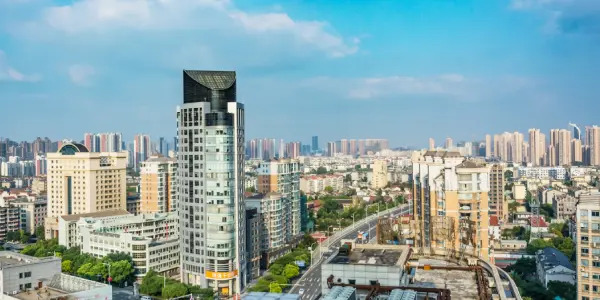
Pune’s western growth corridor is set for another phase of residential intensification after a major listed developer secured a sizeable land parcel in Mahalunge, a suburb increasingly shaped by technology-driven employment and new transport infrastructure. The acquisition signals sustained investor confidence in Pune’s housing market at a time when cities are being pressed to balance expansion with liveability, mobility, and environmental resilience.
The 8.5-acre site lies within the Mahalunge–Maan–Nande belt, an area that has evolved from peri-urban land into a strategic extension of the Hinjewadi employment zone. Industry filings indicate the proposed project will largely focus on group housing, with a development capacity exceeding two million square feet. Market estimates place the project’s long-term revenue potential at approximately ₹2,000 crore, reflecting both land values and steady housing demand in the western suburbs. Urban planners note that Mahalunge’s appeal is closely linked to its proximity to major job centres serving information technology and financial services, as well as improving arterial connectivity. The corridor connects Baner, Balewadi and Hinjewadi, areas that collectively form one of Pune’s most productive economic clusters. Planned links to the city’s Inner Ring Road are expected to further reduce travel times and redistribute traffic away from saturated central routes.
This Pune real estate expansion also underscores a broader shift in how large residential projects are being positioned. Developers are increasingly targeting micro-markets where social infrastructure schools, healthcare facilities and neighbourhood retail can support higher residential densities without placing excessive pressure on older parts of the city. Urban development experts say this approach, if executed responsibly, can help curb uncontrolled sprawl while improving access to employment and services. However, the scale of new housing planned along the western edge of Pune raises questions around long-term sustainability. Environmental specialists have repeatedly flagged the need for water-sensitive design, localised sewage treatment and public transport integration in rapidly urbanising belts. Without these measures, large residential clusters risk intensifying stress on river systems, road networks and civic utilities.
From a market perspective, the acquisition comes amid robust performance indicators from India’s organised residential sector. Rising booking values and cash collections reported by several large developers suggest homebuyer demand remains resilient despite affordability pressures and higher borrowing costs. Analysts say Pune continues to benefit from a diversified economy and relatively moderate pricing compared to Mumbai and Bengaluru. As construction activity expands westward, the challenge for city authorities and developers alike will be ensuring that growth translates into inclusive, climate-aware neighbourhoods, ones that support jobs, reduce commute burdens and contribute positively to Pune’s long-term urban fabric.