


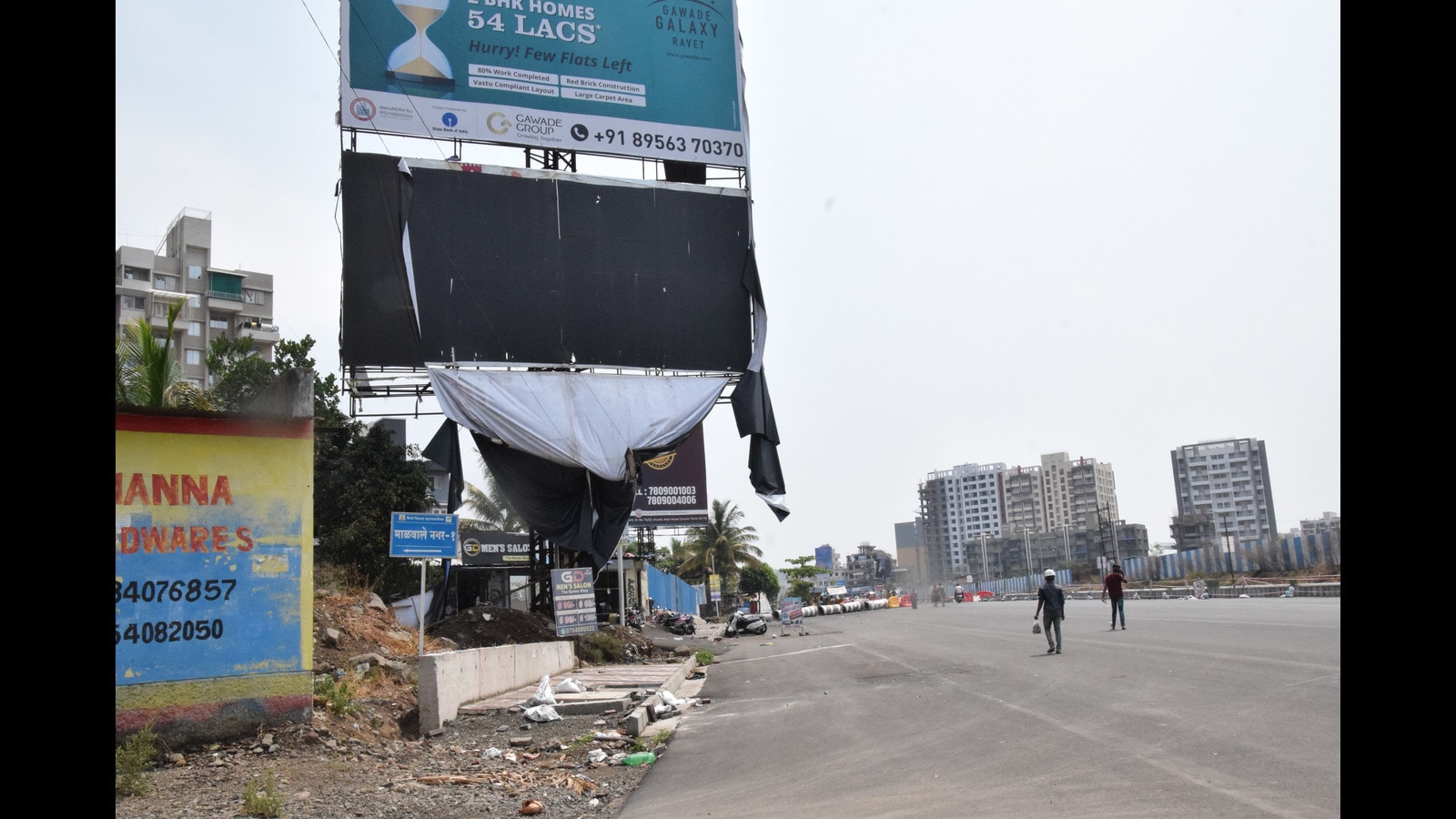
Pune Metropolitan Region Development Authority (PMRDA) has initiated an intensive drive to remove unauthorised and unsafe hoardings along critical stretches of the Pune–Solapur Road, particularly in Loni Kalbhor, Haveli Taluka.
This enforcement action is timed strategically ahead of the revered Sant Dnyaneshwar Maharaj and Sant Tukaram Maharaj Palkhi processions, underscoring the importance of clear, safe routes for pilgrims and local commuters alike. Officials from PMRDA have already dismantled 21 illegal hoardings during the initial phase of this operation, with plans to continue over the next ten days, aiming to cover all key corridors under their jurisdiction. The move is part of a wider commitment by the authority to foster sustainable, hazard-free urban environments, reducing risks associated with poorly regulated outdoor advertisements.
The crackdown holds particular urgency given the onset of the monsoon season. Experts highlight that heavy rainfall and strong winds substantially increase the danger posed by unstable and oversized hoardings, many of which are erected without due approval and safety checks. Such structures not only compromise road visibility but also threaten the safety of pedestrians and motorists, thereby affecting the overall resilience of Pune’s transport infrastructure. PMRDA officials emphasise that public safety remains paramount. Enforcement teams are undertaking daily surveillance and removal activities to mitigate potential hazards before they escalate into emergencies. The authority has issued clear advisories urging advertisers and property owners to voluntarily dismantle any unauthorised and hazardous hoardings, especially those obstructing sightlines or impeding traffic flow. Failure to comply will lead to mandatory removal by the agency, without prior notice.
This proactive approach aligns with Pune’s broader urban governance goals, which prioritise sustainable city planning and equitable public spaces. By regulating visual pollution and eliminating unsafe advertising structures, PMRDA is contributing to cleaner, more accessible roadways that accommodate diverse users, including pedestrians, cyclists, and public transport commuters. Urban planning experts commend the initiative as a vital step toward creating safer and more liveable cities. They stress that unchecked proliferation of hoardings not only undermines aesthetic urban landscapes but also poses serious environmental and safety concerns. Removing such illegal structures is essential for preserving the integrity of Pune’s urban corridors and for promoting a culture of compliance and civic responsibility.
As Pune continues to grow as a major metropolitan hub, managing its outdoor advertising landscape is critical for supporting the city’s zero net carbon ambitions. Illegal hoardings often use non-recyclable materials and inefficient lighting, contributing unnecessarily to waste and energy consumption. The PMRDA crackdown, therefore, reflects a commitment not only to safety but also to reducing the ecological footprint of urban advertising. While the current focus is on routes critical to the Palkhi processions, the authority has indicated plans to extend these enforcement measures citywide, ensuring consistent adherence to regulations across all zones. Such actions are expected to enhance traffic management, improve pedestrian safety, and bolster Pune’s reputation as a forward-thinking, sustainable city.
The crackdown also raises broader questions about the regulation and approval processes for outdoor advertisements. Industry stakeholders and urban administrators alike recognise the need for a streamlined, transparent framework that balances commercial interests with public welfare and environmental sustainability. In conclusion, the PMRDA’s campaign against illegal hoardings along Pune’s Palkhi routes exemplifies the evolving dynamics of urban governance, where safety, sustainability, and citizen well-being intersect. As the city navigates challenges posed by rapid urbanisation and climatic uncertainties, such focused interventions are crucial to fostering resilient and inclusive urban environments.
Also Read : Pune Metro Extension To Lohegaon Airport Gains Support
