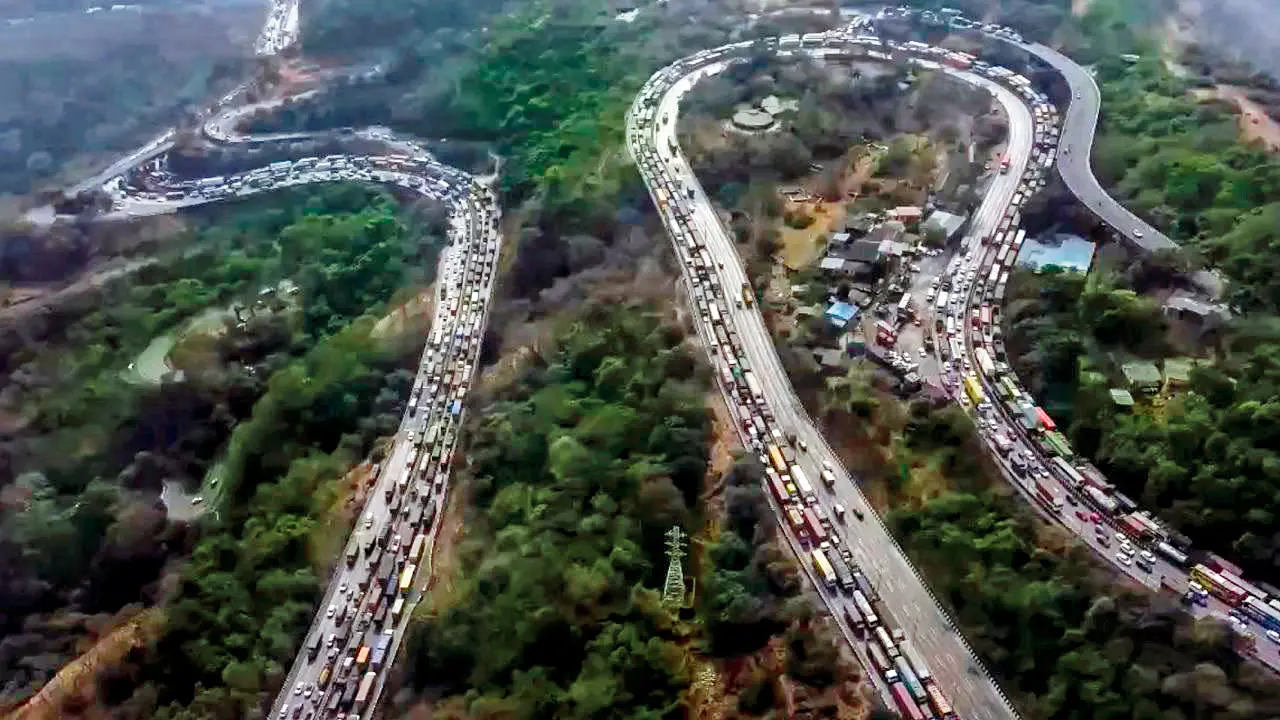
Thousands of Pune-bound commuters stranded for over 30 hours on the inter-city expressway earlier this month are set to receive financial relief, after authorities approved a refund exceeding ₹5 crore in toll collections. The move follows a prolonged traffic standstill triggered by a hazardous tanker accident on the Mumbai–Pune corridor a route critical to Pune’s workforce and logistics network.
The disruption began when a tanker carrying highly inflammable propylene overturned near the Adoshi tunnel on the Khopoli stretch. Emergency services had to secure the site, transfer the cargo and remove the damaged vehicle before traffic could be restored. The process extended into the following day, leaving vehicles immobilised across long stretches of the carriageway. Officials have now initiated the Mumbai Pune Expressway Toll Refund process for motorists whose FASTag deductions were recorded after orders were issued to suspend toll collection during the emergency. Approximately ₹5.16 crore is expected to be credited back directly into linked accounts following transaction verification.
For Pune residents, the episode exposed the vulnerability of a corridor that underpins daily commuting, industrial freight and weekend travel. The 95-km access-controlled expressway has, since its commissioning in 2002, reduced travel time between Pune and Mumbai significantly. Yet its high traffic density also means that a single-point disruption can paralyse mobility across western Maharashtra. Transport planners note that Pune’s expanding residential townships and IT parks rely heavily on seamless inter-city access. Any extended closure impacts not only commuters but also time-sensitive supply chains serving the city’s manufacturing and services sectors. While the Mumbai Pune Expressway Toll Refund addresses financial concerns, the broader issue remains operational resilience.
Experts argue that hazardous cargo movement protocols, emergency diversion routes and rapid communication systems require strengthening as traffic volumes continue to grow. Digital tolling infrastructure such as FASTag enables swift reconciliation of transactions, but synchronised command systems are essential during crises to ensure immediate compliance with suspension directives.
Urban mobility specialists also highlight the need to diversify transport options connecting Pune and Mumbai. Greater reliance on rail-based passenger and freight corridors could reduce pressure on the expressway, particularly during peak periods. Climate-resilient design and contingency planning are increasingly critical as extreme weather events and industrial risks intersect with dense transport infrastructure.
Authorities overseeing the refund process have directed toll operators to submit detailed transaction logs for scrutiny. Once verified, eligible motorists will receive direct credits without requiring individual applications. As Pune continues to integrate more closely with the Mumbai metropolitan economy, infrastructure governance will remain central to sustaining growth. The swift implementation of the Mumbai Pune Expressway Toll Refund may restore some commuter confidence, but long-term credibility will depend on how effectively the corridor adapts to rising demand and risk.
Pune Corridor Jam Triggers Toll Refund