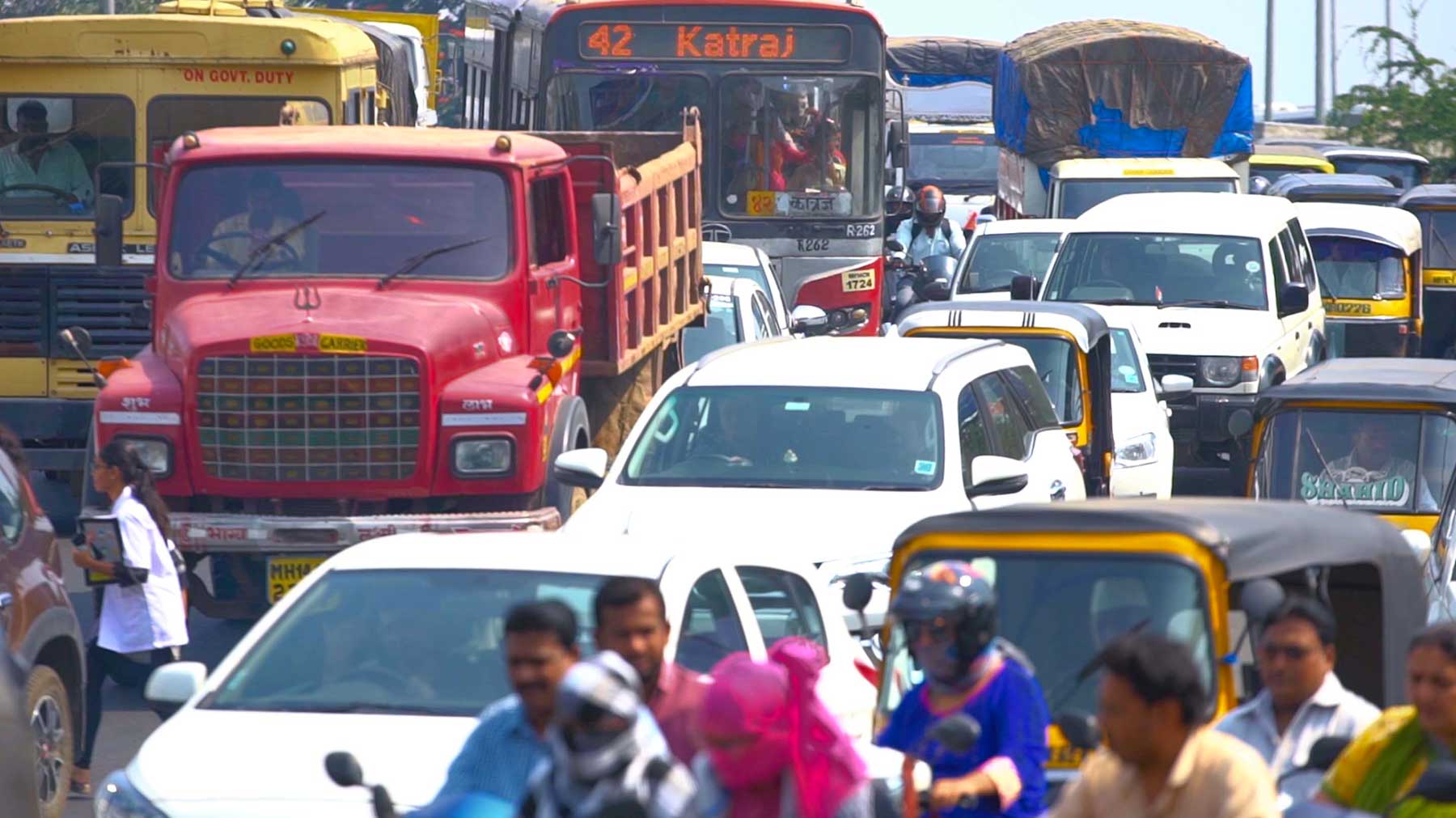
Pune a prolonged traffic shutdown on the Mumbai–Pune Expressway this week left thousands of commuters immobilised for hours, revealing critical gaps in emergency planning on one of India’s most economically vital transport corridors. Triggered by a hazardous goods accident in the ghat section, the disruption extended overnight and into the next day, underscoring how a single incident can paralyse regional mobility and impose wide social and economic costs.
The incident occurred near a tunnel in the steep Borghat stretch, where a tanker transporting combustible material was damaged, raising safety risks. Authorities halted traffic on both carriageways as a precaution, resulting in a multi-kilometre standstill. With no intermediate exits or diversion points available, private vehicles, freight carriers, and buses remained trapped for extended periods, some exceeding half a day. Urban mobility experts note that the Mumbai Pune Expressway, while engineered for speed and capacity, was designed with limited redundancy. Unlike newer global highway systems that integrate emergency crossovers, reversible lanes, or controlled exit gates, the expressway offers few options once traffic is stopped. “When a corridor functions as a single sealed system, any safety incident immediately becomes a humanitarian and economic challenge,” said a transport planning professional familiar with hill-section highways.
The economic implications were significant. The expressway serves as a logistics spine connecting Pune’s manufacturing clusters, Mumbai’s port ecosystem, and key technology and service hubs. Prolonged immobilisation disrupts just-in-time supply chains, delays workforce movement, and increases fuel consumption and emissions from idling vehicles an often-overlooked climate cost of congestion. For daily commuters and long-haul drivers alike, the absence of sanitation, food access, and clear communication compounded the hardship. The episode also highlighted unequal access during crises. While aerial evacuation was possible for a few, most commuters had no alternative but to wait. Urban policy analysts argue that resilient infrastructure must be designed for the majority, not exceptions. Measures such as designated emergency turnaround points, rapid-response material transfer units, and protocol-driven traffic reversal systems are increasingly seen as essential for climate-resilient transport networks, particularly in ecologically sensitive ghat sections.
Authorities eventually neutralised the hazard by transferring the cargo to another vehicle and clearing the damaged tanker, allowing phased reopening late at night. However, planners caution that reactive responses are no substitute for systemic redesign. As traffic volumes rise and extreme weather events become more frequent, the Mumbai Pune Expressway will face growing stress. For Pune and the wider metropolitan region, the disruption serves as a reminder that infrastructure expansion must go hand in hand with safety engineering, redundancy, and people-first planning. Future upgrades will need to prioritise emergency preparedness, environmental risk management, and equitable mobility to ensure that a critical economic artery does not become a point of vulnerability.