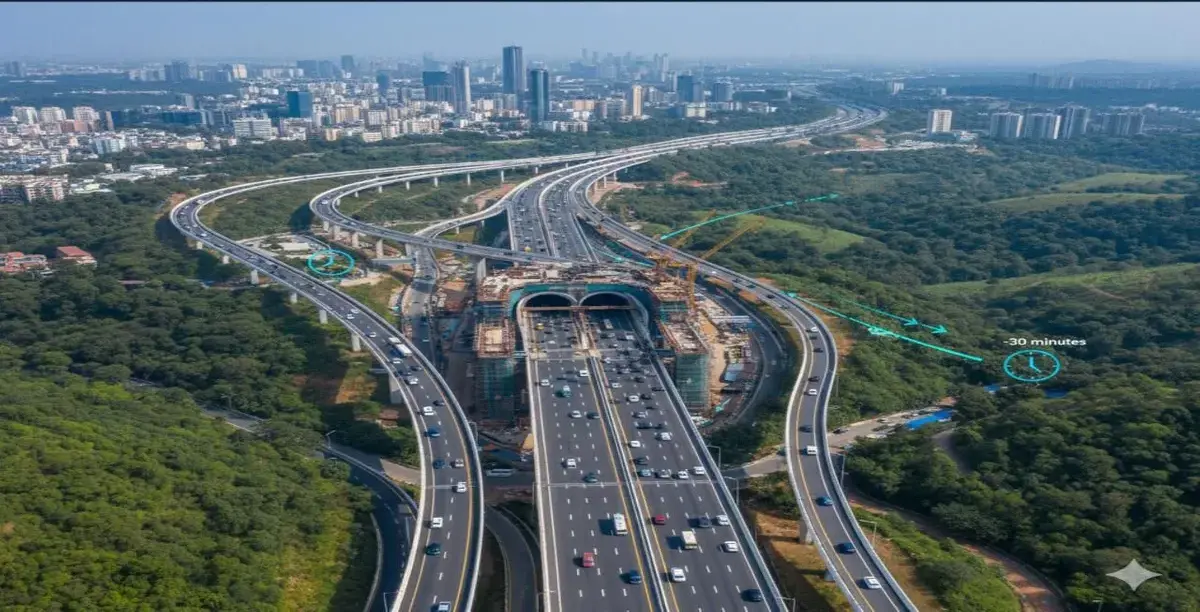
Pune stands to gain significantly as the Mumbai–Pune Missing Link project approaches completion, with the new expressway alignment expected to improve travel reliability, safety and logistics efficiency for the city’s residents and businesses. The infrastructure upgrade is in its final construction stage and is likely to become operational in the coming months. For Pune’s workforce, which relies heavily on daily and weekly travel to Mumbai for finance, media, port-linked trade and corporate engagements, even a 25–30 minute reduction in travel time can reshape commuting patterns.
The new 13.3-kilometre alignment will replace a longer and more accident-prone ghat section, effectively shortening the corridor and improving driving conditions.
Transport planners note that the existing Bor Ghat stretch has long been a bottleneck, especially during monsoons and holiday surges. With traffic volumes on the expressway routinely touching 75,000 vehicles a day and significantly higher on peak days Pune-bound lanes often experience cascading congestion. The Missing Link is expected to ease these stress points by offering a straighter and more stable passage through the hills. From an economic perspective, Pune’s manufacturing clusters in Chakan, Talegaon and Ranjangaon depend on predictable road connectivity to Mumbai’s ports and markets. Industry representatives suggest that reduced travel variability could lower logistics costs and enhance supply chain efficiency.
The city’s IT and services sectors, too, benefit from stronger inter-city accessibility, reinforcing Pune’s position as a complementary growth engine to Mumbai.
Authorities have clarified that while the concession period for toll recovery has been extended, there will be no abrupt increase in toll rates upon the project’s opening. For frequent Pune commuters, this assurance addresses concerns about higher travel costs offsetting time savings. However, infrastructure experts caution that highway expansion alone cannot resolve long-term mobility pressures. As Pune continues to urbanise rapidly, integrated transport planning including rail freight, bus rapid transit and last-mile connectivity will remain essential to prevent induced traffic growth from eroding early gains.
Safety audits and final inspections are currently underway. Public representatives have urged that operational readiness, particularly in managing heavy vehicles and extreme weather risks, should take precedence over symbolic launch timelines. For Pune, the Missing Link represents more than a civil engineering milestone. It strengthens the city’s economic linkage with Mumbai while raising important questions about sustainable regional mobility. The next phase will depend on how effectively faster highways are aligned with lower emissions, improved public transport integration and balanced urban growth across the corridor.
Pune Connectivity Boost From Missing Link