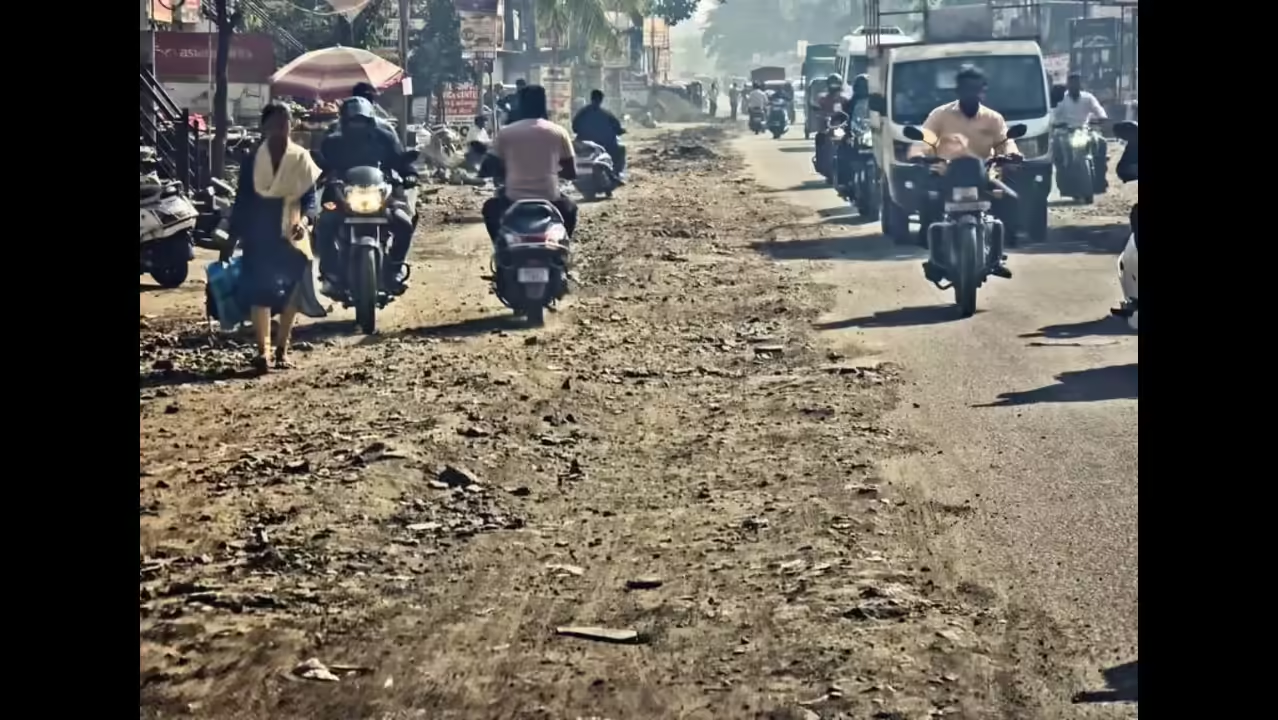
Pune Commuters Struggle As Mundhwa Manjari Road Potholes Remain Unrepaired Dangerously
The Mundhwa–Manjari Road in Pune has emerged as a stark reminder of systemic urban infrastructure failure, with repeated potholes, waterlogging, and unsafe conditions plaguing daily commuters. Documents obtained under the Right to Information (RTI) Act reveal that despite multiple repair records, the road remains hazardous, pointing to gaps in planning, coordination, and civic accountability.
RTI disclosures show that recurring maintenance complaints have been logged repeatedly, yet repairs are often superficial or temporary. One hotspot near Keshavnagar’s KRB Workshop has remained perilous for over two months, with deep potholes, loose gravel, and stagnant water contributing to vehicle damage and pedestrian risk. An official admitted that repair delays were partly due to the unavailability of construction materials, underscoring logistical weaknesses in a rapidly growing urban centre.
The RTI responses also highlight administrative silos. Road repairs intersect with responsibilities across different municipal departments electricity, water, encroachments, and civic engineering leading to delays and lack of accountability. Although PMC awarded the road maintenance contract to a local contractor through a formal tender worth over ₹27 lakh, records indicate minimal quality monitoring or enforcement of penalties for repeated failures.Residents describe repairs as largely cosmetic, with asphalt disintegrating after rain and gravel turning to dust within weeks. Commuters report frequent vehicle breakdowns, cyclists face accidents, and pedestrians navigate unsafe stretches, often forced dangerously close to drains. Many grievances submitted online are marked as “resolved” even though the road remains unrepaired, deepening public frustration.
Urban planners suggest that recurring failures signal the absence of robust quality audits and weak enforcement mechanisms. Administrative fragmentation and poor logistical coordination further exacerbate the problem, raising questions about the PMC’s long-term capacity to manage arterial roads crucial for Pune’s eastern expansion.While a Detailed Project Report for a proposed grade separator at Mundhwa junction exists, no funding or execution timeline has been finalised. Experts warn that without immediate, full-scale resurfacing, reinforced supervision, and clear accountability mechanisms, the road will continue to deteriorate, compromising safety and efficiency.As Pune continues to grow, the Mundhwa–Manjari Road crisis highlights a broader lesson: sustainable urban development requires infrastructure that works on the ground, not just in planning documents. Ensuring inclusive, safe, and resilient transport corridors is critical to building a city that supports equitable mobility and reduces risk to life.
Pune Commuters Struggle As Mundhwa Manjari Road Potholes Remain Unrepaired Dangerously