


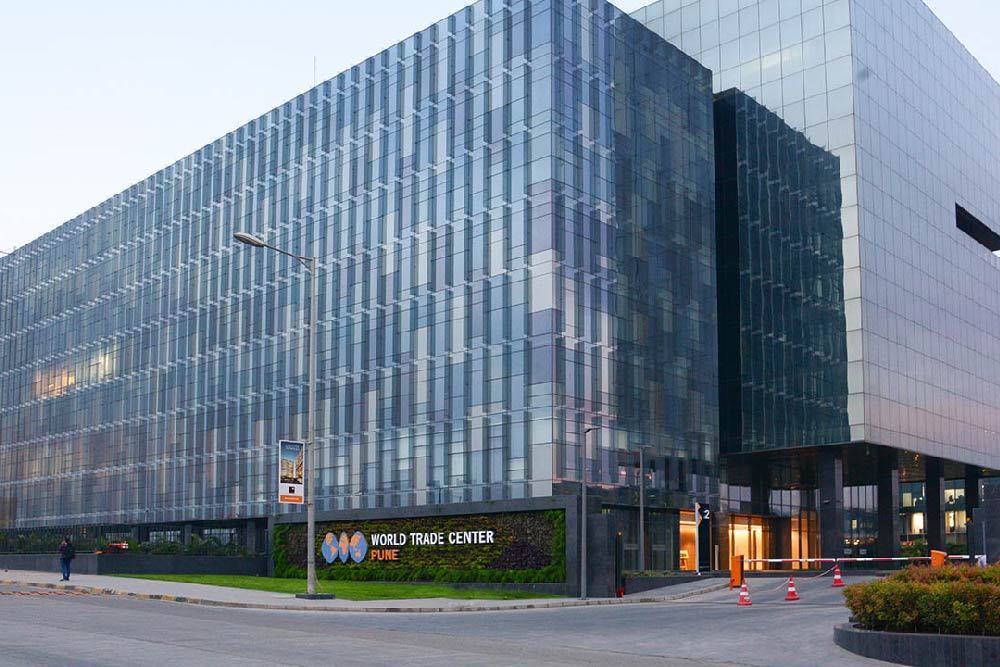
Pune’s commercial real estate market is witnessing a decisive shift in how large financial institutions approach workspace strategy, with a global banking services arm leasing an entire office tower in the city’s Yerwada precinct through a managed workspace model. The transaction, valued at approximately Rs 263 crore over its tenure, highlights how enterprise occupiers are prioritising operational agility, cost efficiency and speed of deployment over traditional long-term ownership or bare-shell leasing.
The leased facility spans over 165,000 sq ft and has been designed to accommodate more than 1,500 employees. Unlike conventional commercial leases that require significant capital investment in interiors and fit-outs, the space has been taken on a fully furnished and serviced basis, allowing immediate occupation. Industry analysts say this reflects a broader recalibration underway in BFSI real estate decisions, driven by evolving workforce patterns, tighter capital discipline and the need for scalable urban infrastructure. Yerwada and the adjoining Airport Road corridor have emerged as one of Pune’s most resilient office micro-markets. Urban planners attribute this to proximity to the airport, established commercial clusters, and improving public transport connectivity. Market data shows that the corridor accounted for nearly half of the city’s total office absorption in early 2025, even as new supply entered the market. Rentals have remained stable, signalling sustained demand rather than speculative growth. The rise of managed offices is also reshaping how cities absorb employment density. By consolidating services, energy management and building operations under a single operator, such spaces can reduce resource duplication and improve efficiency.
Sustainability consultants note that managed office environments are increasingly integrating energy-efficient systems, shared mobility access and optimised space utilisation key considerations for cities aiming to lower the carbon footprint of commercial districts. India’s flexible workspace inventory has expanded rapidly over the past decade, but the nature of demand has changed. What began as a solution for startups and freelancers is now being adopted by large enterprises seeking predictable costs and faster expansion cycles. In markets like Pune, this has supported decentralisation away from saturated central business districts, easing pressure on infrastructure while distributing economic activity more evenly across the city. However, experts caution that concentration risks remain. Large single-tenant occupancies require careful planning around transport capacity, emergency services and civic amenities. Municipal officials say coordinated planning between developers, operators and local authorities will be essential to ensure that commercial growth aligns with liveability goals.
As Pune continues to attract global capability centres and financial services operations, the focus is likely to shift further towards flexible, efficient and climate-conscious office formats. For the city, the challenge will be to ensure that this next phase of commercial expansion strengthens urban resilience while supporting inclusive economic growth.
Also Read: Pristine Landmark buys Vadgaon Sheri land for Rs 250 crore
Pune Commercial Leasing Signals BFSI Workplace Reset
