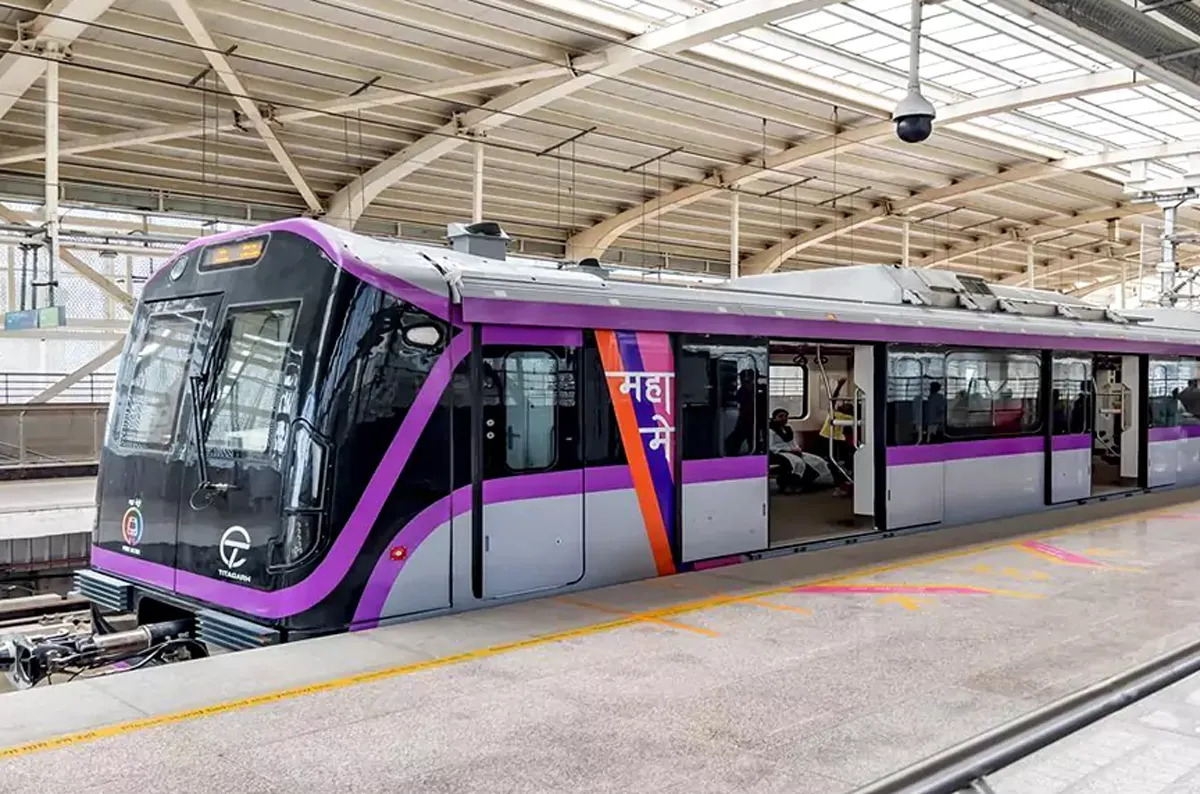
The Maharashtra government has issued revised administrative approval for two new elevated corridors under the Pune Metro expansion, unlocking the next phase of rapid transit growth across the eastern and southern parts of the city. The decision formalises financial and implementation arrangements between the state, the Union government and the executing agency, and clears the way for tendering and funding mobilisation. The sanctioned network spans 31.6 kilometres and will add 28 elevated stations, strengthening connectivity between high-density residential belts and key employment corridors. Urban planners say the Pune Metro expansion is critical as the city’s population pushes outward towards Kharadi, Sinhagad Road, Hadapsar and Warje areas that have witnessed rapid real estate development but limited high-capacity public transport.
The combined project outlay stands at ₹9,857.85 crore. Both the Union and state governments will provide equal equity support of ₹1,212 crore each, while the remaining funding will be structured through loans from financial institutions. Officials involved in the planning said detailed financial engineering for the loan component is underway, reflecting a hybrid funding model common to large urban transit systems. The Union government had cleared the corridors late last year, after which the proposal returned to the state for formal administrative sanction. With the revised approval now issued, the implementing agency has begun preliminary groundwork, including micro-level alignment studies and identification of station footprints. Tender documents for civil works are expected in the coming months.
Cost estimates indicate that track alignment and formation will account for roughly ₹1,694 crore, while station construction is projected at around ₹1,300 crore. Expenditure on traction, signalling and telecommunications systems is pegged at approximately ₹890 crore investments that will determine the reliability and energy efficiency of the system. Transport economists note that the Pune Metro expansion comes at a pivotal moment for the city’s mobility transition. Traffic congestion along Solapur Road, Nagar Road and Sinhagad Road has intensified due to a surge in private vehicle ownership and commercial development. A functional high-frequency Metro network could reduce travel times, improve air quality and support transit-oriented development, particularly around emerging IT and residential hubs.
Residents’ associations and daily commuters have urged authorities to adhere to a five-year completion window, warning that prolonged construction could strain already congested corridors. For the real estate sector, however, the approval signals long-term value creation, especially in peripheral neighbourhoods where accessibility determines housing demand. As Pune seeks to position itself as a competitive and climate-aware urban economy, expanding mass transit infrastructure is increasingly tied to its growth strategy. The coming months will test how quickly the city can convert approvals into on-ground progress and whether execution keeps pace with ambition.