


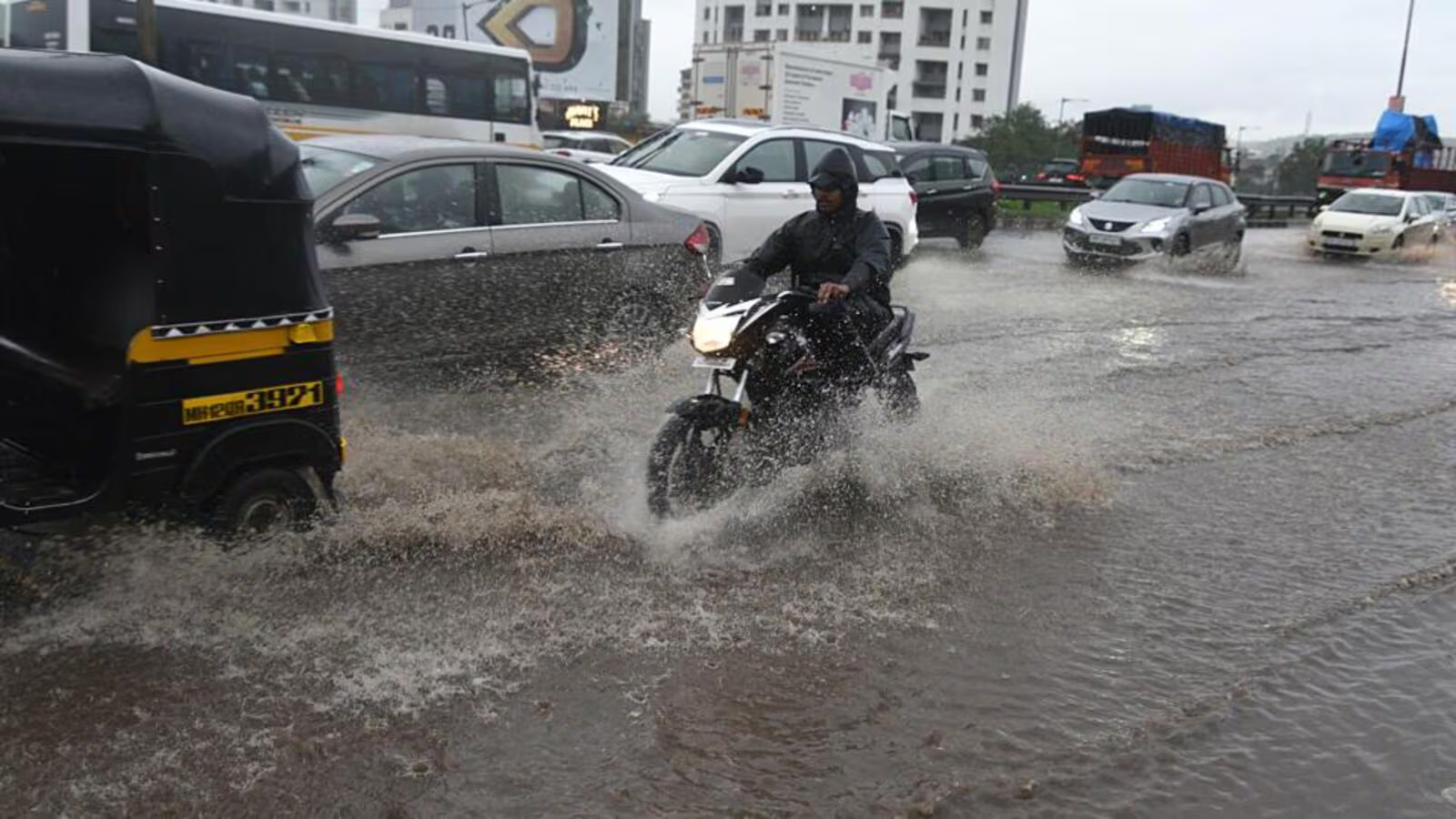
Maharashtra is set to face another spell of turbulent weather as the India Meteorological Department (IMD) has issued colour-coded alerts warning of widespread rainfall across the state over the next five days. The forecast comes as monsoon activity intensifies over western and central India, disrupting normal life in major urban centres while raising concerns about flooding and landslides.
Officials confirmed that heavy to extremely heavy rainfall will dominate several regions for the next 24 hours, with conditions likely to ease gradually from August 20. Mumbai, Thane, Raigad, Palghar, and the ghat areas of Pune and Satara have been placed under a red alert on August 19. This highest-level warning highlights a severe risk of waterlogging, localised flooding, and potential landslides in vulnerable hill regions. Districts including Ratnagiri, Sindhudurg, and Kolhapur have been issued an orange alert, indicating very heavy rainfall in isolated pockets. Meanwhile, Pune city, which is already witnessing steady downpours, has been marked under a yellow alert, with intense showers expected on August 19 before conditions improve. From August 20 onwards, rainfall is projected to become scattered and less disruptive in most parts of the state.
The IMD has urged residents, especially across the Konkan belt and ghats, to exercise caution, citing risks of flash floods, road blockages, and disruptions in essential services. Authorities in vulnerable areas have been directed to activate response mechanisms, including deploying disaster management teams, maintaining standby power backup, and ensuring drainage systems are unclogged. Experts noted that the heavy rainfall pattern is a consequence of active monsoon troughs combined with moisture-laden winds from the Arabian Sea. The concentration of downpours in coastal belts and ghat regions has historically posed challenges to urban infrastructure, particularly in cities like Mumbai and Pune, where inadequate stormwater management amplifies the crisis.
In recent years, the state has faced repeated monsoon-induced urban flooding, which has sparked calls for more sustainable planning. Urban researchers stress the urgency of adopting climate-resilient infrastructure, eco-friendly drainage solutions, and green urban planning to ensure that cities remain liveable under intensifying weather extremes. While the short-term outlook suggests relief after August 20, the red and orange alerts underline the immediate need for vigilance. Citizens are being advised to limit non-essential travel, stay updated through official weather bulletins, and reach out to municipal helplines during emergencies. The unfolding rainfall episode once again highlights how India’s financial and cultural hubs are confronting the dual challenges of climate change and unprepared urban systems.
Also Read: Mumbai Local Trains Delay Due To Heavy Rain, Waterlogging And Poor Visibility
