


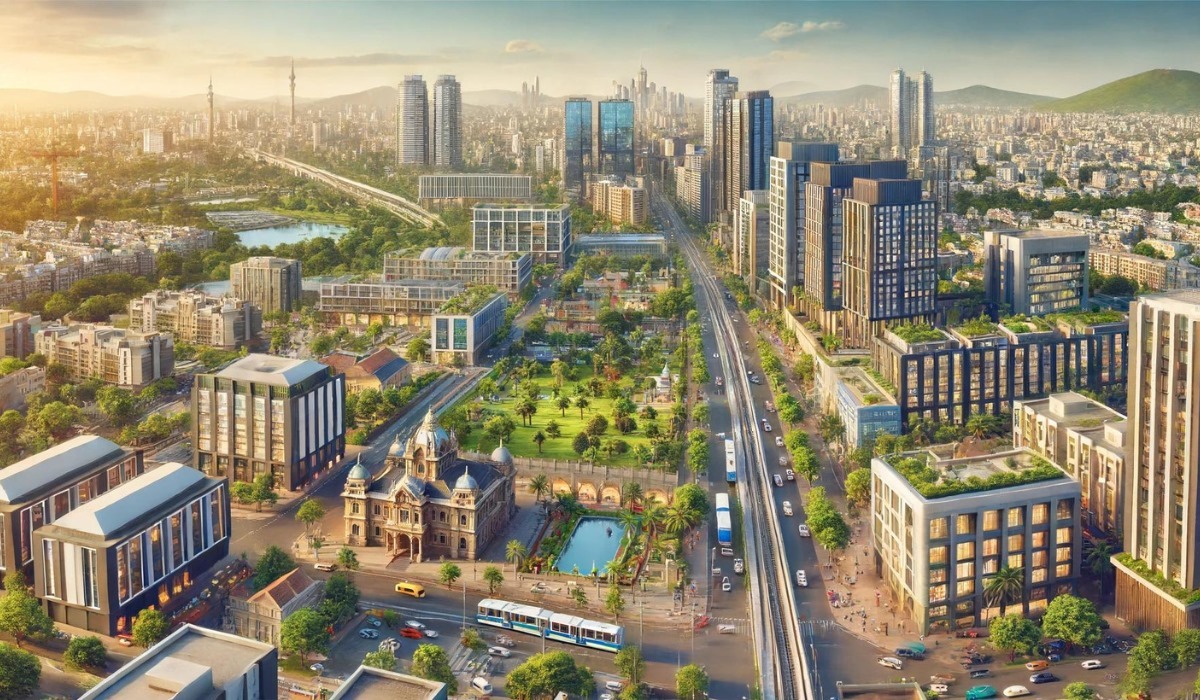
The Pimpri-Chinchwad Municipal Corporation (PCMC) region is witnessing a recalibration of its premium housing market, as a local developer brings a design-led, high-density residential project to central Chinchwad. The new development reflects a broader transition underway in PCMC from low-rise suburban housing towards vertically oriented, lifestyle-driven urban living shaped by changing demographics and land constraints.
Spread across a mid-sized land parcel in one of Chinchwad’s established neighbourhoods, the project has been planned as a high-rise residential enclave with a strong emphasis on open space allocation. More than four-fifths of the site area has been reserved for landscaped greens, pedestrian zones and community amenities a ratio that urban planners say is becoming increasingly relevant as PCMC densifies and climate resilience becomes a planning priority. The development rises to nearly 30 storeys and is configured with low residential density per floor, a design choice aimed at balancing vertical growth with privacy, ventilation and daylight access. Housing configurations range from mid-sized to large apartments, targeting upper-middle and premium homebuyers seeking larger homes within city limits rather than peripheral townships. What distinguishes the project within the PCMC market is its landscape strategy, inspired by Japanese planning principles that prioritise spatial calm, minimalism and nature integration. Urban design experts note that such thematic landscaping is no longer viewed merely as an aesthetic layer but as a response to rising stress levels, reduced green cover and the need for restorative urban environments.
The amenity mix has been structured across both ground-level greens and podium spaces, incorporating wellness, recreation and shared work zones. Large contiguous open areas function as social commons, while quieter zones are designed for senior citizens and contemplative use. This reflects a shift in residential planning where projects are expected to serve multi-generational needs within compact footprints. Location remains a key driver of demand. Central Chinchwad benefits from proximity to established healthcare facilities, retail clusters and emerging public transport infrastructure, including planned metro connectivity. Improved transit access is expected to strengthen the area’s appeal among professionals working across Pune’s western and northern employment corridors. Market analysts observe that premium housing in PCMC has matured significantly over the past decade. Buyers are increasingly design-conscious and selective, with greater emphasis on construction quality, open space ratios and long-term liveability rather than headline amenities alone. Developers responding to this shift are focusing on fewer, better-planned projects instead of large-scale sprawl.
As PCMC continues to urbanise vertically, such developments will test the city’s ability to integrate density with environmental sensitivity. The success of this next phase of housing growth will depend not just on architectural ambition, but on how well projects contribute to walkability, microclimate management and inclusive community life.
Also Read: Mumbai BKC Reinforces Premium Office Status
