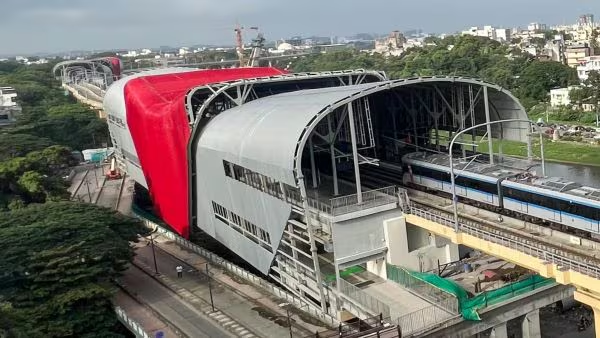
A social media debate over the naming of Pune’s Bund Garden Metro station has unexpectedly reopened a larger conversation about how Indian cities remember, interpret, and sometimes misunderstand their urban history. What began as a casual online joke about the station’s name has evolved into a pointed discussion on civic literacy, language, and the meaning embedded in infrastructure.
The controversy surfaced after an image of the Bund Garden Metro station was shared online, with the name being described as amusing. The reaction was swift. Several residents and urban history enthusiasts pushed back, arguing that the humour revealed a lack of understanding of the city’s geography and planning legacy rather than wit. Urban planners point out that the term “Bund Garden” is not colloquial slang but a reference rooted in 19th-century civil engineering. A stone embankment or bund was constructed across the Mula-Mutha river to regulate water flow, following which a public garden emerged alongside it. Over time, residents began referring to the area by its functional description. While the garden was later officially renamed Mahatma Gandhi Udyan, the older name endured in everyday usage, reflecting how cities organically preserve memory beyond formal renaming exercises.
An urban historian familiar with Pune’s development noted that such names are markers of how infrastructure once shaped settlement patterns. “These are not random labels. They document how water management, transport, and public spaces evolved together,” the expert said. From this perspective, dismissing historic place names risks erasing layers of urban knowledge that help cities remain legible to future generations. The online responses, however, were far from unanimous. Some users defended the humour as harmless, citing linguistic differences across regions and languages. Others questioned why generational labels were being applied to what they viewed as a casual internet moment. A parallel strand of the debate shifted focus towards governance, with calls for more consistent transliteration standards when Indian-language place names are rendered in English for public infrastructure.
For city planners and transport authorities, the episode offers a subtle lesson. Metro systems are not merely mobility assets; they are also cultural artefacts. Station names influence how commuters perceive neighbourhoods and can either reinforce or dilute local identity. In an era where Indian cities are investing heavily in mass transit to cut emissions and improve equity, naming choices carry symbolic weight alongside functional importance. As Pune expands its metro network, the Bund Garden debate underscores the need for greater public engagement around urban heritage. Balancing modern mobility with historical awareness can help cities remain inclusive, grounded, and socially sustainable ensuring progress does not come at the cost of collective memory.
Pune Bund Garden Metro Station Name Sparks Viral Debate On History Language And Urban Memory