


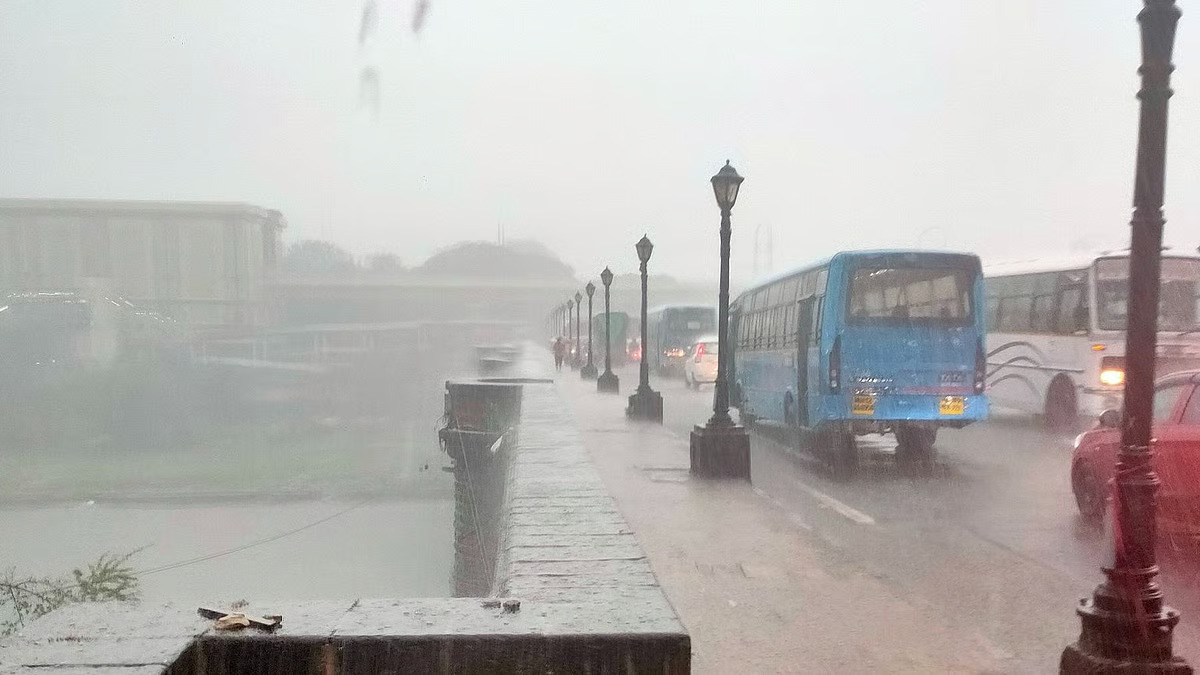
Pune on Saturday afternoon, exposing the city’s ongoing struggle with erratic pre-monsoon weather and fragile urban infrastructure.
What began as a humid, overcast morning quickly escalated into torrential rainfall by 4 PM, bringing traffic to a near halt and flooding several arterial and residential pockets. Localities such as Deccan, Shivajinagar, Karvenagar, and parts of the Peth areas bore the brunt of the intense spell. Suburban zones like Baner, Sus, and Pashan also reported heavy rain and temporary waterlogging, leaving commuters stranded and sparking chaotic scenes during evening rush hours.
This unseasonal downpour is part of a broader meteorological development impacting large parts of Maharashtra, as confirmed by the India Meteorological Department (IMD). The agency issued an alert for severe rainfall accompanied by thunderstorms and lightning, cautioning residents across 24 districts — including Pune, Satara, Kolhapur, Nashik, and Ahmednagar — to avoid unnecessary travel. Despite repeated advisories and an annual civic commitment to pre-monsoon readiness, Pune’s ageing drainage systems once again failed to keep up with the pace and volume of water. Low-lying zones became flashpoints of disruption, with clogged stormwater drains spilling over, delaying public transport, and compounding vehicular congestion.
According to the IMD, the sudden shift in atmospheric pressure and temperature gradients across the Deccan Plateau has intensified pre-monsoon activity. Experts warn that this may be the beginning of a series of similar bursts leading up to the monsoon onset, stressing the urgency for local governments to fast-track flood-mitigation plans. Urban climate researchers have long cautioned that cities like Pune — undergoing rapid, unplanned urbanisation — are especially vulnerable to high-impact weather events. The combination of impermeable concrete landscapes, encroached natural drains, and under-capacity stormwater systems make these cities sitting ducks for climate-induced shocks. Saturday’s rain serves as a reminder that adaptation plans must transition from policy papers to ground execution.
Citizens, particularly those in flood-prone zones, are increasingly turning to real-time weather alerts and social media for updates as the city’s disaster response mechanisms remain stretched. The IMD has advised all residents to stay indoors during heavy spells, avoid standing under trees due to lightning risk, and prepare for possible short-term outages. As the pre-monsoon intensifies, civic accountability, inter-agency coordination, and citizen awareness will be crucial to navigating the season with minimal disruption. While nature’s fury may be inevitable, its impact on daily life can be greatly mitigated by investing in resilient urban design and proactive crisis management.
Also Read: Mumbai Metro Faces Connectivity Blackout Amid Telco Dispute
