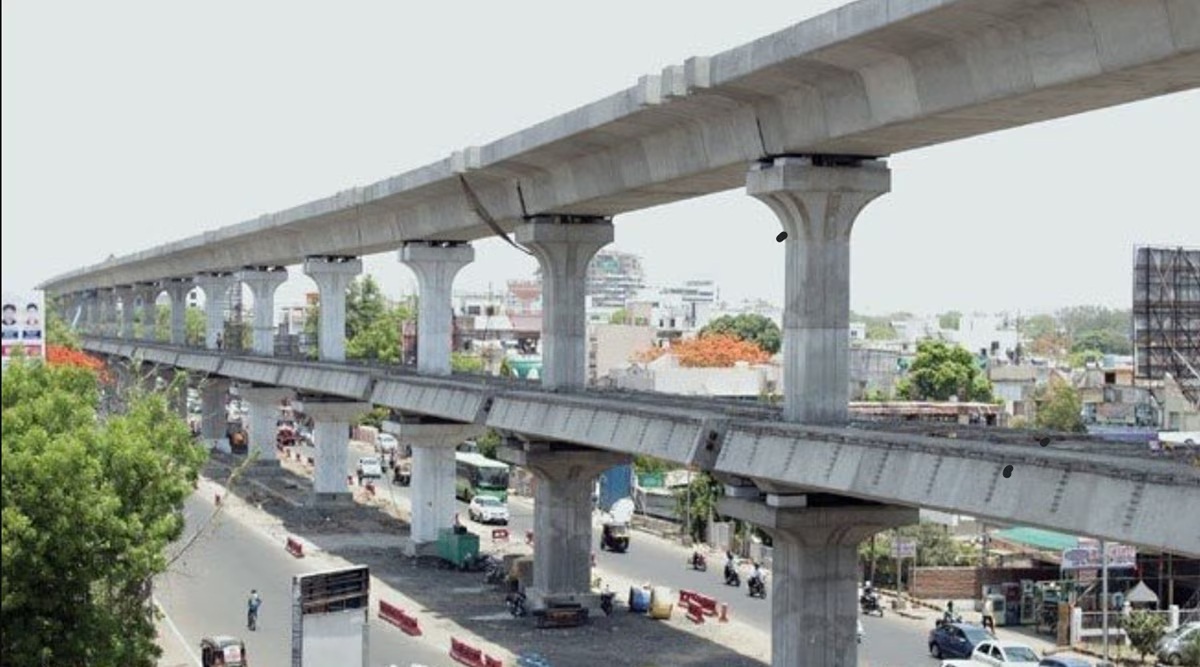
Pune’s strained transport network may soon see partial relief as construction activity accelerates around the Savitribai Phule Pune University junction and along the Maan–Hinjawadi Metro alignment. Authorities overseeing metropolitan development have indicated that a key elevated road structure at one of the city’s busiest academic and employment hubs is nearing operational readiness, a move expected to ease daily congestion while reinforcing long-term public transport goals.
The double-decker flyover at the university junction sits at the intersection of student movement, residential neighbourhoods, and IT-bound traffic. Urban planners say delays at this node have had a cascading effect across western Pune, particularly during peak hours when private vehicles, buses, and two-wheelers converge. Opening the flyover to traffic, even partially, is likely to improve travel time reliability for thousands of commuters who currently face bottlenecks extending towards Baner, Pashan, and the city core. Senior metropolitan officials recently reviewed progress on-site, directing contractors to prioritise unfinished access ramps and resolve civic coordination issues that have slowed completion. Engineering teams were also instructed to address water seepage affecting one side of the structure, underlining the growing emphasis on durability and lifecycle costs in urban infrastructure delivery. Experts note that such interventions, if handled early, reduce long-term maintenance burdens and improve safety outcomes.
Parallel to the flyover works, the review also covered the Maan–Hinjawadi Metro corridor, a flagship mass transit project designed to connect Pune’s largest IT employment zone with central and eastern parts of the city. The corridor is expected to significantly reduce dependence on private vehicles, cutting both travel times and transport-related emissions along one of Pune’s most carbon-intensive stretches. Officials assessed station construction, pedestrian access systems, and foot overbridges at several high-footfall locations, including interchanges with existing road and rail networks. Transport analysts say last-mile connectivity and safe pedestrian infrastructure will determine whether the metro successfully shifts commuters away from cars and ride-hailing services. Ensuring universal accessibility at stations is also seen as critical for inclusive urban mobility.
From a real estate and economic perspective, improved connectivity between the university area, residential clusters, and the IT corridor is likely to influence land values and development patterns. Market observers caution, however, that infrastructure-led growth must be matched with careful zoning, affordable housing supply, and green buffers to prevent unchecked sprawl. As Pune continues to expand outward, integrated transport solutions such as elevated roads combined with high-capacity metro lines are increasingly viewed as essential to sustaining productivity without compromising liveability. The coming weeks will test whether execution on the ground can match the city’s broader ambition of building a more efficient, climate-resilient, and people-first urban transport system.