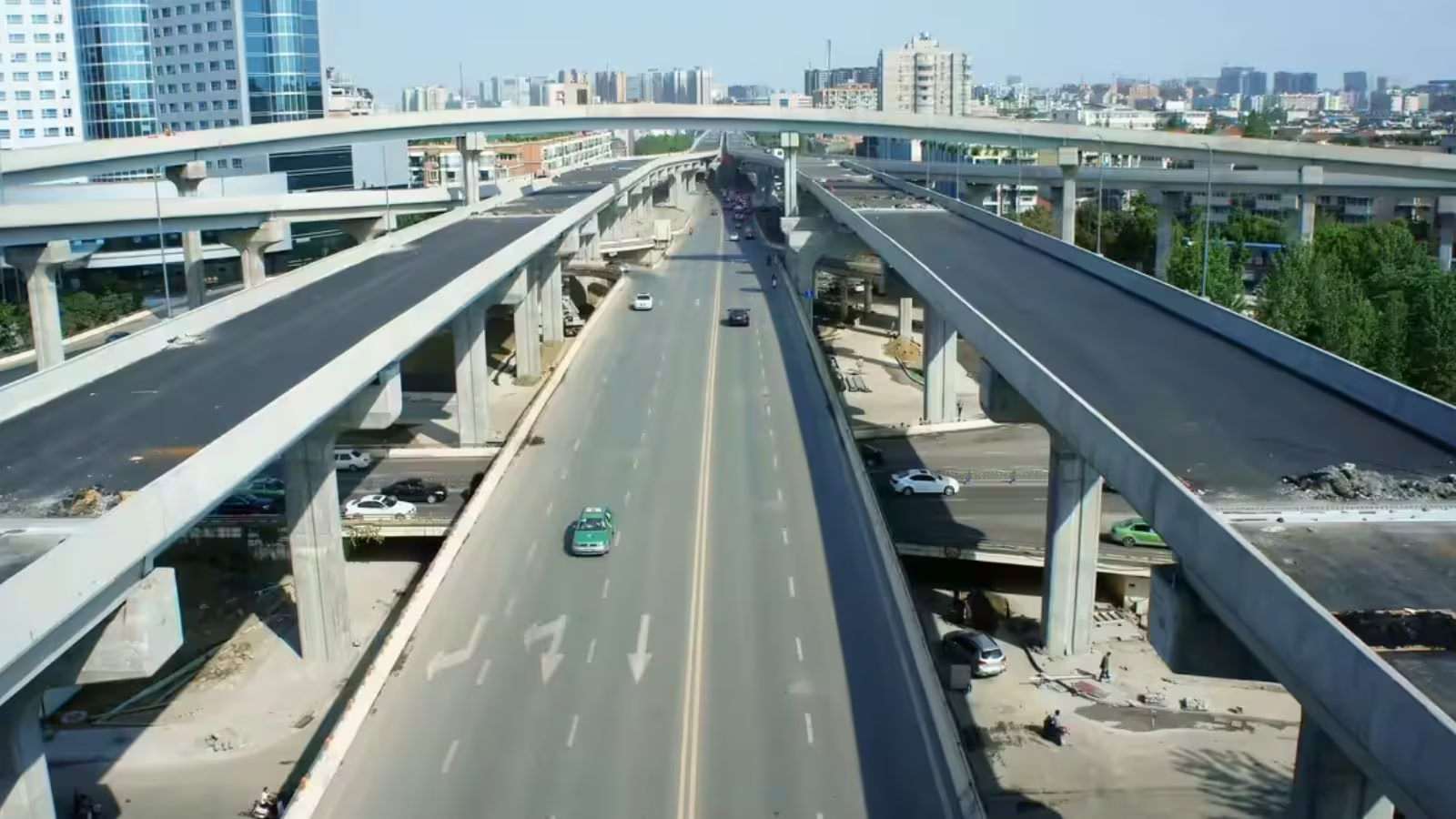
A container vehicle overturn on Friday afternoon briefly slowed movement along the Pune–Bengaluru national highway corridor, disrupting traffic bound for Pune and Kolhapur and exposing the operational risks that accompany large-scale highway expansion. The obstruction, which lasted for around 30 minutes, occurred on a service lane currently handling diverted vehicles due to ongoing six-laning work.
Officials from the highway police division confirmed that the truck, travelling towards Kolhapur from Pune, lost stability following a mechanical fault. The vehicle tipped onto its side across the service road, restricting passage for other vehicles until recovery teams cleared the carriageway. No injuries were reported.
Although the Pune Bengaluru highway disruption was short-lived, it highlights the sensitivity of freight and commuter movement on one of western India’s most vital economic corridors. The route links Pune’s manufacturing clusters and logistics hubs with southern markets, supporting sectors ranging from automotive components to agri-commodities.
The ongoing capacity augmentation project is designed to reduce congestion and improve safety in the long term. However, infrastructure experts note that interim traffic diversions onto narrower service roads can increase the likelihood of bottlenecks when heavy vehicles dominate the route. As freight volumes grow in tandem with industrial output, even minor mechanical failures can temporarily stall mobility. For Pune’s expanding urban economy, seamless highway connectivity is central to sustaining growth. Industrial estates in areas such as Chakan and Talegaon depend on predictable freight schedules. Delays, even brief ones, can ripple through supply chains, particularly for just-in-time manufacturing systems.
Transport planners also point to the importance of preventive vehicle maintenance and regulatory oversight. Mechanical breakdowns remain a recurring factor in highway incidents across India. Strengthening inspection regimes and encouraging predictive maintenance technologies could reduce such risks.
There are environmental dimensions as well. Traffic slowdowns on arterial corridors often lead to increased fuel consumption and higher emissions due to idling engines. In the context of Pune’s broader climate commitments and air quality concerns, minimising unplanned congestion is increasingly viewed as part of responsible infrastructure management. Highway authorities responded promptly, deploying cranes to remove the container and restore normal movement. Yet the episode serves as a reminder that infrastructure expansion must be matched by robust safety systems, real-time monitoring and contingency planning.
As Pune continues to position itself as a logistics and industrial gateway, the resilience of its highway network will remain critical. Ensuring that upgrades translate into safer, more reliable and lower-impact mobility will define the corridor’s long-term economic and environmental value.
Pune Bengaluru Highway Disruption Slows Traffic