


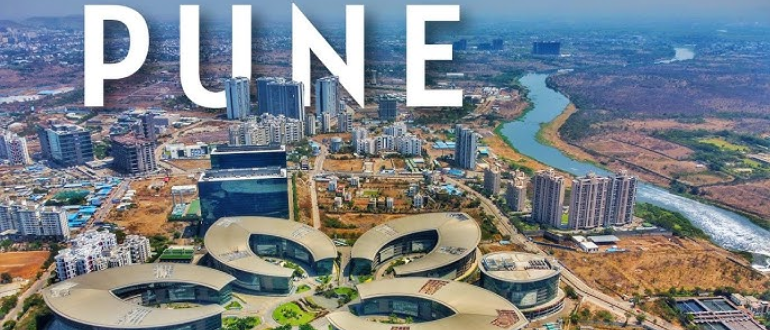
Pune has climbed to become India’s second-largest destination for Global Capability Centres (GCCs) in 2025, marking a decisive shift in the country’s office market hierarchy. The surge in GCC office leasing underscores the city’s evolution from a secondary IT base into a diversified, large-scale corporate hub.
Latest industry data show GCCs leased 5.43 million sq ft of office space in Pune during 2025, nearly double the 2.71 million sq ft recorded the previous year. This sharp expansion pushed the city ahead of established competitors such as Hyderabad and Chennai, while Bengaluru retained the top position nationally. GCC office leasing now accounts for more than half of Pune’s overall office absorption, signalling that multinational corporations are making long-term commitments rather than testing the market. Across India, GCCs leased 29.3 million sq ft in 2025, representing roughly one-third of total office demand. Within that national picture, Pune’s share stands out for both scale and diversity. Unlike cities heavily dependent on IT services, Pune’s GCC growth has been led by engineering and manufacturing mandates, which contributed over 40 per cent of leasing volumes. Banking and financial services followed closely, with technology and business process management firms also maintaining a strong presence. This broad-based demand reflects Pune’s industrial legacy as well as its expanding digital economy.
Urban planners point out that the city’s success is linked to long-term infrastructure and talent advantages. A deep engineering workforce, supported by higher education institutions, continues to attract research and product development functions. At the same time, Grade A office parks in eastern and western corridors have expanded rapidly, offering large floor plates suited to integrated global operations. Connectivity is strengthening the proposition. Proximity to Mumbai provides access to financial markets and corporate headquarters, while the upcoming Navi Mumbai International Airport is expected to enhance global accessibility. Metro rail expansion and highway upgrades are further integrating business districts with residential zones, supporting a more balanced urban form. Average GCC deal sizes in Pune now approach 80,000 sq ft, indicating mature occupier strategies rather than incremental expansions. Analysts say this scale requires consistent power supply, sustainable building standards and integrated mobility planning areas where Pune’s newer commercial developments are making incremental progress. However, sustained growth will depend on managing supply responsibly. As GCC office leasing accelerates, concerns around congestion, water security and equitable housing access are likely to intensify.
Experts argue that aligning commercial expansion with climate-resilient planning and affordable housing provision will be crucial to maintaining the city’s competitiveness. For now, Pune’s ascent signals that India’s office geography is becoming more distributed. The city is no longer an alternative destination; it is firmly positioned at the centre of the GCC office leasing narrative shaping India’s urban economy.
Also Read: Delhi affordable housing fund via charities
Pune becomes Indias second GCC market
