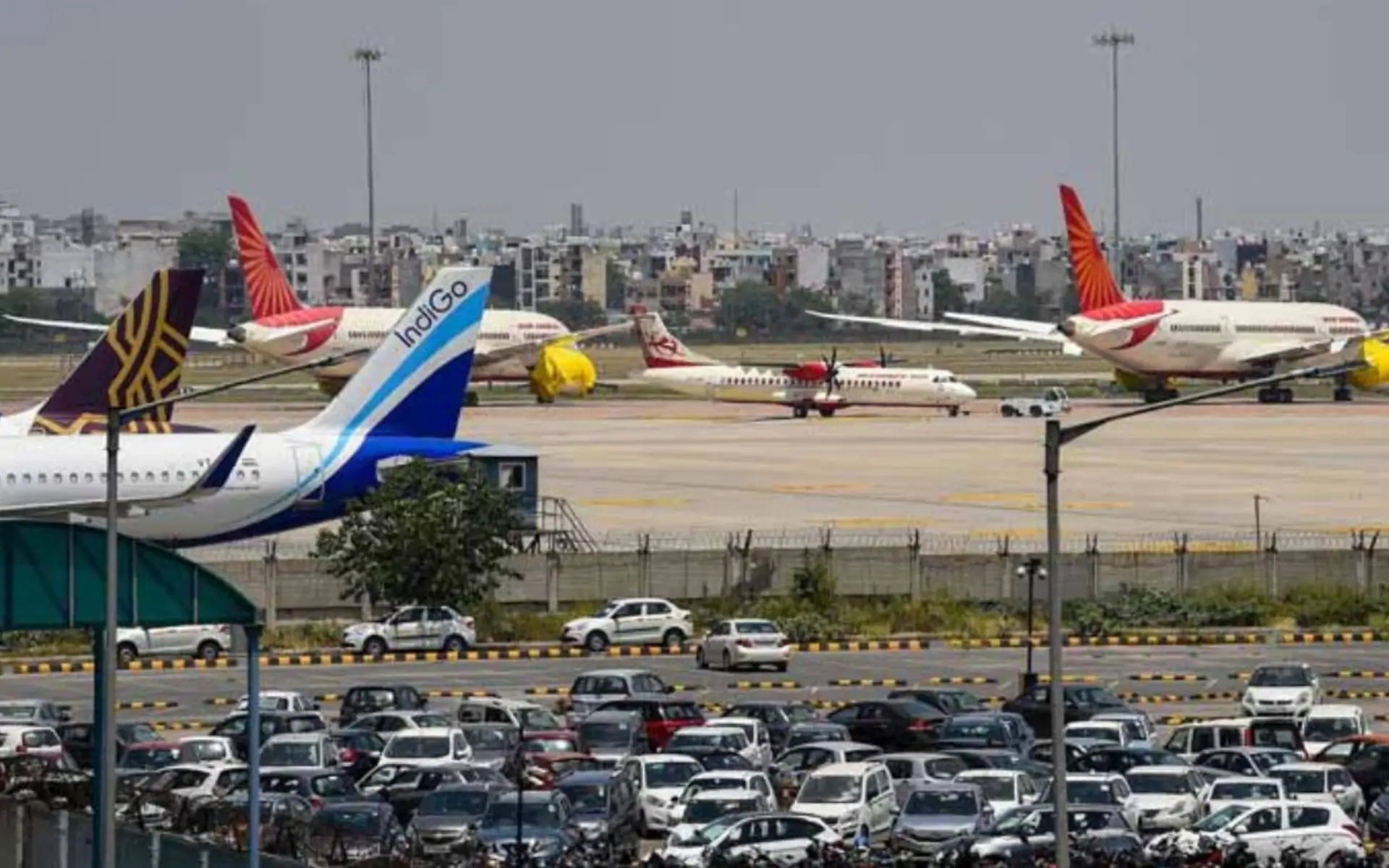
Pune’s aviation footprint expanded significantly in 2025, with Pune Airport reporting a steep rise in overseas passenger volumes and aircraft movements a shift that signals the city’s strengthening global business ties and growing role in western India’s urban economy. Data from airport authorities show that international passenger traffic climbed from 205,460 travellers in 2024 to 338,770 in 2025, marking a 65 per cent jump within a year.
Aircraft movements on international routes rose even faster, increasing from 1,492 to 2,601 a 74 per cent surge. The scale of growth positions Pune Airport international passenger growth as one of the most notable aviation trends in Maharashtra outside Mumbai. Aviation analysts attribute the upswing to a combination of expanded direct routes, improved terminal capacity and rising outbound demand from the city’s technology and manufacturing sectors. Pune maintains non-stop international services to Sharjah, Singapore and Bangkok, corridors that serve professionals, small exporters, students and leisure travellers. For many residents, direct departures from Pune reduce dependence on Mumbai’s larger airport, cutting travel time and surface congestion.
The commissioning of a new integrated terminal has also altered the airport’s capacity profile. According to airport officials, upgraded passenger handling systems, expanded check-in counters and enhanced security infrastructure have enabled smoother processing of international traffic. Industry observers note that improved airside efficiency typically encourages airlines to scale up frequency on viable routes. Beyond convenience, Pune Airport international passenger growth has broader economic implications. International connectivity often influences investment decisions in IT parks, industrial clusters and commercial real estate.
Developers tracking Grade A office absorption say improved overseas links strengthen Pune’s pitch as a secondary global business destination, particularly for companies seeking lower operating costs than Mumbai while retaining access to global markets. Urban planners, however, caution that aviation expansion must align with sustainable growth principles. Airports are high-energy infrastructure assets, and rising passenger numbers increase pressure on transport links, parking capacity and surrounding land use. Integrating airport growth with metro connectivity, electric ground transport and energy-efficient terminal operations will be critical if the city is to balance economic expansion with climate commitments.
Frequent travellers also report qualitative improvements in airport experience, citing reduced layovers and greater schedule flexibility. For businesses, predictable connectivity translates into faster deal cycles and improved supply chain coordination.
With Navi Mumbai International Airport nearing operational readiness and competition intensifying across regional hubs, aviation experts believe Pune will need to deepen route diversification to sustain momentum. Additional links to West Asia and Southeast Asia are viewed as commercially viable, provided passenger load factors remain strong. As Pune transitions from a domestic aviation node to a more outward-facing gateway, policymakers face a dual task: enabling growth while ensuring that infrastructure expansion remains resilient, energy-efficient and inclusive. The trajectory of 2025 suggests that international connectivity is no longer aspirational for Pune it is becoming foundational to the city’s urban economy.
Pune Airport records sharp overseas growth