


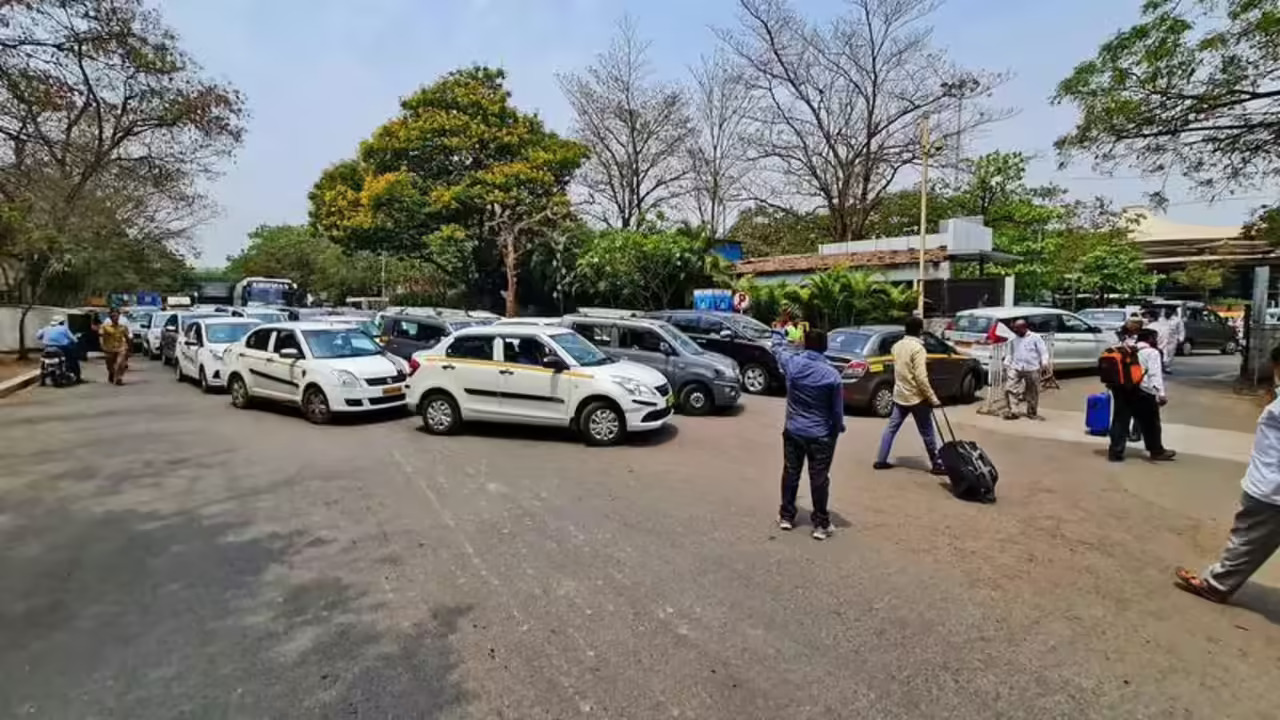
Pune Airport is set to implement a time-bound vehicle entry and exit system aimed at reducing congestion on its premises. According to airport officials, vehicles entering the arrival area will be allotted 10–12 minutes to drop off passengers before being required to exit, with penalties applicable for non-compliance. The proposal has been submitted to the Airports Authority of India (AAI) and is expected to be operational from next month.
Airport authorities highlighted that private vehicles lingering in the drop-off zones, particularly during evening hours, create severe traffic congestion. Current arrangements allow only private vehicles to enter for dropping off passengers, while cabs and autorickshaws are restricted to drop-offs, facing fines if they pick up passengers. The new measure is designed to streamline vehicle movement and ensure smoother operations across the airport, which records close to 30,000 passenger movements daily. Officials emphasised that similar initiatives were attempted in 2016 and 2019 but were withdrawn following public protests. “Vehicles staying beyond the designated time impede traffic flow and cause bottlenecks,” an official explained. The new system aims to prevent such disruptions, with penalties determined by AAI regulations.
The airport has also created an express lane for buses transporting passengers to the AeroMall, which previously faced delays due to vehicles blocking access. This step is expected to improve the commute for public transport users and enhance overall traffic management. Experts note that congestion management at airports is crucial not only for passenger convenience but also for safety and environmental reasons. Delays caused by vehicle crowding can increase idling times, leading to higher carbon emissions. By enforcing a strict time limit for private vehicles, Pune Airport could reduce emissions and promote more sustainable transport practices.
Urban planners suggest that integrating technology, such as real-time monitoring of vehicle flow, could further enhance efficiency. This would align with broader city-wide goals of promoting equitable and sustainable urban mobility. The policy could also encourage greater use of public transport and shared mobility services for airport commutes. Commuters have voiced concerns over overcrowded drop-off zones, especially during peak hours. Many travellers highlight that poorly managed traffic not only causes inconvenience but also risks safety incidents in high-density areas. Officials believe that the planned regulation, coupled with strict enforcement, will help address these long-standing challenges.
The new policy reflects a growing trend among major Indian airports to adopt structured traffic management systems. By limiting dwell times and streamlining vehicle movement, airports aim to balance passenger convenience with operational efficiency and environmental responsibility. As Pune Airport moves toward implementing this measure, authorities remain committed to monitoring traffic patterns and adjusting guidelines to ensure smooth adoption. The initiative signals a step toward more sustainable, climate-conscious, and orderly urban transport systems.
Also Read: Pune Records Minimal Rainfall as IMD Issues No Alerts
