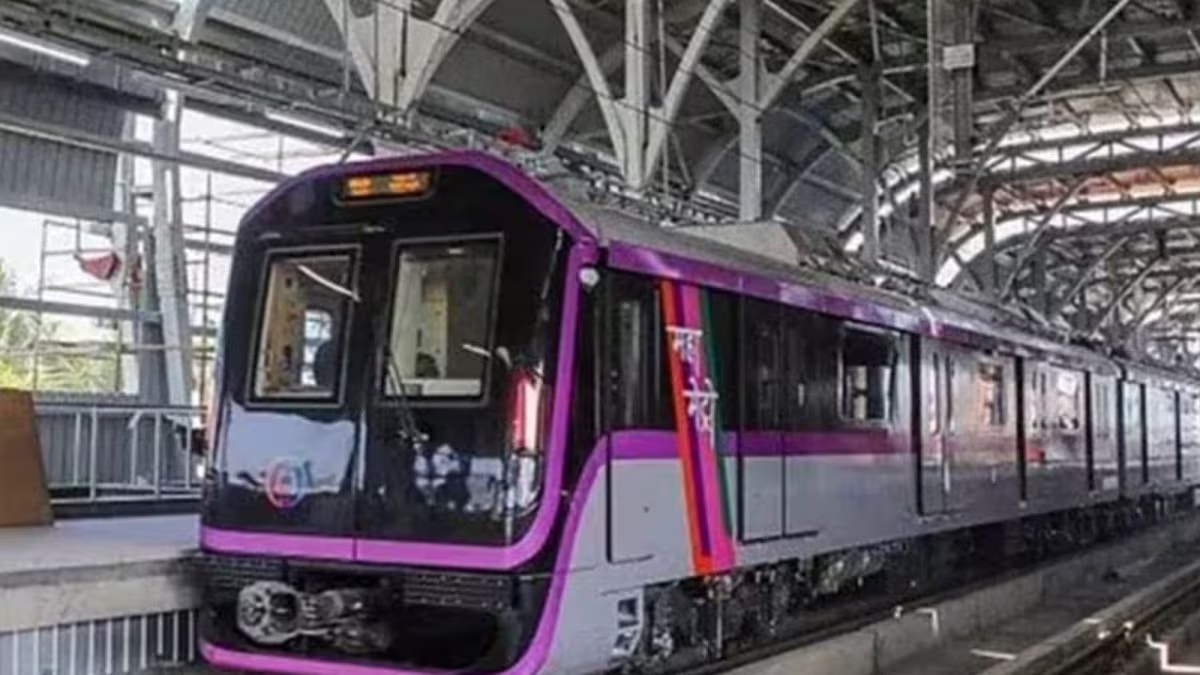
A proposed metro corridor connecting Pune’s western suburbs with the city’s international airport has cleared an important planning milestone, signalling the next phase of expansion for the region’s rapid transit network. Authorities have approved preparation of a detailed project report for the Pune airport metro link, a route expected to connect Khadakwasla with Hinjewadi while providing direct rail access to the airport.
Urban planners say the proposed corridor could reshape travel patterns across the city by linking residential neighbourhoods, educational hubs and technology parks to Pune’s main aviation gateway. If implemented, the Pune airport metro link would offer an alternative to road-based travel, which has struggled to cope with rising traffic volumes in recent years.
The corridor is expected to run across several key urban zones, including large housing clusters in western Pune and the Hinjewadi IT district, which employs thousands of workers in technology and research industries. At present, most commuters rely on road transport to reach the airport, often navigating heavily congested arterial routes. Transport analysts note that the city’s rapid economic expansion has intensified pressure on existing infrastructure. Pune’s population growth, combined with the rise of new residential townships and commercial districts, has resulted in longer travel times and increased emissions from private vehicles.
A dedicated rail link to the airport could help address these pressures by providing a faster and more predictable commute option. Metro systems are widely viewed by urban mobility experts as one of the most effective tools for reducing dependence on private vehicles in dense metropolitan areas. Officials involved in the planning process say the detailed project report will examine route alignments, station locations, passenger demand and environmental impacts. The study will also assess integration with the existing Pune Metro network, which already connects several major residential and commercial corridors.
Urban transport specialists emphasise that airport connectivity projects play an increasingly important role in metropolitan planning. Airports are no longer isolated transport hubs but part of wider urban ecosystems that influence business activity, tourism and real estate development. Improved rail access to Pune’s airport could therefore support economic growth across the metropolitan region while making travel more efficient for residents and visitors. It could also reduce reliance on taxis and private vehicles for airport trips, lowering congestion on major approach roads. Environmental considerations are also likely to feature prominently in the project’s planning stage. Expanding mass transit networks aligns with broader efforts to reduce urban carbon emissions and improve air quality in growing Indian cities.
Experts point out that the success of such corridors depends on careful integration with feeder services, pedestrian access and last-mile connectivity. Without these elements, even well-designed metro lines can struggle to reach their full potential. For Pune, the proposed Pune airport metro link represents another step in building a multi-modal transport system that connects housing, employment centres and public infrastructure. Once the detailed project report is completed and approved, authorities will move to the next stage of project evaluation and funding decisions, which will determine the timeline for construction.
Pune Airport Metro Link From Khadakwasla Approved