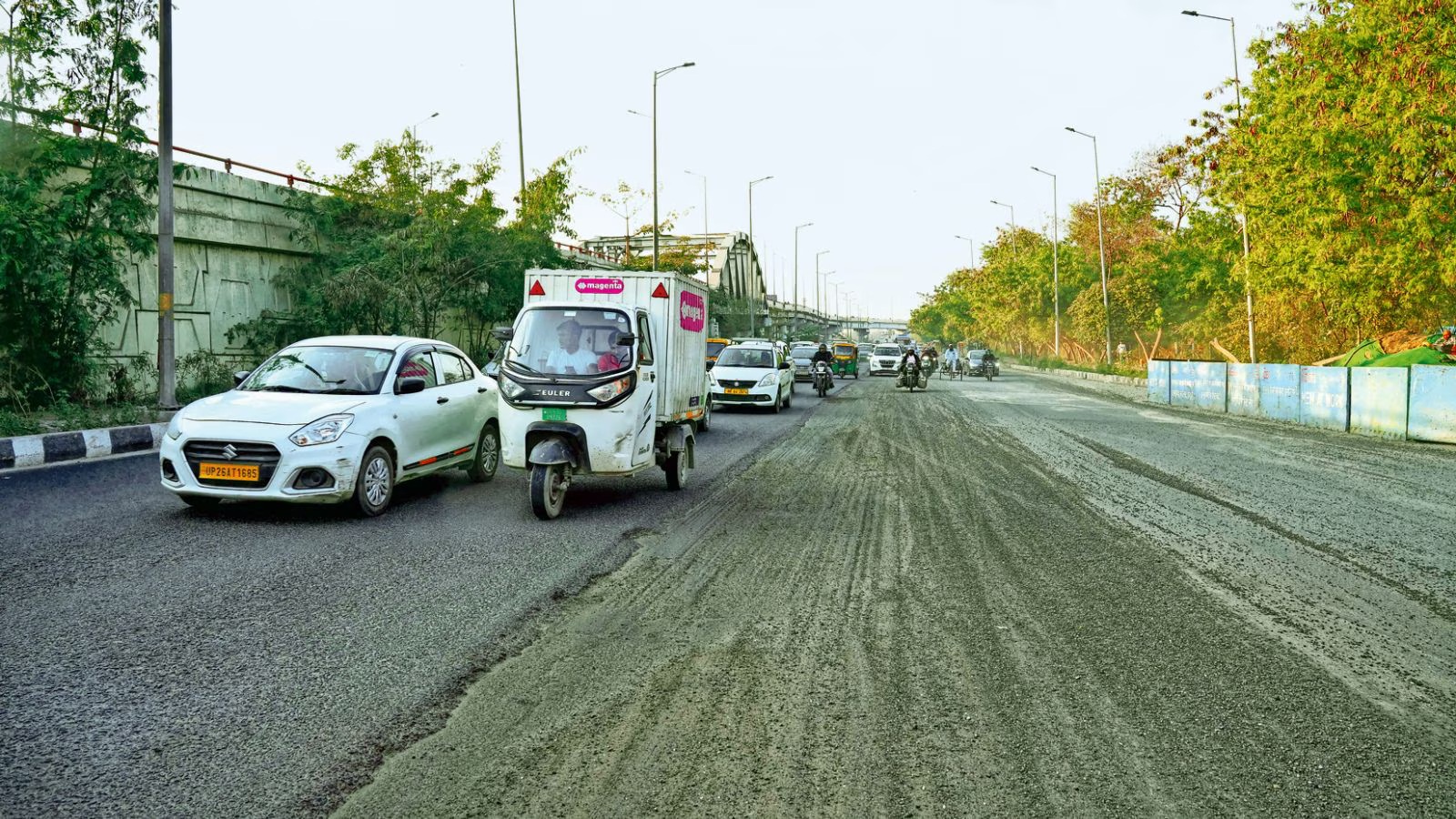
India’s automotive safety landscape is poised for a shift as the Automotive Research Association of India (ARAI) commissions a ₹40-crore Advanced Driver Assistance Systems (ADAS) test facility in Pune. Designed to validate safety technologies for Indian traffic realities, the centre aims to bridge a long-standing calibration gap between global vehicle systems and domestic road conditions. For Indian cities grappling with nearly 1.5 lakh road fatalities annually, the stakes are high. While ADAS features such as automatic emergency braking and lane assistance have become common in premium vehicles, their effectiveness has often been inconsistent on Indian roads. Mixed traffic flows, unmarked lanes, unpredictable crossings and the presence of two- and three-wheelers create a testing environment vastly different from Europe or North America.
The new ADAS test facility replicates these complexities. Trial tracks simulate narrowing carriageways, sharp curves, irregular junctions and parking environments. Engineers are also developing India-specific testing protocols, including crash assessment tools that account for auto-rickshaws and other locally dominant vehicle categories rarely reflected in global standards. Industry observers say this localisation effort could accelerate the mainstream adoption of ADAS technology. As safety features gradually move from high-end models to mid-segment cars, manufacturers face pressure to demonstrate reliability in real-world Indian conditions. The upcoming iteration of India’s car safety rating programme is expected to incorporate active safety systems, raising competitive benchmarks across the market.
Officials associated with the project indicate that tens of thousands of kilometres of on-road data have already been collected to refine system responses. Processing this data, however, presents challenges, from handling large volumes of sensor inputs to safeguarding personal privacy during image capture. The test centre’s long-term value will depend not only on hardware capability but also on robust data governance frameworks. Beyond the automotive sector, the facility has wider urban implications. Effective ADAS systems require predictable infrastructure clear lane markings, standardised signage and consistent road geometry. Urban planners note that safety technology and road design must evolve together. Countries that have successfully deployed advanced safety systems often align vehicle regulations with infrastructure standards; similar coordination could strengthen India’s road safety ecosystem.
For fast-growing cities such as Pune, where vehicle ownership continues to rise alongside real estate and industrial expansion, the integration of smarter mobility tools is becoming essential. Reliable ADAS performance could reduce crash severity, lower insurance costs and improve commuter confidence critical ingredients for inclusive, resilient urban growth. As India moves towards cleaner, connected and increasingly automated mobility, the Pune-based ADAS test facility signals a structural shift. It marks the beginning of a more locally grounded safety framework one that recognises that technology alone cannot prevent accidents unless it is built for the roads people actually use.