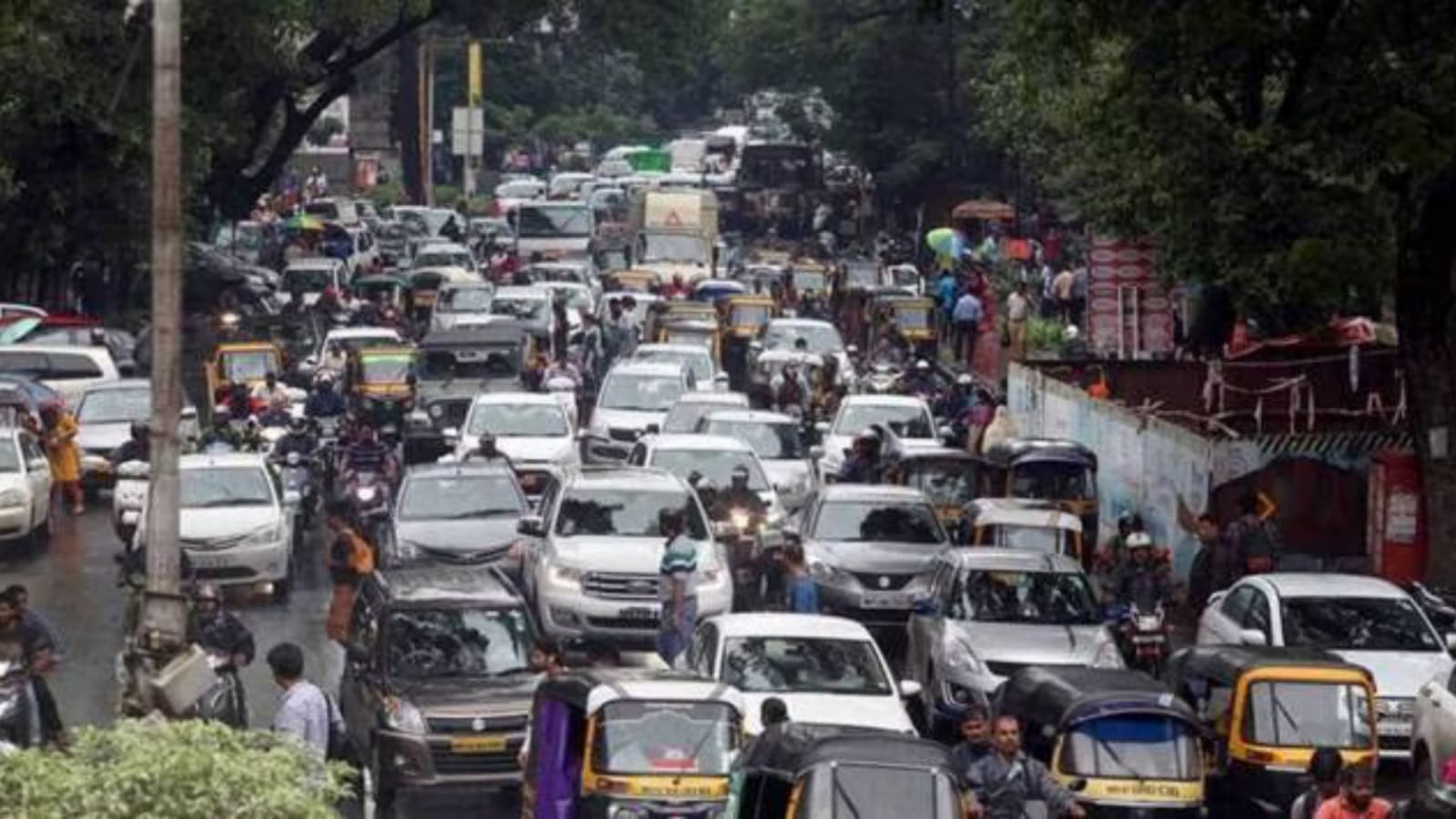
Urban mobility challenges in Pune are being compounded by a persistent but often overlooked issue: a growing number of unused vehicles occupying valuable road space across the city. Authorities estimate that thousands of abandoned cars, two-wheelers and other vehicles remain parked along public streets, reducing carriageway width and worsening congestion in an already traffic-heavy urban environment.
The Pune abandoned vehicles problem has gradually expanded across neighbourhoods ranging from historic central districts to residential suburbs. In several locations, vehicles that appear unused for long periods have effectively become semi-permanent fixtures on public roads, narrowing travel lanes and affecting pedestrian movement. Civic officials acknowledge that the situation has been difficult to manage despite earlier enforcement attempts. A joint operation by the Pune Municipal Corporation and the city’s traffic police last year resulted in the removal of a limited number of vehicles. The initiative temporarily cleared several roads but was discontinued after a short period, allowing the issue to return.
Urban planners say the Pune abandoned vehicles challenge reflects deeper structural pressures facing rapidly growing cities. As vehicle ownership increases, many urban areas struggle to manage roadside parking, vehicle disposal and enforcement mechanisms simultaneously. In dense neighbourhoods, unused vehicles often occupy spaces originally intended for traffic flow, emergency access or pedestrian safety.
The issue gained renewed attention recently when several roads were cleared ahead of a large cycling event hosted in the city. During preparations for the event, authorities removed vehicles that had remained parked unattended for extended periods. Residents observed that traffic movement improved noticeably on the cleared routes, highlighting the extent to which such vehicles can restrict road capacity.
However, once the event concluded, roadside parking gradually reappeared in several locations. Observers say that without consistent enforcement and designated storage spaces for removed vehicles, long-term solutions remain difficult to implement. Municipal officials estimate that more than four thousand abandoned vehicles are currently scattered across different parts of Pune. A major operational challenge has been identifying suitable locations where confiscated vehicles can be stored after removal. Earlier arrangements to temporarily keep seized vehicles near riverbank areas drew objections from environmental groups and residents, forcing authorities to look for alternative spaces.
Urban policy experts note that addressing the Pune abandoned vehicles issue will require a more structured approach. Cities with high vehicle ownership often implement clear systems for identifying neglected vehicles, notifying owners, and auctioning or recycling those left unclaimed. Such measures not only free public road space but also support sustainable urban waste management by ensuring vehicles are dismantled responsibly. Officials say civic authorities and police departments are now preparing to restart enforcement drives with additional logistical support, including cranes to remove obstructing vehicles. As Pune continues to expand its transport infrastructure from metro rail lines to bus corridors urban planners emphasise that managing street space effectively will be equally important for creating safer, more accessible and climate-resilient cities.
Pune abandoned vehicles worsen urban road congestion