


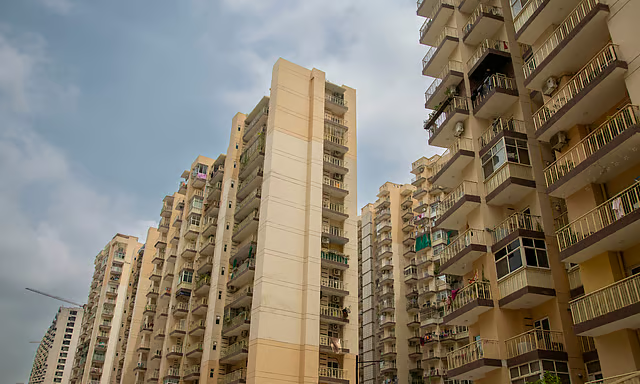
India’s top-tier cities are witnessing a notable shift in residential real estate, with average apartment sizes rising 17 per cent over the last two years, reflecting growing demand for premium and luxury homes. According to recent data, the average unit across seven major metropolitan markets has increased from 1,420 square feet in 2023 to 1,676 square feet in 2025, signalling a structural tilt towards larger, lifestyle-oriented dwellings.
The Delhi National Capital Region (NCR) stands out with the sharpest increase, recording a 30 per cent jump in average apartment size from roughly 1,890 square feet to 2,466 square feet over two years. Analysts attribute this expansion to a surge in luxury launches: approximately 80 per cent of the 61,775 new units in NCR in 2025 were classified as premium, compared with just 40 per cent in 2023. Chennai and Bengaluru followed, posting 24 per cent and 21 per cent growth in apartment sizes, respectively, highlighting a broader regional appetite for high-end residential formats. Hyderabad led in absolute unit sizes, with 2,600 square feet apartments in 2025, up 13 per cent from 2,299 square feet in 2023. In contrast, the Mumbai Metropolitan Region (MMR) continues to have the smallest average units among tier-one cities, at 904 square feet, though this represents a 12 per cent increase from 810 square feet two years prior. Experts note that local land constraints, higher population densities, and a premium on central urban plots contribute to smaller average unit sizes in MMR compared to other metros. Urban planners and real estate analysts interpret this trend as a reflection of evolving lifestyle preferences rather than purely investment-driven decisions.
The pandemic has reinforced the desire for larger, well-designed homes with multiple bedrooms, dedicated workspaces, and flexible layouts that accommodate both comfort and functionality. High-end residential real estate is increasingly seen as an emblem of social status, offering spatial quality and design sophistication alongside financial value. The growth in apartment sizes also carries implications for urban infrastructure and municipal planning. Larger units typically translate into higher per-capita resource consumption, including electricity, water, and common-area facilities. City authorities and developers must therefore integrate sustainability measures into luxury residential planning to mitigate environmental impacts, while ensuring equitable urban growth. Market analysts observe that while smaller, mid-income units remain essential for inclusive housing, the premiumisation trend defines where active demand is concentrated.
Developers are now prioritising quality over quantity, with buyers willing to absorb higher price points for enhanced living standards. This signals a long-term shift in the housing market toward lifestyle-centric urban development, particularly in emerging economic corridors and well-connected metropolitan zones.
Also Read: Jenika Ventures Expands Advisory Footprint In Gurgaon
Premium Housing Drives Larger Apartments Across India
