


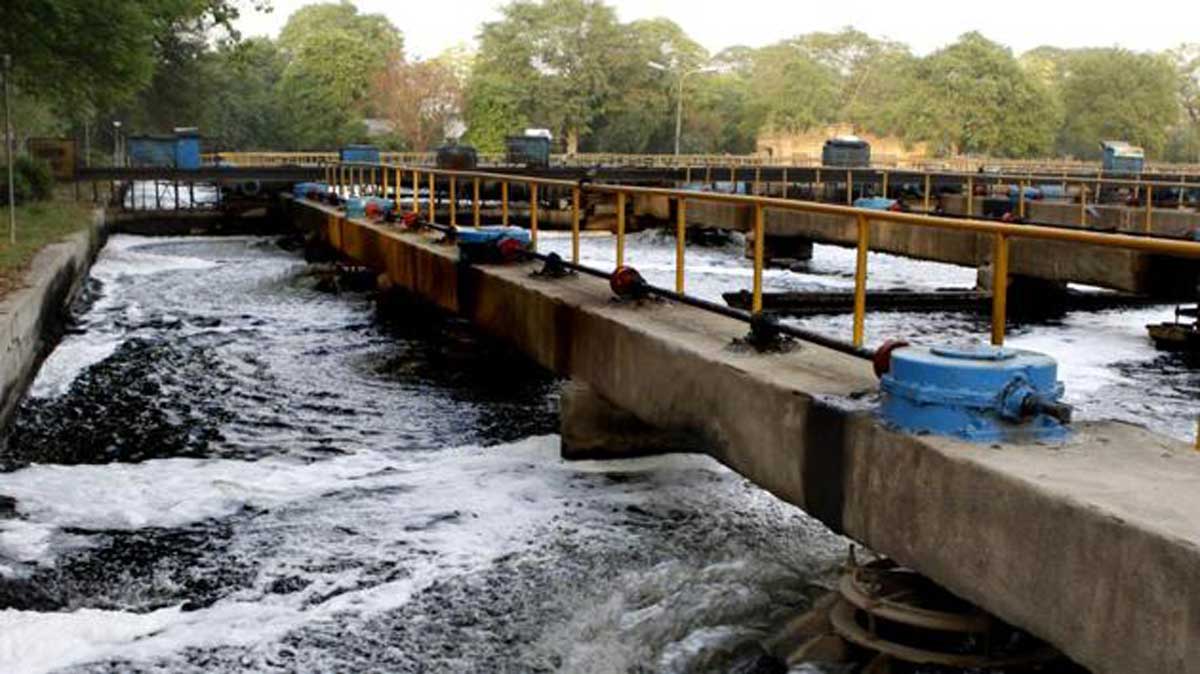
In Prayagraj, Uttar Pradesh, a groundbreaking initiative is redefining urban water management.
The Naini Sewage Treatment Plant (STP), powered by an 832kW solar system, now meets nearly half its energy needs through renewable sources, slashing electricity costs by INR 1.5 crore annually. Spearheaded by the Ganga Pollution Control Unit of Uttar Pradesh Jal Nigam, this pilot project is a beacon of hope, with plans to extend solar integration to all nine STPs in the district, aiming for collective savings of INR 32 crore each year. As two-thirds of the global population faces water stress in 2025, traditional wastewater systems—energy-intensive and fossil fuel-dependent—are no longer viable. These systems burden developing regions with high costs, complex infrastructure, and carbon emissions. Prayagraj’s solar-powered approach offers a compelling alternative, blending innovation with sustainability to create “green water”—clean, reusable water that nurtures communities and ecosystems. This model is not just a local triumph; it’s a blueprint for cities worldwide striving for net-zero carbon and equitable urban futures.
The emotional resonance of this transformation is profound. Imagine children in underserved communities accessing safe, treated water, their health and futures safeguarded. Solar-powered pumps, capable of operating on both AC and DC power, are making this a reality even in off-grid areas.
These systems require minimal maintenance, freeing up resources for community development and empowering local economies. In Rajkot, a similar initiative at the Aji water treatment plant has cut emissions and costs by 20%, prompting the municipality to explore scaling up solar solutions across its facilities. Global policies are amplifying this shift. Governments in India, South Africa, and Egypt are rolling out incentives like tax breaks and feed-in tariffs, making renewable-powered water treatment financially attractive. Delhi’s Rajkiya Pratibha Vikas Vidyalaya hosts India’s first solar-powered water treatment plant, a testament to how decentralized systems can loop water resources efficiently, aligning with circular economy principles. These efforts turn wastewater from a liability into an asset, fostering resilient, inclusive cities. The private sector is also stepping up. Industry leaders are deploying renewable energy solutions to reduce freshwater consumption and operational costs. Their commitment to net-zero emissions by 2050, with interim targets for 2030, underscores a broader vision: sustainability as a standard, not an aspiration. In Chennai, a LEED Platinum-certified facility recycles all wastewater for landscaping, capturing 53% of rainfall in a 350,000-litre harvesting system—a vivid example of innovation in action.
Prayagraj’s journey is a clarion call for collective action. From policymakers to communities, every stakeholder has a role in building water systems that endure. Solar panels and pumps are not just infrastructure; they are the heartbeat of a planet where every drop of water tells a story of hope, equity, and life.
