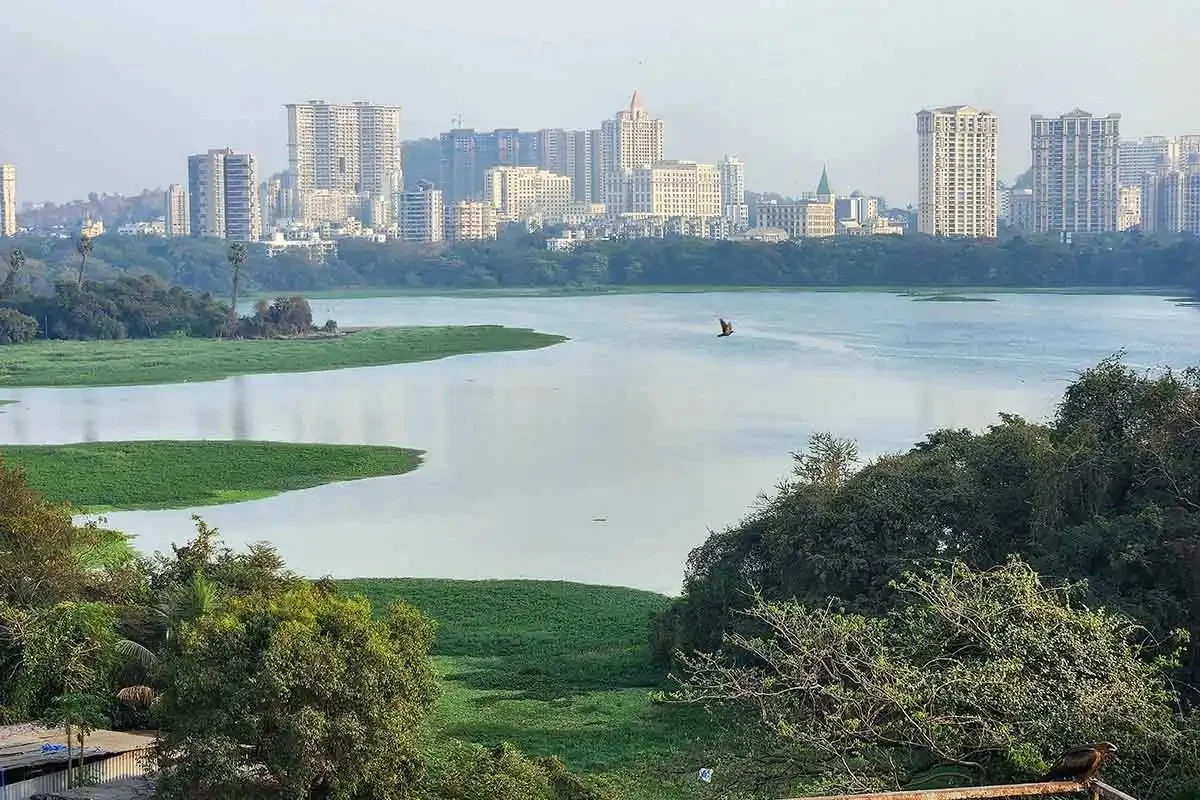
Mumbai’s Powai Lake is witnessing an accelerated restoration initiative as the Brihanmumbai Municipal Corporation (BMC) intensifies efforts to curb untreated sewage inflow while balancing ecological concerns, particularly tree preservation. The 210-hectare wetland, historically used as a drinking water source and now a notified wetland supporting marsh crocodiles and diverse biodiversity, has suffered from nutrient-rich sewage discharges that have long undermined water quality and ecosystem health.
A senior BMC official outlined that approximately 18 million litres of wastewater previously entering the lake through 18 inlets are being redirected through a dedicated diversion system. The plan, which spans 2.4 kilometres, has already seen 1.1 kilometres of pipeline laid along the lake’s periphery. Thirteen labour teams are operational across multiple segments, with full completion targeted for May 2026. This mechanism is designed to intercept several critical outlets, including those near the Indian Institute of Technology Bombay campus, whose internal sewer lines are being managed separately by the institute. As an interim arrangement, the diverted sewage is routed to the Bhandup Pumping Station, whose capacity is being upgraded to handle 225 million litres per day. Additionally, an 8 MLD sewage treatment plant near Suvarna Mandir is planned, with a projected two-year construction timeline. The intervention is expected to significantly improve water quality, reduce algal blooms, and restore the wetland’s natural hydrological function.
However, the plan has generated environmental scrutiny over the proposed transplantation of 122 trees at the treatment plant site, part of a larger 212-tree cluster. Experts from conservation groups caution that survival rates for transplanted trees in Mumbai are historically below 40 per cent. Citizen representatives have urged the BMC to explore alternative alignments or mitigation strategies to minimise tree loss, highlighting the role of mature trees as a natural barrier for air quality improvement and flood absorption. Urban planners and environmental advocates note that previous restoration attempts, including mechanical removal of aquatic weeds, were ineffective due to ongoing nutrient inflow from sewage. The current diversion strategy represents a long-awaited breakthrough, combining engineering solutions with ecological sensibilities.
Residents emphasise that ecological restoration should not compromise the lake’s existing tree cover, which remains critical to maintaining Mumbai’s climate resilience. Experts suggest that integrating community oversight with scientific monitoring could improve outcomes and ensure that Powai Lake continues to function as a protected urban wetland. The initiative, once completed, is expected to enhance the lake’s biodiversity, support sustainable urban planning, and improve quality of life for surrounding communities while setting a precedent for integrated waterway restoration in Mumbai’s dense urban environment.
Powai Lake Restoration Underway With Green Safeguards