


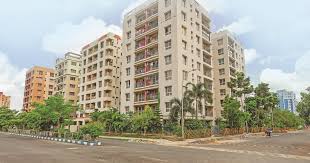
India’s affordable urban housing strategy is entering a more structured phase, with policy recalibration, credit reforms and fiscal rationalisation converging to make home ownership more attainable for low- and middle-income households.
What was once largely framed as a welfare-led aspiration is now being positioned as a long-term urban development priority. Over the past year, the Centre has strengthened institutional frameworks, eased financing constraints and sought to crowd in private participation signalling a shift from scheme-based interventions to systemic reform. A key milestone came in December 2025, when NITI Aayog released a comprehensive framework to promote affordable housing. The approach paper outlined supply-side constraints, financing gaps and regulatory bottlenecks that continue to impede delivery in urban India. Importantly, it called for deeper coordination between central and state governments, financial institutions and developers, underscoring that affordability must be embedded within broader urban planning and infrastructure strategies. The operational backbone of this push remains the Pradhan Mantri Awas Yojana–Urban (PMAY-U). After nearly a decade of implementation, the mission entered a new phase with PMAY-U 2.0, effective September 1, 2024. The updated programme targets support for one crore additional beneficiaries over five years, expanding rather than replacing the earlier framework.
PMAY-U 2.0 continues to function through four verticals Beneficiary Led Construction, Affordable Housing in Partnership, Affordable Rental Housing and the Interest Subsidy Scheme (ISS). Together, they address ownership, rental demand and access to institutional finance across income segments. The ISS has emerged as a pivotal lever. Eligible households earning up to Rs 9 lakh annually can avail a 4 per cent interest subsidy on home loans up to Rs 25 lakh, for properties valued at up to Rs 35 lakh. The subsidy capped at Rs 1.8 lakh is disbursed over five years. With over Rs 312 crore already released to more than 70,000 households, the scheme is expanding formal credit access, particularly for first-time buyers. To further widen credit flow, the government revamped the Credit Risk Guarantee Fund Trust for Low Income Housing in early 2025. By offering guarantees to lenders extending loans to Economically Weaker Section (EWS) and Lower Income Group (LIG) borrowers, the scheme reduces risk exposure and incentivises banks and housing finance companies to lend to informal-sector workers. By January 2026, guarantees had been issued for over 6,200 loans worth nearly Rs 615 crore. On the cost side, GST rationalisation on construction materials such as cement, marble and sand-lime bricks in September 2025 has eased input pressures. While developers continue to grapple with land and compliance costs, lower tax incidence on materials provides some headroom to maintain affordability thresholds. Urban policy experts note that the current phase of reform is less about headline announcements and more about aligning fiscal, regulatory and financial systems.
The ultimate test will lie in execution, state-level coordination and the ability to sustain private sector interest in a segment traditionally marked by thin margins. As Indian cities continue to expand, affordable housing is increasingly being treated not merely as a social obligation but as a cornerstone of inclusive urban growth and economic stability.
Also Read: Bengaluru Embassy Developments posts sharp presales surge
Policy Reset Strengthens India’s Urban Affordable Housing Mission
