


The eagerly anticipated 51.38 km Bairabi–Sairang broad‑gauge rail line, set to connect Mizoram’s capital Aizawl to India’s national railway network, is expected to be inaugurated by Prime Minister in July. This transformative infrastructure project marks a pivotal moment in regional integration and sustainable urban development. The Northeast Frontier Railway (NFR) and Commissioner of Railway Safety (CRS) finalised safety inspections between 6 and 10 June, approving the Hortoki–Sairang stretch for passenger and freight operations at speeds up to 90 km/h.
With the earlier Bairabi–Hortoki section authorised in July 2024 and trial runs achieving speeds between 35–110 km/h, the line is now fully clear for public use—making Aizawl the fourth North‑East capital with railway connectivity after Assam, Tripura and Arunachal Pradesh. Staging a grand feat of engineering through rugged terrain, the project incorporates 48 tunnels spanning over 12.85 km, 55 major bridges and 87 minor bridges, including Pier P‑4—towering at 104 m, 32 m taller than Delhi’s Qutub Minar. This underlines the demanding topographical challenges surmounted and the intricate engineering deployed in connecting Mizoram to the rest of India.
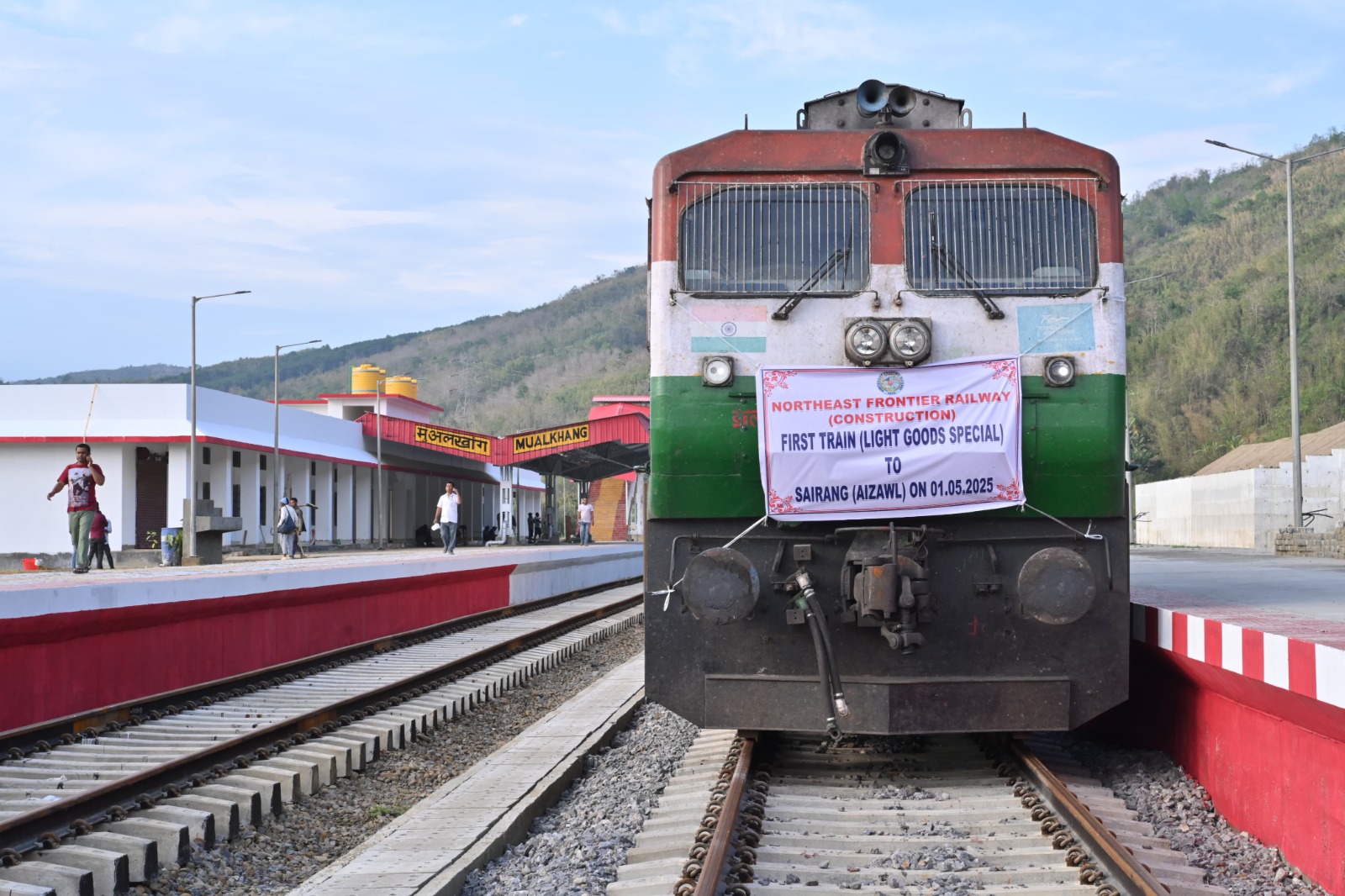
Financing for the project has steadily progressed, with ₹7,714 cr disbursed from a sanctioned ₹8,215 cr. Construction started in 2015, accelerated post‑2016, and has overcome hurdles like monsoon disruptions and the 2023 bridge collapse that claimed 26 labourers. Trial operations reached Sairang on 1 May, signalling near‑completion. Economists and local leaders expect substantial economic and social dividends. Shortened travel times to Assam, improved freight corridors, and better access to markets and healthcare are cited as immediate gains. Enhanced tourism prospects, especially eco‑tourism in Mizoram’s lush landscapes, are anticipated to accelerate the region’s growth potential.
Aligning with the Centre’s Act East Policy, extension surveys are already underway to stretch connectivity from Sairang to India–Myanmar frontier at Zochachhuah. Meanwhile, Mizoram has ramped up online Inner Line Permit procedures and railway police staffing to secure transit and tribal sensitivities. From a sustainability lens, the shift toward rail connectivity supports low‑carbon transport and equitable urban access, mirroring the editorial goals of eco‑friendly, gender‑neutral, resilient cities. The Bairabi–Sairang line is not merely a rail corridor—it exemplifies infrastructure as empowerment, binding remote communities into India’s emergent green urban narrative.
As the CRS report is now forwarded to the Ministry of Railways, formal commissioning is expected by end‑June or early July. PM’s anticipated inauguration will thus signify both a technical culmination and a symbolic milestone in India’s Northeast policy, affirming the government’s focus on connectivity‑driven growth.
Also Read: Bengaluru train electrification delayed due to power line issues
