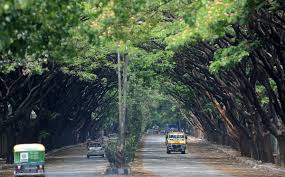
Perambalur District to Go Green with Highway Avenue Trees
The State Highways Department in Perambalur district has launched a major tree-planting initiative. The ambitious project aims to plant 10,000 indigenous tree saplings along State highways and major district roads, creating a green corridor that will serve as a natural air filter and a symbol of the city’s commitment to environmental stewardship. This forward-thinking strategy not only seeks to mitigate the impact of vehicular pollution but also to enhance the aesthetic appeal of the region, aligning with a broader agenda of building equitable and eco-friendly cities for a better future. The move is a testament to the district’s proactive approach to balancing infrastructural development with ecological preservation.
The initiative, which has been launched with the support of senior officials, is being implemented across three subdivisions: Perambalur, Kunnam, and Veppanthattai. The plan allocates 3,500 saplings for the Perambalur and Kunnam divisions each, while the Veppanthattai subdivision will receive 3,000 saplings. The project began recently, with officials marking the start by personally planting saplings along the Senjeri-Koneripalayam highway. This ceremonial start underscores the importance of public participation and leadership in driving sustainable change. The choice of planting indigenous species is a key aspect of this project, as these trees are better adapted to the local climate and require less maintenance, making the initiative both eco-friendly and cost-effective in the long run.
The planting will take place along several key stretches, including the Ariyalur-Alathur-Chettikulam-Senjeri route, the Perambalur Bypass road, and the Mathur-Thittakudi highway, among others. The officials confirmed that saplings will be planted on either side of the roads wherever land is available. If space is a constraint, a single-sided plantation will be undertaken to maximise the green cover. This flexible approach ensures that the project can be implemented comprehensively, regardless of the on-ground challenges. The trees, ranging from six to ten feet in height, are being sourced and will be meticulously maintained by the department, ensuring their long-term survival and growth.
The selection of tree species like vembu, magizham, mahagani, and naaval is not arbitrary. These native trees are known for their resilience and ability to thrive in the local soil conditions. Each sapling will be protected with a tree guard to prevent damage, and a regular watering schedule has been put in place to ensure they establish themselves successfully. The entire planting process for all 10,000 saplings is scheduled to be completed by October, a strategic timeline that takes advantage of the favourable weather conditions.
This initiative is a powerful example of how public infrastructure projects can be used as a tool for environmental restoration and social equity. By creating a green network along the highways, the district is not only improving air quality but also providing shade and a more pleasant travel experience for commuters. The project’s success will serve as a blueprint for other regions to follow, demonstrating that with careful planning and dedicated implementation, it is possible to build prosperous cities that are in harmony with nature. It is a vital step towards a future where development is not at the expense of the environment but is instead a catalyst for its renewal and rejuvenation.