


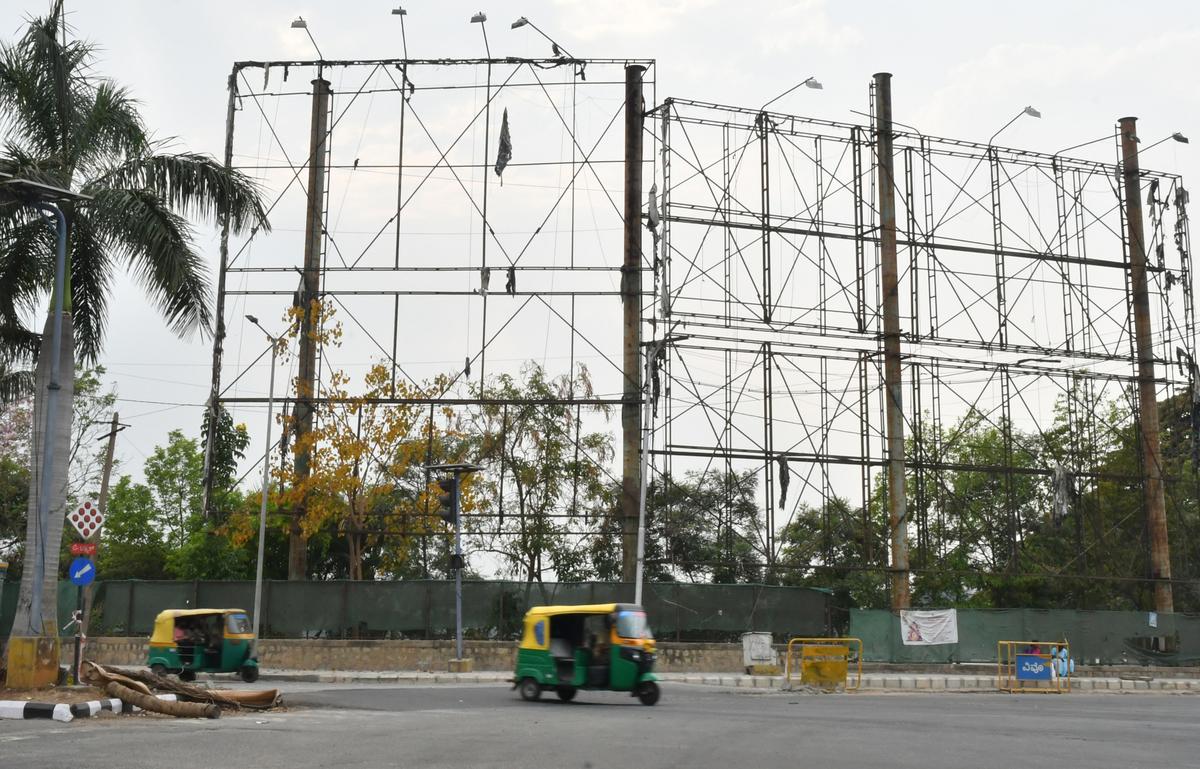
In a significant move to regulate urban advertising, the Pimpri Chinchwad Municipal Corporation (PCMC) has decided to discontinue issuing permissions for temporary flex displays under its jurisdiction. This decision follows widespread misuse of the previously introduced online permission system, where flexes were often erected beyond the designated spots. This crackdown aims to address the uncontrolled proliferation of temporary flex that had started to clutter public spaces and violate zoning regulations.
The online permission system, initially introduced to streamline the installation of temporary flex, allowed applicants to book one of 135 approved spots across various wards for a period of up to seven days. However, the system, which required a nominal fee, was misused by applicants who installed flex in unauthorised locations, leading to chaos and visual pollution. As a result, PCMC officials have now confirmed that no further permissions will be granted for temporary flex installations. According to Pradip Thengal, Deputy Municipal Commissioner and head of the PCMC’s Sky Sign Department, the decision came after a detailed review and approval by the municipal commissioner during a standing committee meeting.
Despite the growing concern over illegal flex displays, activists argue that the ban alone will not solve the underlying issue. Madhav Patil, founder of the NGO Angholichi Goli, highlighted that many small-scale businesses and local politicians, unable to afford expensive legal hoardings, resort to illegal flex installations as an affordable alternative. In his view, the absence of affordable advertising solutions forces individuals into violating the law, pointing to a gap in the city’s urban planning and sustainability approach.
The ban also follows the civic body’s efforts to address the issue in the lead-up to the assembly elections, during which over 36,000 illegal hoardings were removed. Despite these efforts, the PCMC recovered only Rs 47,000 in fines, underscoring the challenge of managing urban advertising in a city that is rapidly growing and urbanising. The challenge of striking a balance between regulation, accessibility, and sustainability remains at the forefront of the civic body’s concerns. For a city like Pimpri Chinchwad, which is undergoing significant urban development, finding a sustainable solution for street advertising is essential to maintaining visual appeal, safety, and quality of life.
