


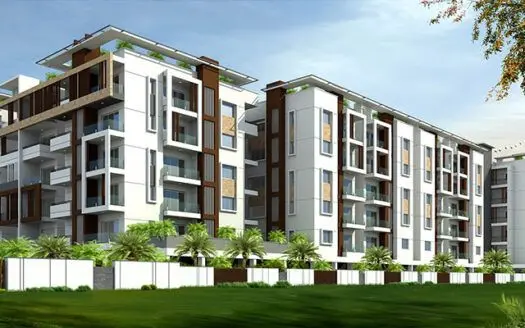
Hyderabad’s Financial District is witnessing a new intersection of healthcare discourse and high-density urban development, as a city-based developer formally introduced a wellness-oriented residential tower during an international medical leadership gathering held in the western business corridor of the city. The announcement signals how premium housing in Hyderabad is increasingly aligning with health outcomes, open-space planning, and lifestyle infrastructure rather than scale alone.
The project, planned as a 55-storey residential tower, is positioned within the Financial District an area that has emerged as one of Hyderabad’s fastest-growing mixed-use zones, anchored by IT campuses, hospitals, and regional transport links. Urban planners note that the district’s evolution reflects a broader shift in Indian cities, where commercial growth is now closely followed by demand for high-quality, low-density residential environments catering to professionals with global exposure. The timing and setting of the project’s unveiling were significant. The launch coincided with a closed-door healthcare leadership meet that brought together senior representatives from international and Indian medical bodies, along with hospital administrators and clinicians. While the event focused on cross-border healthcare leadership, the residential announcement underscored how wellness narratives are increasingly shaping real estate design decisions in metropolitan India. According to project details shared at the event, the development places a strong emphasis on open landscapes, natural ventilation, and spatial planning intended to support physical and mental well-being. Around three-fourths of the site area is allocated to landscaped or open spaces, a ratio that urban designers say remains uncommon in high-rise luxury developments within Indian business districts. Such planning approaches are being closely watched as cities grapple with heat stress, air quality challenges, and declining per-capita open space.
The tower is planned to house a limited number of large-format residences, reflecting a trend toward ultra-low-density vertical living. Market analysts observe that Hyderabad’s premium housing segment has increasingly favoured fewer units per acre, larger floor plates, and integrated wellness amenities, particularly in western micro-markets such as the Financial District, Nanakramguda, and Kokapet. From an urban economy perspective, developments of this nature indicate growing confidence in Hyderabad’s long-term liveability and employment base. The city continues to attract global capability centres, healthcare investment, and institutional capital, reinforcing demand for residential formats that combine proximity to work hubs with healthier living environments. Urban policy experts caution, however, that while wellness-led luxury projects can raise design benchmarks, their broader impact will depend on how such principles influence mid-income housing, public realm planning, and citywide environmental resilience. The challenge ahead lies in translating wellness-driven design from niche developments into scalable urban solutions.
As Hyderabad expands westward, projects that integrate health, density management, and climate-responsive design may increasingly shape how the city balances growth with long-term urban sustainability.
Also Read: Hyderabad Residential Registrations Rise 14 Percent
Pavani Infra Signals Wellness Shift In Luxury Housing
