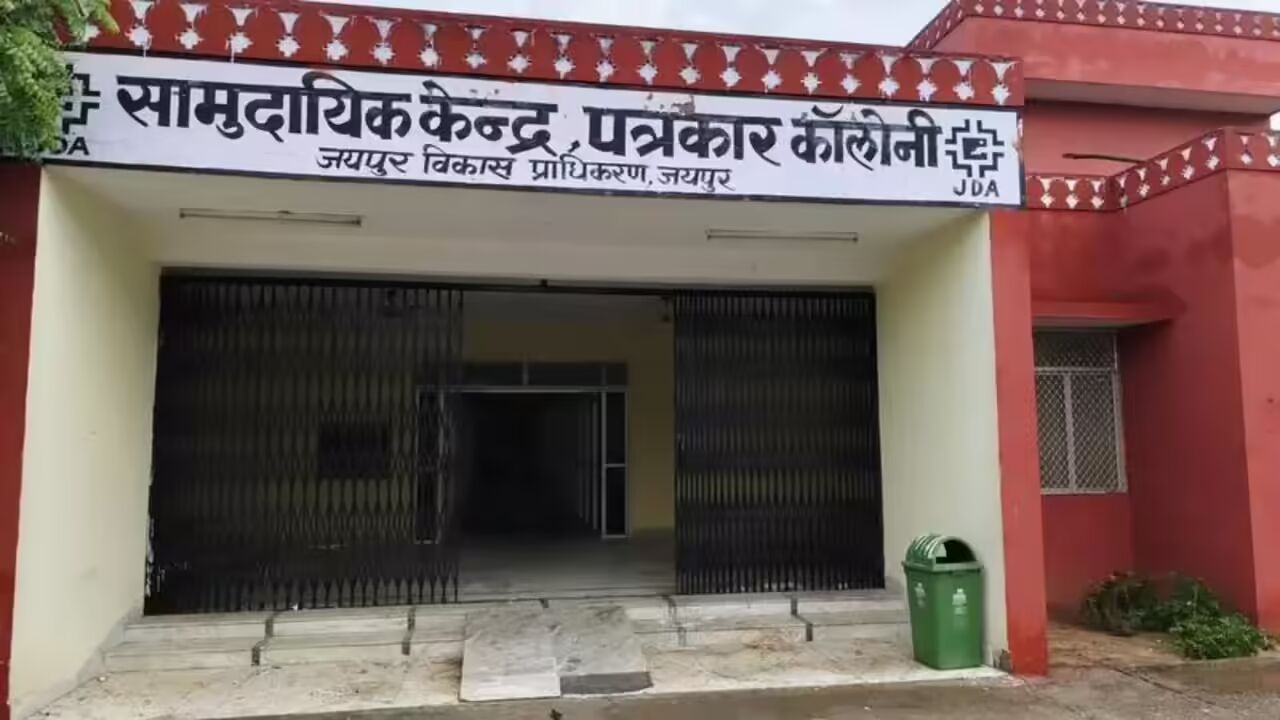
Patrakar Colony Residents See Relief As HC Orders Vacate Notice
The Jaipur High Court has directed the Jaipur Development Authority (JDA) to proceed with vacating an unauthorised community centre in Patrakar Colony, reinforcing legal protections for planned land use and signaling a renewed focus on statutory compliance in urban residential areas.
The order comes amid long-standing disputes over land classification, zoning norms and encroachments that have raised broader questions about governance, neighbourhood equity and public space integrity in fast-growing city sectors. Residents of Patrakar Colony had petitioned the court, contending that a community centre building — constructed on land originally earmarked for residential and amenity space — was established without requisite approvals and in violation of development control regulations. After reviewing administrative records and hearing arguments from both sides, the High Court ruled that the structure needed to be vacated and relevant regulatory protocols upheld, directing the JDA to implement the order in a defined timeline. Urban planners note that such judicial interventions underscore the challenges that rapidly expanding cities like Jaipur face in reconciling community needs with statutory land-use frameworks.
Planned residential neighbourhoods are typically governed by a defined set of zoning rules intended to balance housing, open space, infrastructure and civic amenity provisions. When deviations occur without clear authorisations, they can undermine orderly development and create service gaps, including pressure on drainage, roads and utilities. For local residents, the community centre was both a gathering point and a source of contention: while some appreciated its role for meetings and social functions, others warned that its unregulated operations infringed on municipal bylaws, compromised planned open space and contributed to traffic and parking pressures in an already congested colony layout. The High Court’s intervention reflects the need for transparent adjudication when informal practices intersect with formal planning regimes.
The case also highlights the role of urban development authorities in enforcing land-use norms. JDA had previously issued notices regarding irregularities, but enforcement lagged, prompting residents to seek legal redress. By upholding regulatory frameworks and directing action, the judiciary has signalled that land-use governance requires consistent application of rules, especially in residential zones where deviations can have knock-on effects on community amenities and infrastructure performance. In broader terms, the order dovetails with ongoing efforts to sustain liveable neighbourhoods amid Jaipur’s rapid population growth and spatial expansion. As sectors and colonies evolve, maintaining clarity on permitted land uses and adhering to master plan provisions becomes critical to preventing piecemeal development that can stress service systems and dilute the quality of communal spaces.
Experts emphasise that resolving such disputes through legal and administrative channels — rather than ad-hoc negotiations — preserves the credibility of planning instruments and ensures that infrastructure investments align with intended outcomes. Consistent enforcement also sends a clear signal to developers, resident associations and civic authorities about the importance of procedural adherence in urban development. For Patrakar Colony, the immediate consequence will be the removal of an unauthorised structure and the restoration of land for its planned purposes, potentially freeing space for sanctioned amenities or open areas. Long-term, the episode may catalyse more proactive engagement between residents and municipal planners to align community needs with statutory planning frameworks.
As Jaipur continues to grow and densify, balancing local aspirations with legal land-use norms will remain a central challenge. Authorities will need to combine vigilant enforcement with participatory planning approaches that allow citizens to contribute to neighbourhood design without compromising regulatory integrity.