Patna Water Metro Infrastructure Work Starts On Ganga
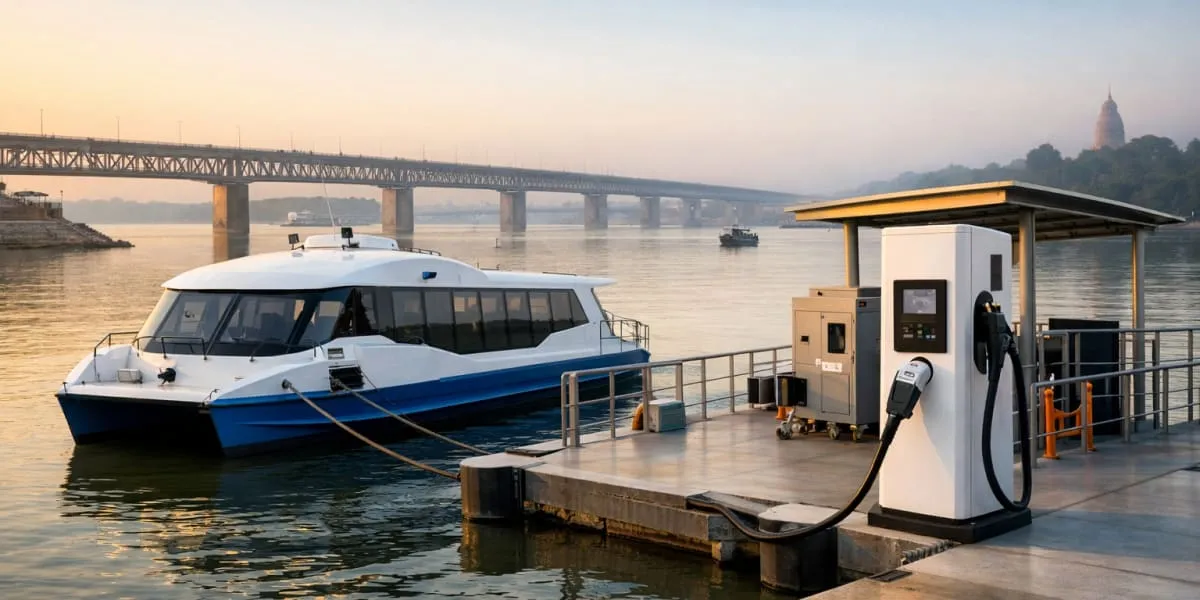
Patna: Work has begun on key infrastructure for the proposed Patna water metro, with construction activity starting at a riverfront terminal where a charging facility will power electric ferries planned for the city’s upcoming river transit system.
The development marks the first visible step toward integrating the Ganga into Patna’s urban transport network, a move expected to reshape mobility along the city’s dense riverfront corridor. The charging installation is being built at a prominent ghat along the Ganga and will supply electricity to battery-powered passenger vessels operating on the initial corridor. Officials involved in the project say the charging hub is a critical operational component, enabling clean-energy boats to run frequent services between multiple riverfront stops without relying on conventional diesel engines.
The first phase of the Patna water metro is planned as a 10.5-kilometre corridor connecting major ghats across the city’s riverbank, linking residential neighbourhoods and heritage areas that currently depend heavily on road transport. The route will connect several important riverfront points, creating a parallel transit system that bypasses congested city roads and bridges. Transport planners say the initiative represents a strategic shift toward utilising inland waterways for daily commuting rather than limiting river routes to tourism or freight. Patna’s expanding population and limited road capacity have intensified traffic bottlenecks, particularly along corridors linking western and eastern parts of the city. A functioning water-based transit system could provide commuters with a faster and potentially more reliable alternative during peak hours.
The project is estimated to cost about ₹908 crore and is being implemented through collaboration between the national inland waterways authority and the state government, with technical support from a public sector shipbuilder responsible for designing the vessels. Urban infrastructure experts note that water-based mobility solutions are gaining attention in Indian cities located along major rivers. Electric ferries, when paired with charging infrastructure and integrated ticketing systems, can reduce emissions while easing pressure on road networks. For river cities like Patna, the approach also allows planners to activate underused waterfront assets as part of a broader urban mobility strategy.
Officials familiar with the plan indicate that additional charging facilities will be installed at other terminals as the corridor expands. The long-term blueprint envisions multiple routes across the Ganga and adjoining stretches, potentially extending services to neighbouring districts across the river. Beyond transportation, the Patna water metro is expected to influence riverfront development, tourism activity and local commerce along the ghats. If implemented effectively, the system could demonstrate how river-based transit can complement conventional metro rail and bus networks in rapidly growing cities.
As construction progresses on terminals and charging infrastructure, the next phase will focus on vessel deployment, safety systems and integration with city transport hubs. For Patna, the success of this experiment may determine whether waterways can become a practical pillar of sustainable urban mobility in India’s river cities.