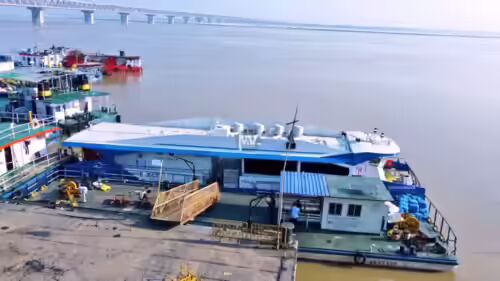
A new chapter in river-based urban mobility is unfolding in Bihar’s capital as the first operational stretch of the Patna Water Metro begins connecting key riverfront locations along the Ganga, offering residents and visitors an alternative mode of transport through the city’s historic ghats.
The initial corridor highlights major stops such as Gandhi Ghat and Gaighat, forming part of a wider water-transport network planned along the river. Urban mobility planners say the service marks an early step toward integrating waterways into the city’s broader transport ecosystem while easing pressure on congested road corridors. The Patna Water Metro project has been designed around a roughly 10.5-kilometre river route in its first phase, linking several ghats along the Ganga. The corridor connects locations including Digha, Gandhi Ghat, and Gaighat while passing other riverfront points expected to become transport terminals in later phases.
Officials involved in the project say the water metro is intended to complement ongoing investments in rail metro infrastructure and road networks in the city. The initiative aims to create a multi-modal transport system in which river ferries, metro rail, and road transport together improve commuting efficiency across the urban region. The project is estimated to cost around ₹908 crore and is being implemented through collaboration between the Bihar government and national inland waterways authorities. The fleet will include electric or hybrid ferries capable of carrying around 100 passengers, with accessibility features such as wheelchair-friendly spaces and air-conditioned cabins.
Urban planners see the river corridor not only as a transport system but also as a strategy for revitalising the Ganga riverfront. Several ghats along the route are expected to develop into integrated terminals combining passenger jetties, tourism infrastructure, and public spaces that encourage greater engagement with the riverfront. Beyond commuting, the Patna Water Metro is also expected to support tourism and regional connectivity. The longer-term plan proposes expanding services to additional terminals and potentially linking nearby districts such as Hajipur, Sonepur and other settlements along National Waterway-1, strengthening economic ties across the Ganga basin.
Experts note that water-based transport offers significant environmental advantages for dense urban regions. Electric ferries operating along the river produce far lower emissions than road-based vehicles and can reduce traffic congestion by shifting a portion of daily travel to waterways. Such systems have already demonstrated success in cities like Kochi, where water metro services have become an integral part of public transport networks. Replicating similar models in river cities like Patna reflects a growing policy shift toward sustainable and climate-sensitive mobility systems.
As the first corridor begins operations, attention will turn to expanding terminals, integrating ticketing systems with other public transport networks, and ensuring consistent passenger demand. If implemented at scale, the water metro could reshape how residents move across the riverfront city—turning the Ganga from a geographic barrier into a central transport corridor for Patna’s evolving urban landscape.