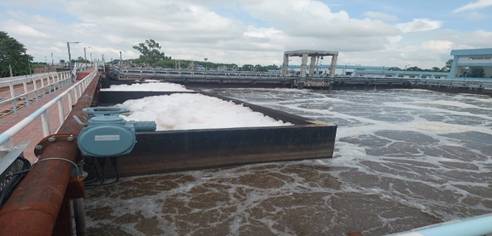
Patna Wastewater Mapping Shifts River Cleaning Focus
A new scientific assessment of urban wastewater flows in Patna is reframing how policymakers approach river restoration, with evidence showing that city drains—not just large treatment plants—hold the key to improving water quality in the Ganga River. The findings point to a structural gap in current river-cleaning strategies, with implications for infrastructure planning across India’s riverine cities.
The study, based on geographic information systems (GIS) and seasonal water quality analysis, tracks how untreated wastewater entering the river through multiple drains alters its chemical composition at different points and times of the year. It highlights that pollution is not uniform but varies depending on flow patterns, local discharge points, and seasonal fluctuations. For urban planners, this shifts the focus from centralised solutions to decentralised, drain-level interventions. While large-scale programmes such as the National Mission for Clean Ganga have invested in sewage treatment plants and riverfront upgrades, experts argue that these measures alone cannot address dispersed pollution sources embedded within city drainage networks. The Patna drain mapping exercise underscores how legacy infrastructure—often under-capacity or poorly maintained—continues to channel untreated sewage directly into the river. Researchers emphasise that even advanced treatment facilities lose effectiveness if upstream drainage systems remain unregulated. This disconnect between network-level planning and city-scale infrastructure has been identified as a recurring challenge in river rejuvenation efforts.
The implications extend beyond environmental health. The Ganga supports millions of livelihoods, from agriculture to informal economies along its banks. When pollution levels spike, it affects not only ecosystem stability but also public health and economic productivity. Studies indicate that urban sewage remains one of the dominant contributors to river contamination, often overwhelming existing treatment capacities. From an urban development perspective, the findings highlight the need for integrated water management systems that treat drains as critical infrastructure rather than peripheral channels. This includes mapping pollution hotspots, installing decentralised treatment units, and improving monitoring mechanisms to ensure compliance across municipal systems. Climate resilience also emerges as a key dimension. Seasonal variations in river flow—particularly during dry periods—reduce the Ganga’s ability to dilute pollutants, amplifying the impact of untreated discharge. As climate variability intensifies, cities like Patna will need adaptive infrastructure that can respond to fluctuating water volumes and pollution loads.
Urban policy experts suggest that future investments must prioritise last-mile wastewater management, ensuring that pollution is intercepted before it reaches the river. This could involve retrofitting old drainage systems, integrating real-time data monitoring, and aligning municipal governance with basin-level environmental goals. As India continues to invest in river rejuvenation, the Patna case illustrates a critical lesson: effective cleanup depends as much on invisible urban systems beneath city streets as on visible interventions along riverbanks. Bridging this gap could redefine how cities balance growth with ecological sustainability.