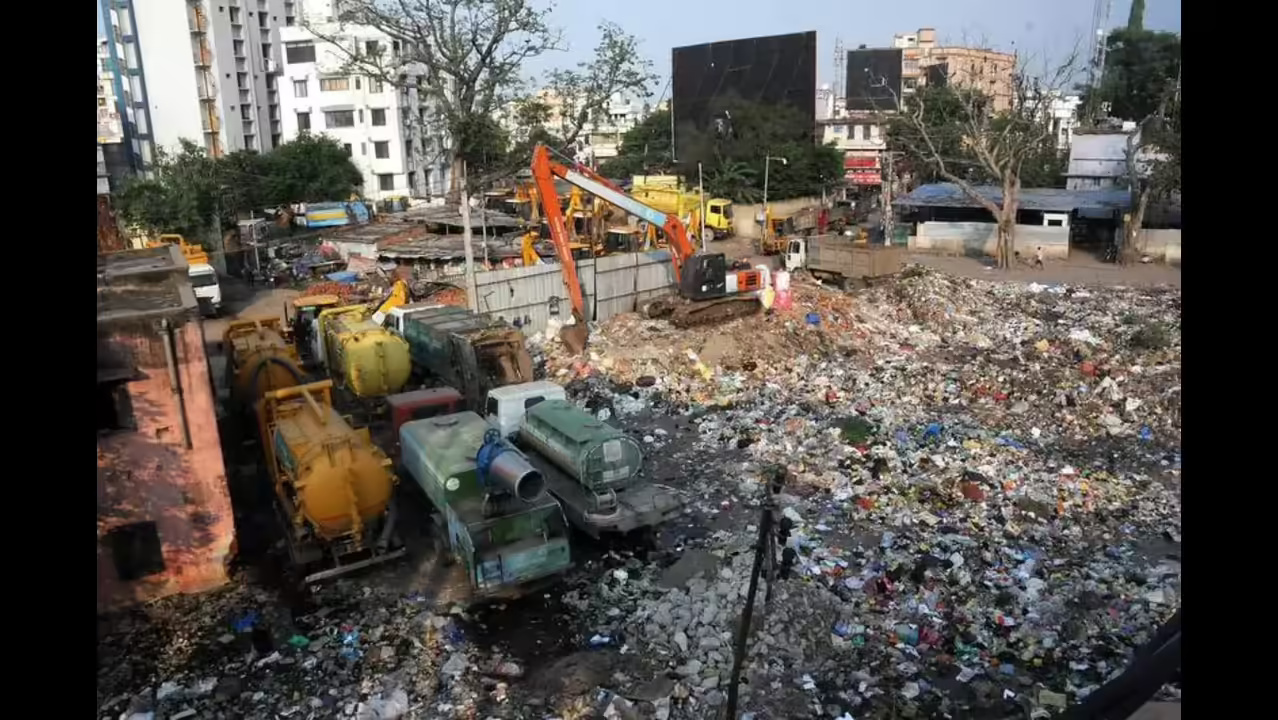
Patna is preparing for a major shift in how it handles urban waste, with a new Integrated Solid Waste Management (ISWM) plant expected to significantly reduce dependence on open dumping and improve the city’s long-term environmental sustainability. The project, which has been under planning for several years, is designed to process municipal solid waste through modern segregation, recycling, and treatment systems instead of relying on traditional landfill methods.
According to recent civic updates, the ISWM plant will introduce mechanised waste sorting, composting, and material-recovery processes, marking one of the most significant waste-management upgrades for the city in recent years. Urban planners say the development is particularly important for fast-growing cities such as Patna, where waste generation has increased sharply due to population growth, real-estate expansion, and rising consumption. In many tier-two cities, infrastructure for handling waste has not kept pace with urban growth, resulting in landfill pressure, air pollution from waste burning, and growing environmental risks. The new ISWM plant is expected to address these challenges by introducing a more structured waste-processing system. Instead of transporting large volumes of unsegregated waste to dumping grounds, the facility will focus on separating organic waste, recyclables, and non-recyclable material at scale. Officials say this could substantially reduce the volume of waste that ends up in landfills and improve overall urban cleanliness.
The move also aligns Patna with a broader national shift toward sustainable waste management. Several cities across India have recently launched similar projects aimed at achieving scientific waste processing and reducing landfill dependency. For instance, Lucknow has already reported 100 per cent scientific processing of municipal waste after commissioning new treatment facilities, demonstrating how integrated waste-management systems can transform urban environmental outcomes. Experts say the significance of the ISWM plant goes beyond sanitation. Modern waste-processing facilities often become part of the circular economy by converting organic waste into compost, recovering recyclable materials, and reducing greenhouse-gas emissions caused by uncontrolled dumping. In growing cities, such infrastructure can also improve public health outcomes by reducing air pollution and contamination of nearby water bodies.
The project is also being viewed as a critical step toward climate-resilient urban planning. Cities that continue to rely heavily on open dumping are likely to face increasing environmental and regulatory pressure in the coming years. By investing in scientific waste-processing infrastructure now, Patna could reduce long-term environmental costs and improve the quality of life for residents, especially those living near dumping sites. However, urban experts caution that the success of the ISWM plant will depend not only on infrastructure but also on consistent waste segregation at the household level and reliable door-to-door collection systems. Without these, even modern waste-processing facilities struggle to achieve their full potential.
If implemented effectively, the project could mark a turning point in how Patna manages one of its most persistent urban challenges. The real test will be whether the city can sustain the system over the long term and expand it alongside future population growth.