


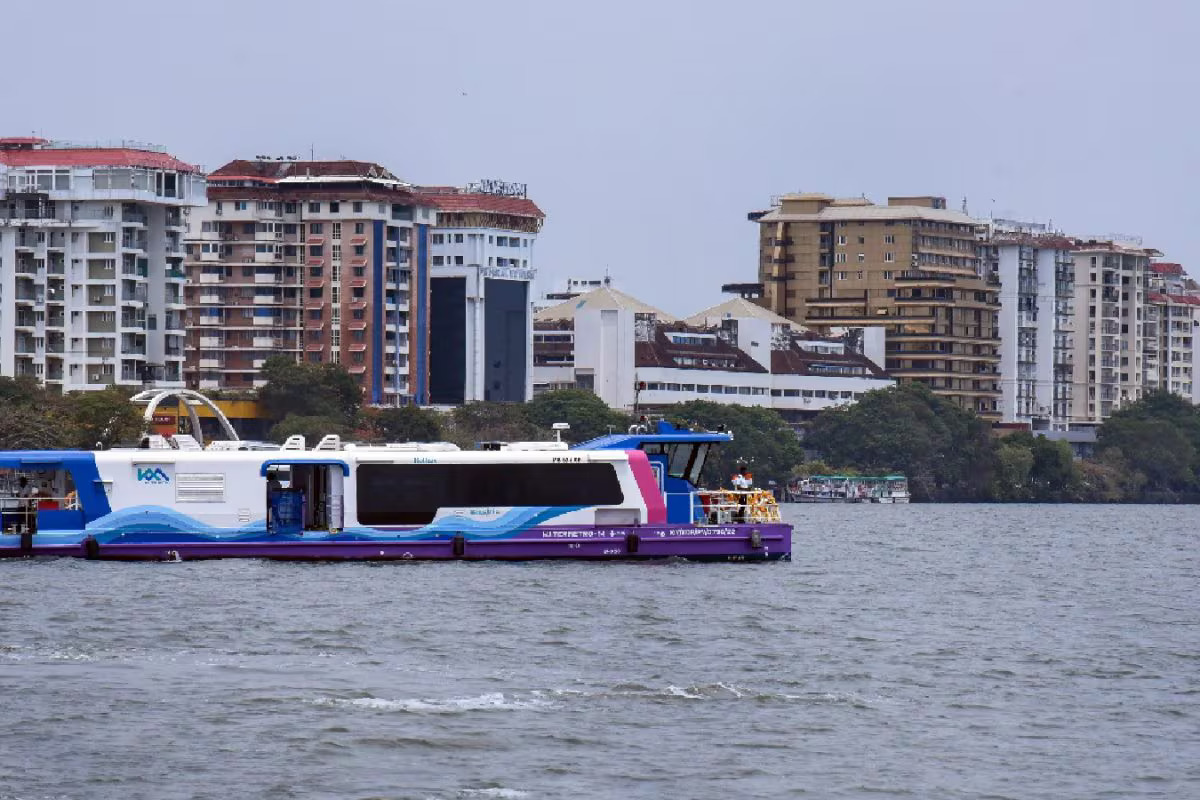
Patna is set to introduce a Water Metro and establish an inland ship repair and construction hub, aiming to revitalise the Ganga as a clean, efficient, and sustainable mobility and logistics corridor under the Centre’s National Waterways development agenda.
The initiative was unveiled at Patna’s inaugural National Waterways-1 (NW-1) consultative workshop, chaired by the Union Minister of Ports, Shipping and Waterways. Attended by central and state dignitaries—including senior officials from Bihar, Uttar Pradesh, Jharkhand, and West Bengal—the event marked a decisive step towards realigning river transport as a cornerstone of urban infrastructure and regional commerce . Fundamental to Patna’s transformation are two core projects: a Water Metro system linking riverbanks with clean electric vessels, and a ship repair and construction facility in the city. Inspired by the successful Kochi Water Metro, authorities envision a modern, low-carbon commuter network offering a viable alternative to congested roads . Likewise, the shipyard is expected to bolster local industry by enabling maintenance and construction of inland vessels, reducing logistic costs and creating skilled employment opportunities .
Sonowal also announced the establishment of 16 additional community jetties alongside the existing 21 in Bihar. These docking points will improve access for farmers, artisans, and small traders, enabling direct river-to-market logistics. The development includes Two Ro-Pax terminals and deployment of hybrid electric catamaran vessels for eco-friendly public transit \. A Joint Task Force—comprising the Bihar government, the Ministry of Ports, Shipping & Waterways, and IWAI—will oversee sustainable waterway development. Meanwhile, a strategic upgrade of the National Inland Navigation Institute in Patna into a Centre of Excellence demonstrates a commitment to capacity-building in riverine navigation.
The broader context for these developments is the Jal Marg Vikas Project (JMVP), which has extended the operational capacity of NW‑1 across 1,390 km from Haldia to Varanasi. With 69% completion to date, JMVP encompasses multimodal terminals, navigational locks, and eco-conscious features like bio‑toilets and dolphin‑safe dredging. Cargo throughput on India’s waterways has surged from 18.1 MMT in FY14 to a record 145.5 MMT in FY25, with annual growth averaging nearly 21%. These figures reflect ninefold increases in navigable waterways and terminal infrastructure since 2014 . Partnerships like the recent IWAI–Rhenus MoU further enhance capacity through deployment of barges and pusher tugs to reinforce scheduled cargo operations across NW‑1, NW‑2 and NW‑16. In addition, the Kalughat intermodal terminal in Bihar has received a five‑star SVAGRIHA green rating, underscoring the project’s commitment to environmentally sustainable logistics infrastructure.
Economists and urban planners see inland waterways as an effective tool against urban transport challenges. By shifting heavy and bulk cargo from roads and rails, river-based transit can significantly reduce emissions while relieving congestion . The integrated approach also promises increased mobility options for women and micro-entrepreneurs, aligning with equity-driven urban design principles . However, the scheme faces distinct challenges. River dynamics demand continuous dredging and fairway management to maintain navigability—issues that IWAI addresses through extensive depth surveys and dredging schedules. Moreover, ensuring consistent, affordable power for electric vessels and prompt coordination with urban transport nodes will be critical for operational viability.
Infrastructure development will require precise alignment between river agencies, state governments, and urban planners. Lessons from JMVP and ports-led inland expansion suggest that private participation, such as MOUs with logistics firms, is vital—and Bihar has already laid out land for shipyard construction in Patna and a multimodal terminal in Bhagalpur. The economic upswing expected from Patna’s waterways stretch is significant. IWAI projects over 50,000 direct and indirect jobs through dredging, vessel operation, terminal management, and ancillary services. Agriculture, fisheries, and tourism stand to gain from improved river access and connectivity.
The success of Patna’s waterways initiative would set a powerful precedent for other riverine cities. As cities advance their climate and sustainability goals, river transport offers a zero‑carbon urban option, especially when powered by electric boats, bio‑toilets, and riverbank ecology protection. Yet, the real test lies in execution. Community inclusion, climate resilience, and transparent governance will mark the initiative’s legacy—whether Patna becomes a true model of green waterways integration or remains an aspirational policy document.
Also Read : Ahmedabad Fast Tracks Industrial Growth With Infrastructure Push
