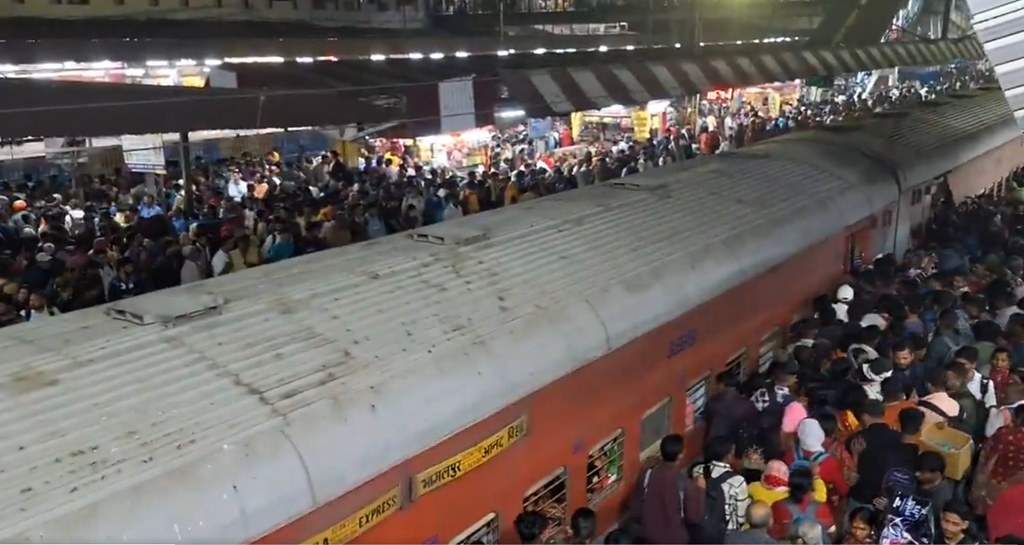
Patna Station Security Boost Signals Crowd Management Shift
Railway authorities have strengthened security arrangements at major stations in Patna ahead of the upcoming Ram Navami celebrations, responding to an expected surge in passenger movement across one of eastern India’s busiest travel periods. The move reflects a broader attempt to manage crowd pressure at transport hubs that are increasingly central to the region’s growing urban mobility network.
According to officials familiar with the arrangements, additional personnel have been deployed at key railway stations, with intensified monitoring through CCTV systems and closer coordination with city police. The focus is not only on preventing security incidents but also on ensuring smooth passenger flow during peak festival travel, when short-distance commuters and pilgrims tend to crowd platforms and concourse areas. The timing is significant for Patna, where the main station handles some of the highest passenger volumes in Bihar and continues to serve as a primary gateway to the state. With facilities such as multiple entry points, large waiting halls, and connections to upcoming metro infrastructure, the station has evolved into a major urban transport node rather than just a transit stop. City authorities are also implementing wider security measures across Patna ahead of Ram Navami, including large-scale police deployment and layered surveillance in crowded public areas.
For transport planners, the railway security push forms part of a larger pattern: festivals in densely populated cities increasingly require integrated crowd-management strategies that combine railways, local policing, and urban traffic systems. Urban planners say such steps highlight the growing importance of railway stations in the broader urban ecosystem. In cities like Patna, stations are not only transit points but also informal economic zones, with thousands of daily commuters, small vendors, and short-distance travellers depending on them. Any disruption during peak festival travel can quickly spill over into traffic congestion, safety risks, and pressure on civic services. There is also a longer-term infrastructure implication. Repeated large-scale security deployments during festivals underline the need for more resilient station design — including wider platforms, better crowd-control systems, improved passenger circulation, and safer entry points. As urban populations expand and rail remains the most affordable form of inter-city travel in eastern India, the demand for safer and more efficient transport infrastructure is expected to grow steadily.
For now, the enhanced security arrangements are expected to help manage the immediate rush and reduce risks during one of the busiest travel windows of the year. The next challenge for authorities will be ensuring that these temporary measures evolve into permanent upgrades, especially as Patna continues to position itself as a major regional transport and economic hub.