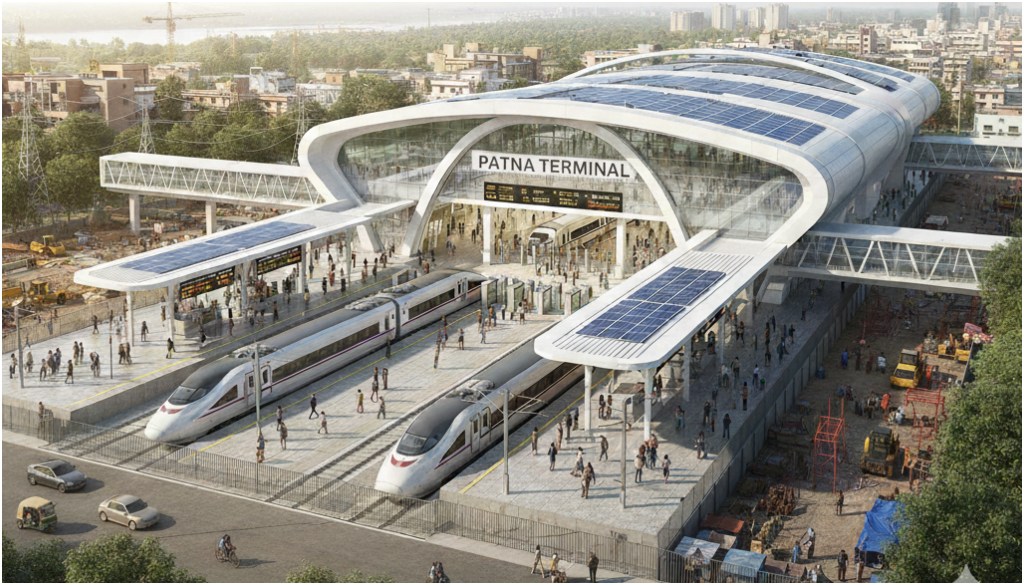
Rail infrastructure modernisation in Bihar is entering a faster execution phase, with work accelerating across 22 stations under the Amrit Bharat station redevelopment Patna initiative. The push reflects a broader effort to upgrade passenger infrastructure while aligning regional rail networks with evolving urban mobility needs.
The ongoing upgrades are part of a nationwide programme focused on transforming railway stations into integrated transport hubs. In Bihar, the current phase targets improvements in passenger amenities, circulation spaces, and station accessibility, with authorities prioritising timely completion to minimise disruption while enhancing commuter experience. The Amrit Bharat station redevelopment Patna programme is designed to address long-standing gaps in station infrastructure, particularly in high-footfall locations. Planned interventions include modern waiting areas, improved signage systems, upgraded platforms, and better sanitation facilities. These changes are expected to streamline passenger movement and reduce congestion, especially during peak travel periods. Urban transport analysts view station redevelopment as a critical component of city planning, particularly in fast-growing regional centres like Patna. Railway stations often function as multimodal nodes, connecting long-distance travel with local transport systems. Enhancing their capacity and usability can therefore improve overall mobility efficiency, reducing reliance on road-based transport and easing urban congestion.
At a systems level, the redevelopment initiative is also aimed at standardising infrastructure quality across stations. The Amrit Bharat scheme envisions consistent design frameworks, improved accessibility for persons with reduced mobility, and the integration of digital services such as real-time information systems. For Bihar, where a large share of intercity and intra-state travel depends on rail, the impact of the Amrit Bharat station redevelopment Patna effort could be significant. Improved station environments not only enhance passenger comfort but also support economic activity by facilitating smoother movement of people and goods. Better connectivity can strengthen regional trade links and improve access to employment hubs.
The redevelopment drive is also expected to influence urban form around station precincts. Globally, upgraded transit hubs often trigger surrounding development, including commercial spaces, hospitality, and mixed-use real estate. However, experts caution that such growth must be carefully managed to avoid congestion spillovers and ensure inclusive access to upgraded infrastructure. Environmental considerations are increasingly being embedded into station design, with a focus on energy-efficient lighting, waste management systems, and improved ventilation. While not always immediately visible, such features contribute to reducing the carbon footprint of transport infrastructure over time. Execution speed remains a key factor. Accelerated timelines suggest a shift towards more coordinated project management across railway divisions, though timely delivery will depend on land availability, contractor capacity, and inter-agency coordination.
For commuters, the changes promise more reliable and comfortable travel environments. For cities like Patna, the initiative represents an incremental but important step towards modern, integrated, and user-centric transport systems. As redevelopment progresses, the next phase will likely focus on integrating these upgraded stations with broader urban mobility networks, ensuring that infrastructure investments translate into tangible improvements in daily urban life.