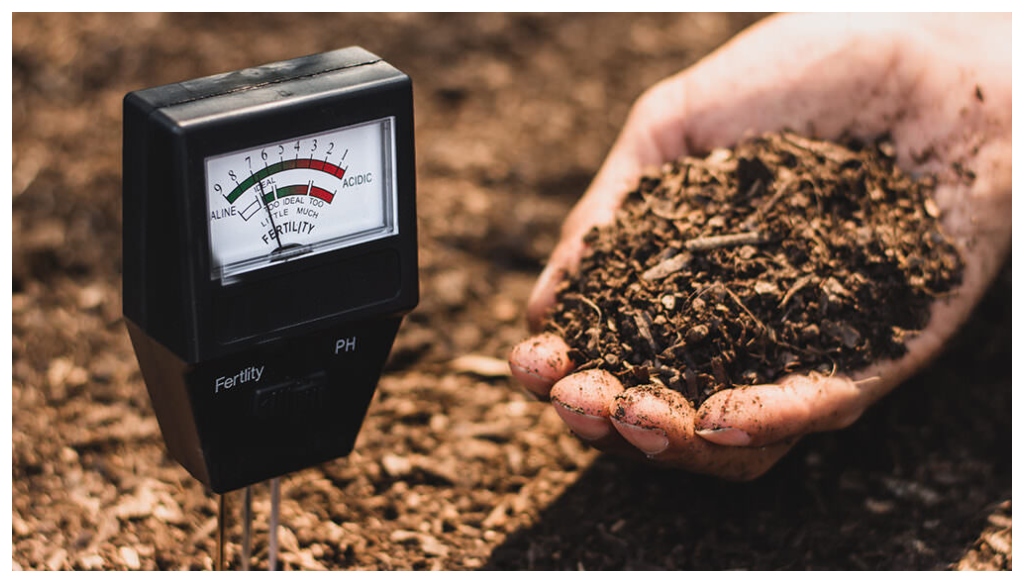
Bihar has expanded its agricultural infrastructure with the launch of 32 new soil testing centres across multiple districts, a move aimed at accelerating the adoption of data-driven and sustainable farming practices. The initiative signals a growing convergence between scientific agriculture and public infrastructure planning, as states seek to improve productivity while reducing environmental stress.
The newly operational facilities are designed to provide farmers with detailed assessments of soil health, including nutrient composition and fertility levels. Officials involved in the rollout indicate that the soil testing centres will enable more precise application of fertilisers, reducing excessive chemical use and helping restore long-term soil quality. This expansion is part of a broader effort to mainstream scientific farming across Bihar, where agricultural productivity remains closely tied to soil conditions and input efficiency. By decentralising testing facilities to the sub-divisional level, authorities aim to make soil analysis more accessible, particularly for small and marginal farmers who often lack access to laboratory services. Agriculture experts note that soil degradation—driven by imbalanced fertiliser use and declining organic content—has emerged as a key constraint on farm output in several parts of India. The new soil testing centres are expected to address this challenge by equipping farmers with actionable insights on nutrient deficiencies and crop suitability. This, in turn, can improve yields while lowering input costs, creating a more resilient agricultural system.
The initiative is also linked to the rollout of digital tools in agriculture. Alongside the laboratories, the state has introduced a digital agriculture framework to generate soil health records and support real-time monitoring of crop patterns. Such integration of data systems is increasingly seen as critical for scaling precision farming and aligning agricultural practices with climate variability. From an infrastructure perspective, the development highlights how agricultural systems are evolving beyond traditional input-based models to more knowledge-driven ecosystems. Soil testing centres function as essential rural infrastructure, much like water supply or irrigation networks, enabling informed decision-making at the farm level. The environmental implications are significant. Balanced fertiliser use not only improves soil structure but also reduces runoff into water bodies, a major contributor to pollution in river basins. In a state intersected by major river systems, better nutrient management can play a role in improving both agricultural sustainability and water quality. Economic benefits are also expected to follow. More efficient farming practices can stabilise incomes, reduce dependency on costly inputs, and support diversification into crops better suited to local soil conditions. Over time, this could strengthen rural economies and reduce vulnerability to climate shocks.
However, sector specialists emphasise that the long-term impact will depend on farmer awareness, regular usage of testing services, and timely dissemination of recommendations. Without sustained engagement, even well-established infrastructure risks underutilisation. As Bihar scales up its agricultural modernisation efforts, the success of the soil testing centres will lie in their ability to bridge science and practice—ensuring that data-driven insights translate into tangible improvements in productivity, sustainability, and rural livelihoods.