Patna Science City Expands With New Learning Galleries
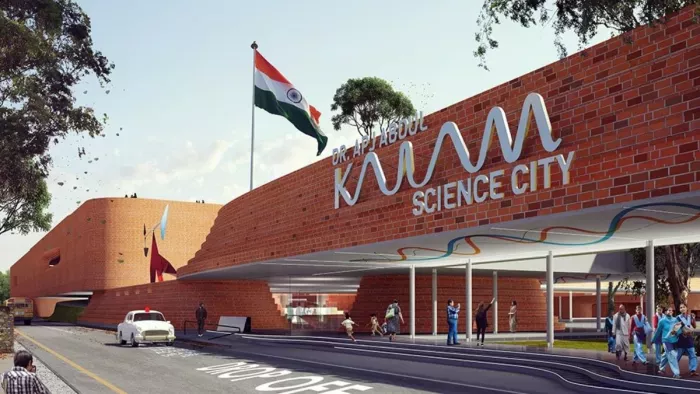
Patna: Installation work is underway to expand the learning infrastructure at Dr A P J Abdul Kalam Science City, with several new galleries and interactive exhibits being prepared to broaden public access to science education.
The expansion signals Bihar’s growing investment in knowledge infrastructure, positioning the complex as a long-term educational and cultural asset for the city. Officials overseeing the project say civil construction for five thematic galleries has already been completed across a built-up area of roughly 7,700 square metres. These spaces will eventually host nearly 269 science exhibits covering more than two dozen themes designed to engage students, families and researchers through hands-on exploration of scientific concepts.
Two sections of the complex — focused on basic scientific principles and the history of scientific achievements — are already open to visitors, drawing strong public interest since the facility began welcoming guests last year. Early installations include displays demonstrating fundamental physics concepts and emerging fields such as artificial intelligence and data analysis, reflecting an effort to connect classroom science with contemporary technological developments. Work is now progressing on three additional galleries that explore environmental sustainability, human biology and astronomy. Together, these spaces are expected to introduce more than 170 new interactive installations ranging from planetary science demonstrations to exhibits explaining climate systems and cognitive processes. The installation programme is being supervised by the country’s national science museum network in collaboration with specialised exhibit designers.
The expanded galleries are part of a broader plan to transform the science complex into a regional hub for experiential learning. Spread across roughly 20 acres near one of the city’s major sports complexes, the campus also includes an auditorium, a theatre for immersive science films and dormitory facilities intended to host visiting student groups. Urban planners note that such educational infrastructure plays a growing role in shaping knowledge-driven cities. Interactive science centres increasingly function not only as museums but also as informal learning environments where young people can experiment, collaborate and explore emerging fields such as robotics, data science and environmental technology.
For Patna, the development arrives at a time when the city is gradually expanding its cultural and academic institutions. Combined with established facilities like the Indira Gandhi Planetarium and Shrikrishna Science Centre, the science city strengthens the capital’s profile as a centre for STEM education and public science engagement. Officials involved in the project say supporting infrastructure — including water treatment and environmental management systems — is also being completed as part of the final phase of development. The exhibits currently under fabrication are expected to be installed in stages as design approvals are finalised.
Once fully operational, the expanded science complex could become a major destination for educational tourism in eastern India. For a rapidly growing urban region, the facility represents a shift toward knowledge-based public infrastructure — spaces where learning, research and civic engagement converge to shape the next generation of scientists and innovators.