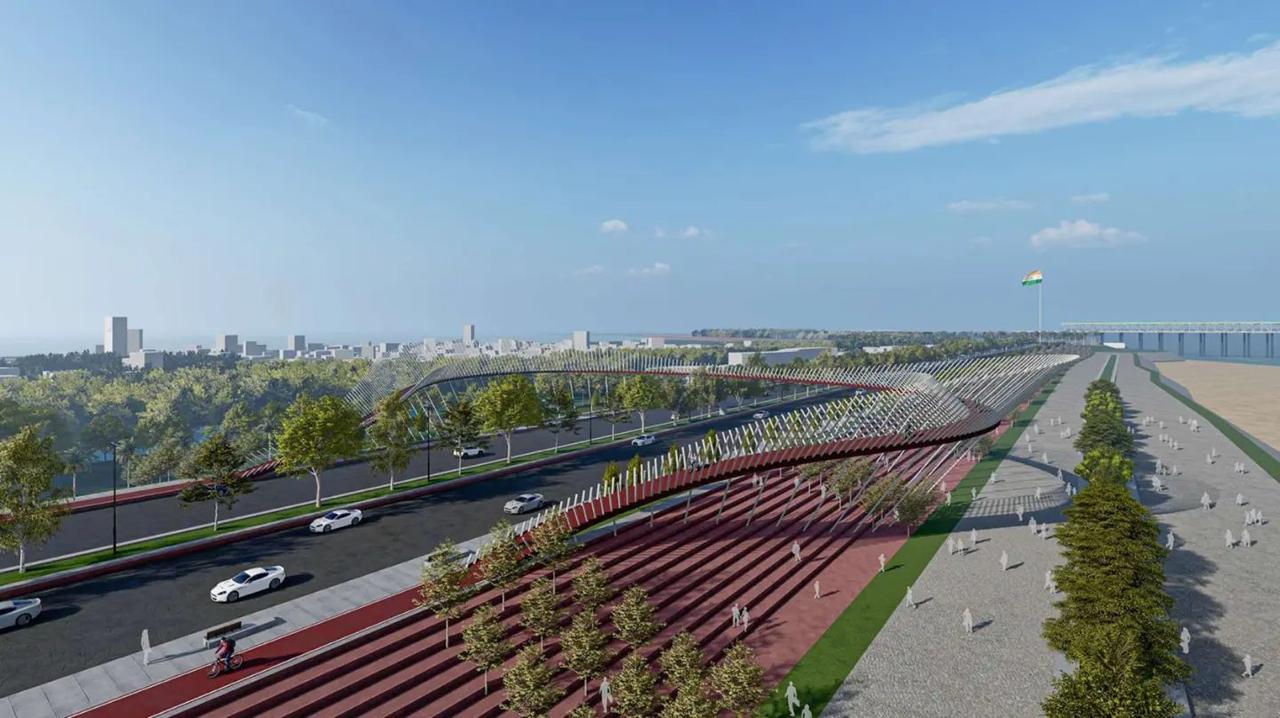
Patna Riverfront Upgrade Boosts Public Space Access
Patna’s riverfront transformation is advancing with the redevelopment of three key ghats under the Patna ghats development initiative, part of the national Namami Gange programme. The upgrades aim to improve public access, sanitation, and environmental conditions along the Ganga, signalling a broader shift in how Indian cities are reclaiming riverfronts as functional urban spaces.
The newly developed ghats—located at prominent stretches along the river—have been equipped with enhanced infrastructure, including improved pathways, lighting systems, and basic public amenities. These interventions are designed to support both daily use and high-footfall cultural events, particularly in a city where riverbanks play a central role in civic and religious life. The Patna ghats development effort reflects a growing emphasis on integrating riverfronts into urban planning frameworks rather than treating them as peripheral or seasonal spaces. Urban planners suggest that such projects can help formalise previously unstructured areas, reducing encroachments while improving safety and usability for residents.
From an infrastructure standpoint, the redevelopment includes features such as widened platforms, dedicated bathing zones, sanitation facilities, and high-capacity lighting to enhance visibility and security. In some locations, promenades and permanent structures have been added to support pedestrian movement and organised activity along the river edge. The initiative is embedded within the larger Namami Gange programme, a centrally sponsored mission focused on river rejuvenation through pollution control, sewerage infrastructure, and riverfront development. Since its inception, hundreds of projects have been sanctioned nationwide, combining environmental restoration with urban infrastructure upgrades.
Experts note that riverfront projects like the Patna ghats development can deliver multiple co-benefits when executed effectively. Improved sanitation and waste management reduce direct pollution inflow into the river, while organised public spaces can support local economies through tourism, small businesses, and cultural activities. At the same time, better-designed ghats can enhance resilience against seasonal flooding by incorporating graded steps and durable materials. However, the long-term success of such interventions depends on sustained maintenance and governance. Without consistent upkeep, infrastructure risks deterioration, particularly in high-use zones. Environmental specialists also highlight the need to balance development with ecological sensitivity, ensuring that construction does not disrupt river flow patterns or biodiversity.
For Patna, where the Ganga remains central to both identity and daily life, the redevelopment marks a shift towards more structured and accessible riverfronts. The improved ghats are expected to attract higher footfall, not just during festivals but as everyday public spaces for recreation and community use. As Indian cities grapple with climate pressures and rapid urbanisation, projects like these underscore the importance of aligning infrastructure development with environmental stewardship. The next phase of riverfront planning will likely focus on connectivity, maintenance frameworks, and integration with wider mobility and tourism networks—ensuring that such investments translate into long-term urban value.