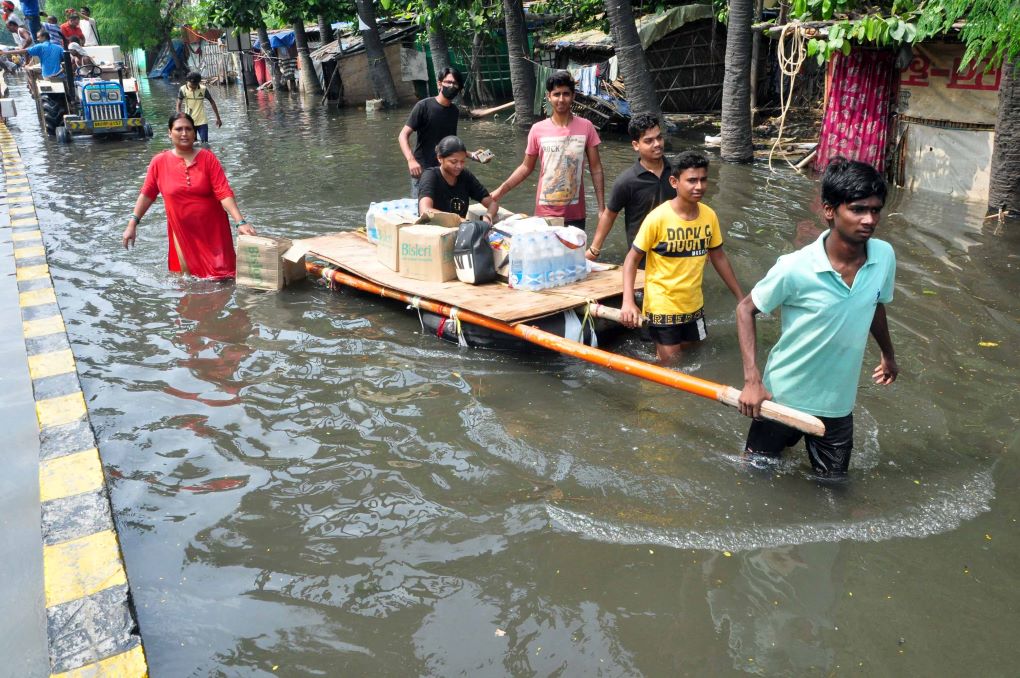
Patna has moved to fast-track long-pending drainage works in the Saidpur and Bakarganj zones, signalling a renewed push to tackle chronic waterlogging in some of the city’s most densely populated neighbourhoods.
Senior state officials have directed departments to accelerate the Saidpur Bakarganj Drain Project, citing repeated monsoon flooding, public health concerns and mounting pressure on urban infrastructure. The Saidpur Bakarganj Drain Project is central to Patna’s broader flood-mitigation strategy. These low-lying localities, criss-crossed by ageing drains and encroached channels, routinely experience prolonged water stagnation during heavy rainfall. For residents and small businesses, even short bursts of intense rain can disrupt transport, damage property and stall economic activity. Urban planners say the challenge is not just capacity but system integration. Much of Patna’s drainage network was designed decades ago, when the city’s built-up footprint and impermeable surfaces were significantly smaller. Rapid real estate growth, shrinking open land and blocked natural water channels have reduced percolation and increased surface runoff. Without systemic upgrades, isolated interventions offer limited relief.
Officials overseeing the Saidpur Bakarganj Drain Project have been asked to review timelines, remove execution bottlenecks and improve on-site coordination between civic and engineering teams. Infrastructure experts note that timely completion is critical before the next heavy rainfall cycle. Delays often compound costs and prolong exposure to urban flooding risks. Beyond immediate flood control, the drainage overhaul has implications for public health and climate resilience. Stagnant water contributes to vector-borne diseases and undermines sanitation gains. In a warming climate, where extreme rainfall events are becoming more frequent, resilient stormwater systems are no longer optional but foundational urban infrastructure.
The project also intersects with questions of equity. Saidpur and Bakarganj include mixed-income settlements, informal housing clusters and dense commercial pockets. Waterlogging disproportionately affects lower-income residents who lack the resources to retrofit homes or relocate temporarily. Urban development specialists argue that drainage upgrades must be paired with strict enforcement against encroachments and improved solid waste management to ensure long-term functionality. For the real estate market, reliable drainage is a prerequisite for sustainable property growth. Developers and lenders increasingly factor flood vulnerability into investment decisions. A functioning stormwater system reduces risk premiums, protects asset value and supports more responsible expansion in emerging corridors.
As Patna positions itself as a growing regional hub, the success of the Saidpur Bakarganj Drain Project will be watched closely. The coming months will test whether administrative urgency translates into on-ground progress — and whether the city can shift from reactive flood response to proactive, climate-resilient planning.