Patna Purnia Link Signals New Infrastructure Phase
Bihar is set to advance its first high-speed greenfield corridor connecting Patna and Purnia, with administrative approval marking a key step in reshaping long-distance mobility and regional economic integration. The proposed Patna–Purnia expressway is expected to significantly reduce travel time while unlocking new development corridors across northern Bihar.
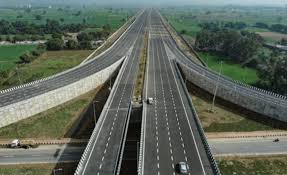
The project, designed as a high-speed access-controlled route, will span roughly 250–280 km depending on final alignment, linking multiple districts across the state. Officials indicate the corridor will support speeds of up to 120 kmph, cutting travel time between the two cities from several hours to nearly three, fundamentally altering inter-city movement patterns. This Patna Purnia expressway is being positioned as Bihar’s first fully internal expressway corridor, marking a transition from incremental road upgrades to high-capacity, future-ready infrastructure. It has also been designated under the national expressway framework, aligning it with broader logistics and freight connectivity strategies. From an urban development perspective, the corridor is expected to reshape spatial growth across districts such as Vaishali, Samastipur, Saharsa and Purnia. Improved connectivity typically accelerates peri-urban expansion, creating new residential and commercial clusters along interchanges. Urban planners note that such corridors often redistribute growth pressure away from congested city cores, enabling more balanced regional development.
The economic case for the Patna Purnia expressway extends into logistics efficiency. By linking agricultural regions in north Bihar with administrative and consumption centres, the route is likely to reduce freight costs and improve supply chain reliability. Experts suggest that integrated logistics parks, warehousing zones and agri-market linkages could emerge along the corridor, particularly if supported by complementary policy frameworks. However, the project also reflects the complexities of large-scale infrastructure delivery. Earlier stages faced procedural and financial scrutiny, requiring revisions to meet updated national guidelines on cost structures and long-term maintenance provisions. The current approval signals that these bottlenecks are being addressed, although land acquisition and tendering processes remain critical milestones ahead. Administrative timelines indicate that bidding processes are expected to be completed within the current planning cycle, with construction likely to follow once land acquisition reaches a viable threshold. This phased approach reflects a broader shift towards structured project execution in India’s highway sector.
Beyond mobility, the corridor carries implications for climate and land-use planning. High-speed highways, if integrated with multimodal transport and controlled development, can reduce congestion and improve fuel efficiency. Conversely, unregulated expansion along expressways risks sprawl and environmental stress—making coordinated planning essential. As Bihar scales up its infrastructure pipeline, the Patna Purnia expressway represents more than a transport project. Its success will depend on how effectively it aligns mobility gains with inclusive urban growth, economic opportunity, and sustainable land-use strategies—setting the tone for the state’s next phase of urban transformation.