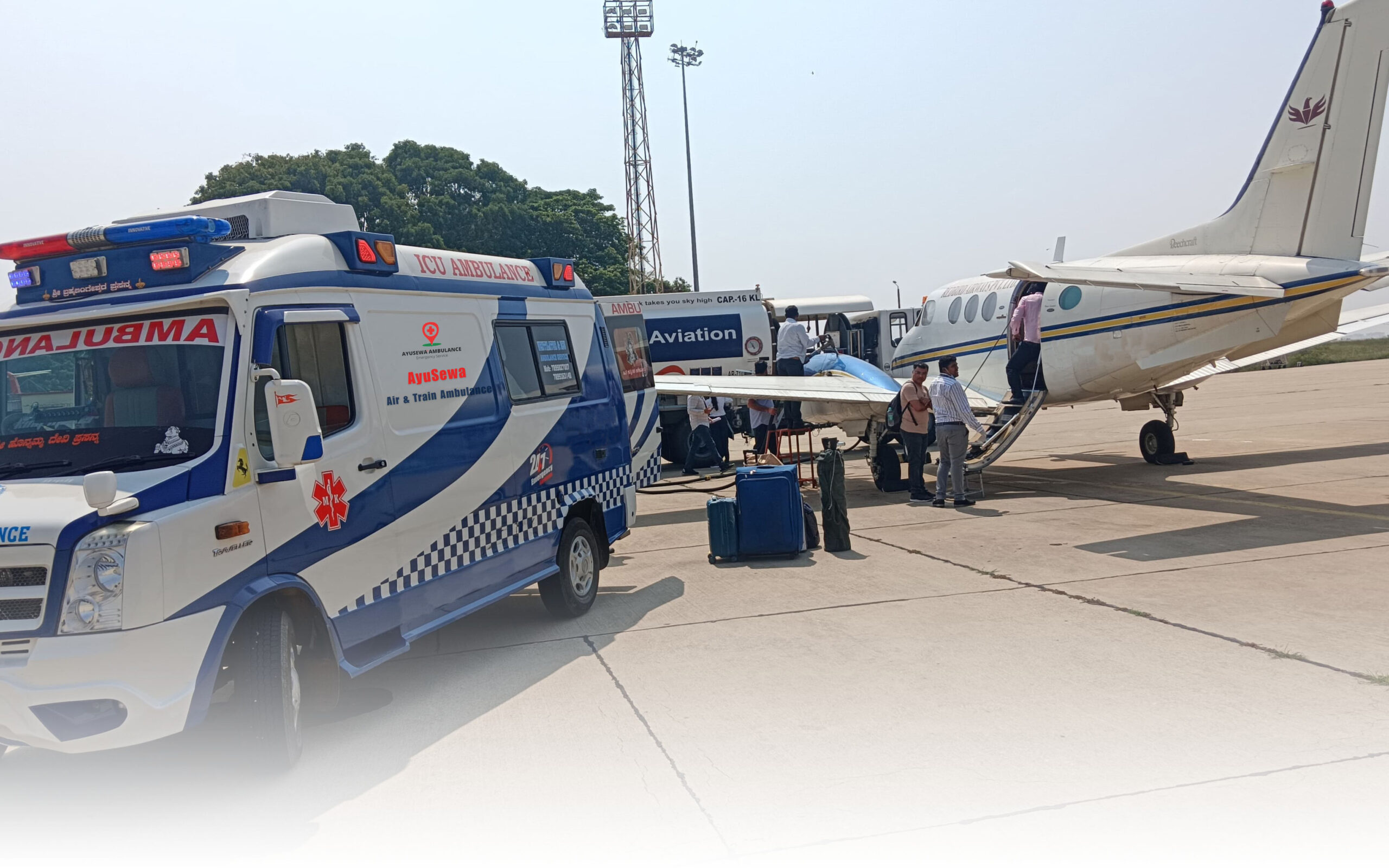
Patna Private Air Ambulance Services Expand Operations
Private medical-transport operators are expanding their presence in Patna as demand for long-distance emergency care continues to grow, highlighting a major gap in public healthcare infrastructure in eastern India. A recent industry update indicates that a private air-and-rail ambulance provider has strengthened its operations in the city, positioning Patna as a key hub for emergency patient transfers to larger medical centres across the country.
The development reflects a broader trend in tier-2 cities where patients often need to travel hundreds of kilometres to access specialised treatment. Private operators say demand for air ambulance and train-based medical transfer services has risen sharply over the past few years, particularly for critical patients being shifted to Delhi, Kolkata or other major healthcare hubs. Company information available on public platforms shows that such services are now being offered from multiple cities, including Patna, Ranchi and Guwahati, with a growing focus on inter-city patient relocation rather than only emergency evacuation. For urban planners and healthcare analysts, the rise of private medical-transport services highlights a deeper structural challenge. While public investment in hospital buildings and bed capacity has increased in recent years, the availability of advanced specialised treatment remains uneven across smaller cities. As a result, critically ill patients frequently depend on costly private transport solutions to reach tertiary-care hospitals located in larger metropolitan regions.
The expansion of such services also reflects changes in the way healthcare infrastructure is evolving in rapidly growing cities. Instead of relying only on local treatment facilities, many urban healthcare systems are becoming more network-based, where smaller cities act as referral centres linked to larger medical hubs. Private air-and-rail ambulance services are positioning themselves as an essential link in this network by providing what operators describe as “bed-to-bed” patient transfer — a service that begins at a local hospital and ends at a specialised medical centre in another city. However, the rapid growth of the sector also raises questions about affordability and regulation. Most air ambulance transfers remain expensive for middle-income households, and the absence of strong regulatory frameworks in many states means service quality can vary widely. Public-health experts say the long-term solution lies in strengthening regional healthcare capacity so that fewer patients need to travel long distances for treatment in the first place.
For Patna, the rise of private medical-transport services signals both opportunity and concern. On one hand, improved emergency transfer options can save lives by enabling faster access to advanced treatment. On the other, the growing dependence on private air ambulance services underlines the urgent need for more evenly distributed healthcare infrastructure across Bihar’s cities. How policymakers respond to this gap could shape the future of urban healthcare access in eastern India over the coming decade.