Patna Metro Underground Corridor Boosts Transit Progress
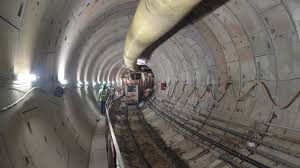
Patna’s underground metro construction has entered a decisive phase, with tunnelling activity intensifying along key stretches of the city’s north–south corridor. The progress of tunnel boring machines (TBMs), particularly near Rajendra Nagar, marks a critical milestone in the Patna metro underground corridor, bringing the project closer to operational readiness by late 2026.
The underground section, spanning roughly 7.9 kilometres between Rajendra Nagar and Patna Junction, forms the backbone of the city’s first fully integrated rapid transit system. Designed to pass beneath some of the most densely populated and traffic-heavy zones, the corridor is expected to significantly ease surface congestion while improving east–west and north–south connectivity across the urban core. Construction agencies have deployed multiple TBMs to excavate twin tunnels simultaneously, enabling parallel progress across segments. Recent breakthroughs at key stations and continued tunnelling near Rajendra Nagar indicate that the most technically complex phase—subsurface excavation beneath built-up areas—is advancing steadily.
Urban infrastructure experts note that underground metro construction in dense cities presents unique challenges, including soil stability, groundwater management, and the need to protect existing structures. TBMs are central to this process, allowing controlled excavation with minimal surface disruption—an essential requirement in areas with narrow roads, heritage buildings, and critical utilities. The Patna metro underground corridor is part of a larger two-line network being developed to address rising mobility pressures in the state capital. With rapid population growth and increasing vehicle ownership, road congestion has emerged as a structural constraint on productivity and air quality. Metro systems, particularly underground segments, are seen as long-term solutions that reduce travel time, lower emissions, and optimise land use in expanding cities.
Progress on the underground stretch is also being aligned with elevated sections that have already begun limited operations. The integration of these segments will eventually create a continuous transit spine connecting residential clusters, commercial districts, and transport hubs such as railway stations and bus terminals. This multimodal connectivity is expected to reshape commuting patterns and reduce dependence on informal transport systems. From a city-building perspective, the corridor’s development is likely to influence land values, real estate demand, and urban density along its alignment. Transit-oriented development—where housing, workplaces, and services cluster around metro stations—could emerge as a key planning strategy, provided zoning and infrastructure policies are aligned.
However, the pace of execution remains critical. While tunnelling progress signals momentum, completing station infrastructure, safety systems, and integration with existing transport networks will determine the project’s readiness for public use. As Patna transitions from a road-dominated city to a multi-modal urban system, the Patna metro underground corridor represents more than a transport upgrade. It reflects a shift toward compact, efficient, and lower-emission urban growth—an evolution that could define the city’s trajectory over the coming decade.