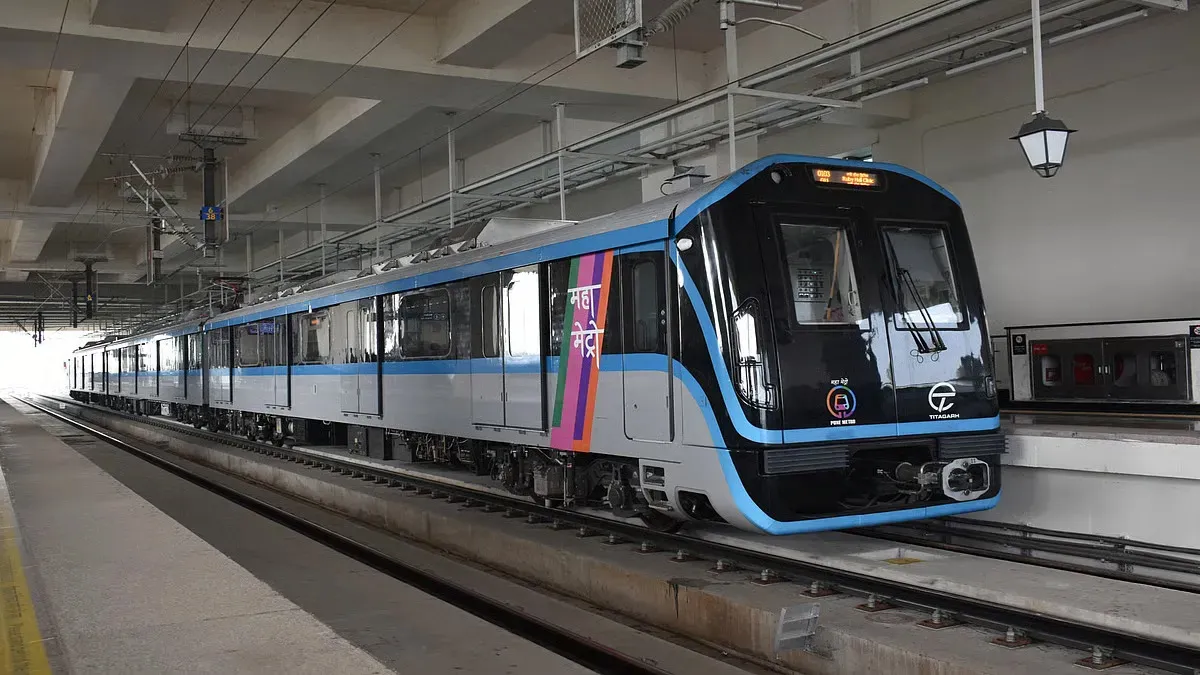
Patna Metro Advances With Blue Line Trial Milestone
PATNA — A crucial phase of the Patna Metro project took shape this week as engineers completed a comprehensive trial run on the Blue Line’s elevated stretch between Bhootnath and Malahi Pakdi stations, moving the city closer to a significant expansion of urban rail connectivity.
The exercise, which forms part of systematic testing ahead of commercial operations, reflects steady progress in transforming local mass transit infrastructure in Bihar’s capital, where congestion and pollution remain pressing urban challenges. The Blue Line, a core corridor of the Patna Metro network designed to link Patna Junction with the New Inter-State Bus Terminal through a mix of underground and elevated tracks, has emerged as a backbone for east-west mobility. The trial covered the elevated section serving densely populated neighbourhoods — a segment seen by transport planners as critical to reducing dependency on road traffic and shortening peak-hour commute times.
During this latest round of tests, technical teams systematically evaluated signalling systems, overhead power lines, braking performance, track alignment and emergency response protocols under simulated operating conditions. These assessments are essential to meet national safety benchmarks and ensure seamless service once passenger operations begin. Final validation runs are scheduled in the coming days as part of readiness certification. For urban residents accustomed to long, unpredictable journeys on crowded roads, the prospective metro service promises a shift in daily mobility. Infrastructure analysts highlight that high-capacity rapid transit systems — when integrated into wider public transport networks — not only cut travel times but also lower emissions and ease pressure on surface streets. In Patna, where motorised traffic density has surged with population growth, the Blue Line is anticipated to provide an environmentally viable alternative.
City planners also point to broader socioeconomic benefits. Reliable metro connectivity can enhance access to jobs, education and services across districts that were previously hard to reach. This can be especially impactful for women commuters and low-income residents, who often face compounded travel-related barriers on existing transport modes. Enhanced metro access is seen as a catalyst for equitable urban mobility. However, challenges remain. Authorities must navigate fare structuring, last-mile linkages and capacity planning to ensure the metro serves both daily commuters and occasional travellers effectively. Coordination with road upgrades, pedestrian infrastructure and feeder services will be pivotal in embedding the metro into Patna’s urban ecosystem.
As the city prepares for final technical clearances and regulatory approvals, attention now turns to aligning operational launch plans with broader sustainable city goals — ensuring that future-ready mobility contributes to resilience, inclusivity and economic opportunity for Patna’s residents.