


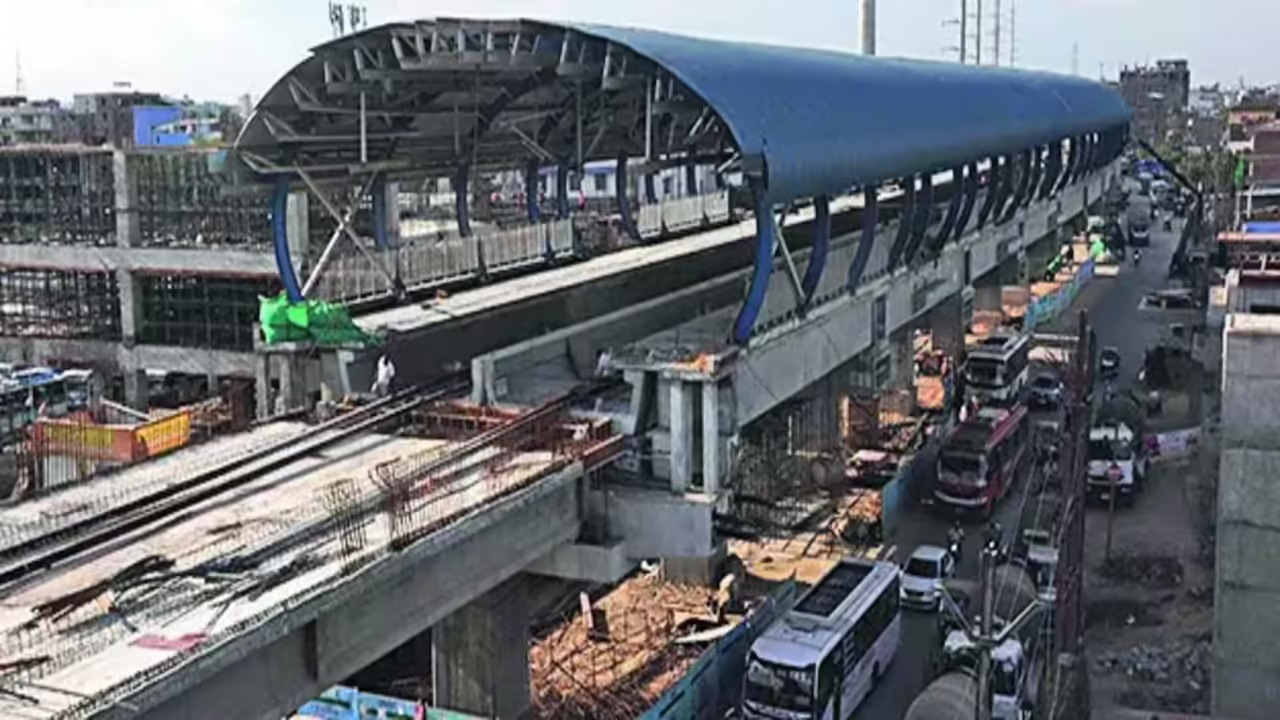
The much-anticipated Patna Metro is poised to commence operations by August 15, marking a significant stride in Bihar’s urban infrastructure development. This pivotal project aims to substantially alleviate traffic congestion, enhance commuting convenience, and generate vital employment opportunities for the local populace. The metro’s impending launch is set to lay a robust foundation for Patna’s rapid and sustainable future development, contributing to a more eco-friendly and equitable urban landscape for its citizens.
Construction agencies are diligently working in two shifts to meet the ambitious operational deadline. A 6.2-kilometre track has already been successfully laid on the primary corridor, extending from Malahi Pakri to New ISBT. This initial section encompasses five strategically located stations: Malahi Pakri, Khemnichak, Bhootnath, Zeromile, and New ISBT. While initial services will commence across four stations, excluding Khemnichak where construction is still underway, this phased approach ensures operational readiness and safety.
The project is now in its final stages, with the installation of critical systems such as automated fare collection machines, platform screen doors, escalators, and gate systems nearing completion. Adherence to stringent safety standards has been a paramount concern throughout the construction phase, ensuring a secure and reliable transit experience for future commuters. Significant progress has also been achieved on supporting infrastructure, including the metro depot’s washing and pit maintenance units, control room, power sub-station, workshop shed, inspection shed, and track unit, all essential for seamless operations.
A three-coach metro rake has already arrived in Patna, transferred from Pune, and preparations for the trial run are actively underway. This inter-city transfer of resources, while drawing some scrutiny, has been clarified by officials as standard practice within the railway sector, designed to facilitate early development phases. The operationalisation of the metro is expected to significantly reduce the city’s carbon footprint by encouraging a shift from private vehicles to mass public transit, thereby contributing to cleaner air and a healthier urban environment.
The Patna Metro project is more than just a transport system; it is a catalyst for comprehensive urban transformation. By providing efficient, accessible, and gender-neutral public transportation, it will enhance the quality of life for residents, foster economic growth, and ensure equitable access to opportunities across the city. As final touches are applied to the stations and systems, Patna stands on the threshold of welcoming its first metro ride, ushering in a new era of sustainable and integrated urban development for Bihar’s capital.
Also Read :Patna Metro’s Malahi Pakri–New ISBT stretch to start August 15 operations
