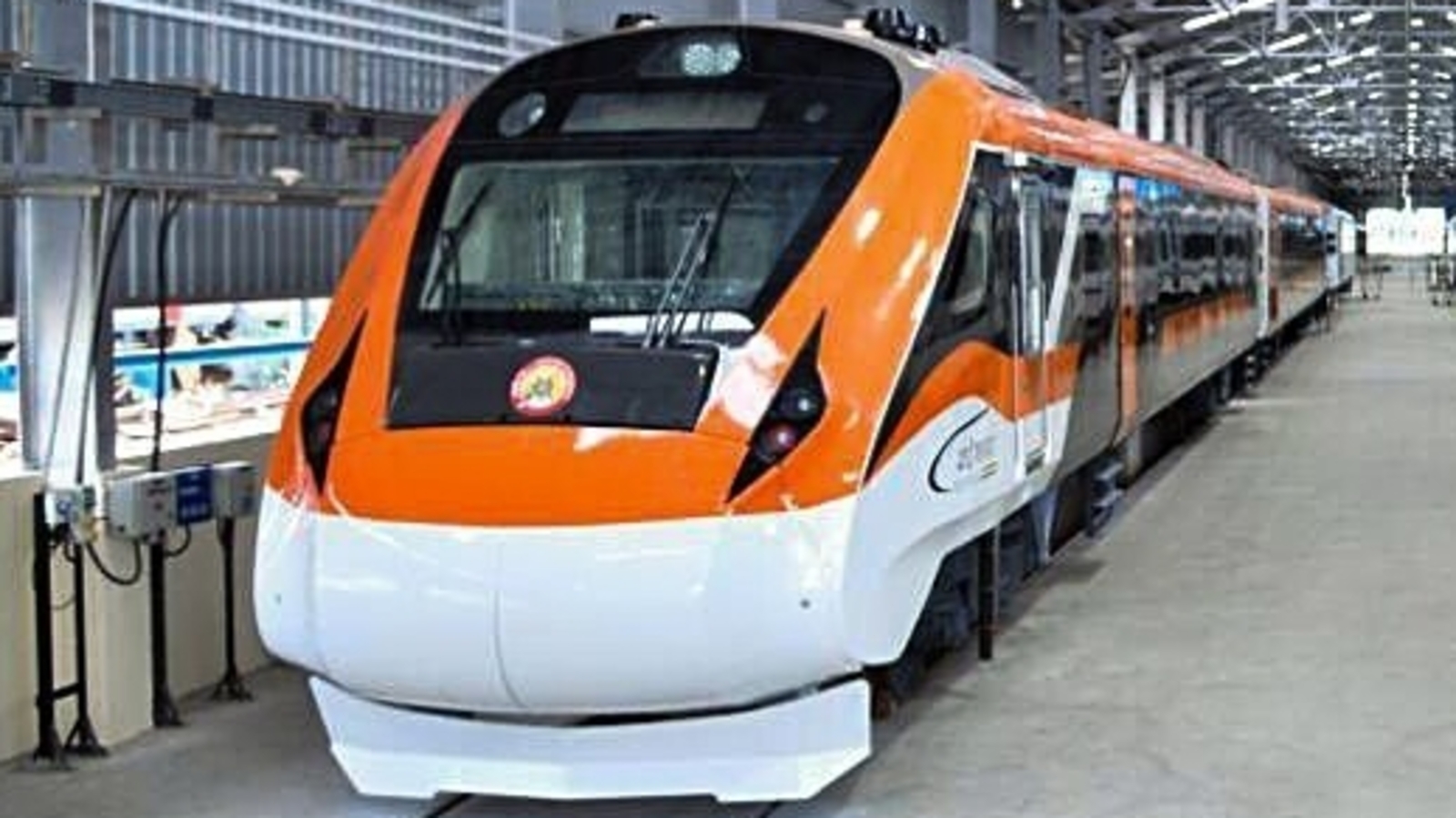
Patna is set to receive a significant upgrade in long-distance mobility this month as Indian Railways prepares to introduce the Vande Bharat Sleeper service on the Patna–Delhi corridor. The new train, expected to begin operations before the year-end, is designed to improve overnight travel between two of the country’s most heavily used urban centres, offering faster connections and enhanced passenger comfort.
Officials familiar with the rollout confirmed that the service is planned to run six days a week, broadly mirroring the timings of the existing Tejas Rajdhani. The train is expected to depart Patna in the evening and arrive in Delhi the next morning, with the return service following a similar overnight schedule. A trial run will be conducted once the first set of coaches arrives from the manufacturer’s facility in Bengaluru on 12 December.
The sleeper variant of the Vande Bharat will comprise 16 coaches with 827 berths, making it one of the higher-capacity premium options on this route. The rake configuration includes first-, second- and third-tier air-conditioned coaches, aimed at accommodating a wide passenger base from students and migrant workers to business travellers. A senior railway official noted that early assessments indicate strong demand, given the perennial pressure on long-distance trains departing from Bihar.Beyond speed and capacity, the train is positioned as a modern mobility solution built around safety and user experience. Features include automatic doors, bio-vacuum toilets, CCTV surveillance, improved berth ergonomics and individual reading lights. The coaches are engineered for a top speed of 160 km/h and fitted with crash-resistant structures and upgraded signalling interfaces.
These improvements reflect Indian Railways’ ongoing efforts to standardise higher safety benchmarks across long-distance networks. Urban mobility experts observe that the Patna–Delhi corridor illustrates how rail-based transport continues to serve as a socio-economic connector for large sections of India’s inter-state workforce. Faster overnight trains, they note, can contribute indirectly to more inclusive urbanisation by enabling safer, more predictable and more affordable travel for those commuting between Tier-II cities and major metros.The introduction of modern sleeper services also aligns with the national objective of shifting passenger volumes from road and short-haul aviation to lower-carbon rail transport. With India targeting net-zero emissions by 2070, enhanced long-distance rail infrastructure is seen as a critical pathway for reducing carbon intensity without compromising mobility needs.
For a region like Bihar, where public transport plays an outsized role in economic mobility, such upgrades could support more equitable access to opportunity.Railway authorities expect the sleeper service to become operational shortly after final inspections. If the rollout proceeds as planned, the new train could mark a meaningful step forward in modernising India’s inter-city rail experience while reinforcing the importance of sustainable, citizen-centric transport systems.
Patna Launches Vande Bharat Sleeper This Month For Faster Safer Overnight Travel