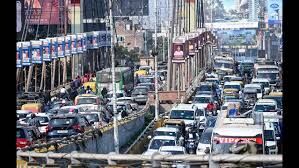
A major redesign of the forecourt at Patna Junction is set to reshape how passengers and vehicles access one of eastern India’s busiest railway hubs, with authorities planning a large-scale upgrade aimed at easing chronic congestion and improving urban mobility.
The proposed redevelopment will transform the station’s circulating area into a 170,000 sq ft integrated forecourt, incorporating organised parking for over 6,000 vehicles and redesigned entry systems. The initiative forms part of a broader station modernisation push under national railway infrastructure programmes, with a focus on improving passenger experience and traffic flow. For a city like Patna—where rapid population growth has strained legacy transport infrastructure—the project addresses a long-standing bottleneck. The station precinct, which handles high daily footfall and mixed traffic, has historically suffered from chaotic parking, narrow access routes, and unregulated entry points. The new design introduces dual access corridors, including an additional entry from the GPO roundabout, aimed at redistributing traffic and reducing pressure on the existing Mahavir Mandir-side approach. Urban planners see this intervention as a critical step in rethinking Patna Junction redevelopment beyond cosmetic upgrades. By expanding the forecourt and reorganising vehicular movement, the project seeks to create a more structured interface between rail transport and the surrounding city. This is particularly relevant as Patna gradually moves towards multimodal integration, with metro connectivity and nearby transit infrastructure already under development.
A key component of the plan is the integration of smart parking systems. Digital booking, automated payments through FASTag and QR codes, and designated commuter passes are expected to streamline parking operations while reducing idle traffic—a major contributor to congestion and emissions in dense urban nodes. The redevelopment also involves relocating existing utility infrastructure, including operational facilities within the station area, to free up land for expansion. Officials indicate that this will unlock additional space for parking and circulation, enabling a more efficient layout aligned with projected future demand. From a broader infrastructure perspective, Patna Junction redevelopment reflects a shift towards transit-oriented urban design. Railway stations are increasingly being repositioned as integrated mobility hubs rather than standalone transport points. In Patna, this evolution is expected to influence surrounding land use, potentially driving commercial activity, pedestrian infrastructure improvements, and better last-mile connectivity.
However, experts caution that physical upgrades alone may not fully resolve congestion unless supported by traffic management reforms and enforcement. The success of the project will depend on coordination between railway authorities, municipal bodies, and urban transport agencies to ensure seamless integration with city-wide mobility systems. As Indian cities intensify efforts to modernise transport infrastructure, Patna’s station upgrade offers a case study in balancing capacity expansion with urban functionality. The coming phases will determine whether the redesign can deliver not just smoother traffic movement, but a more accessible, efficient, and future-ready public transport environment.