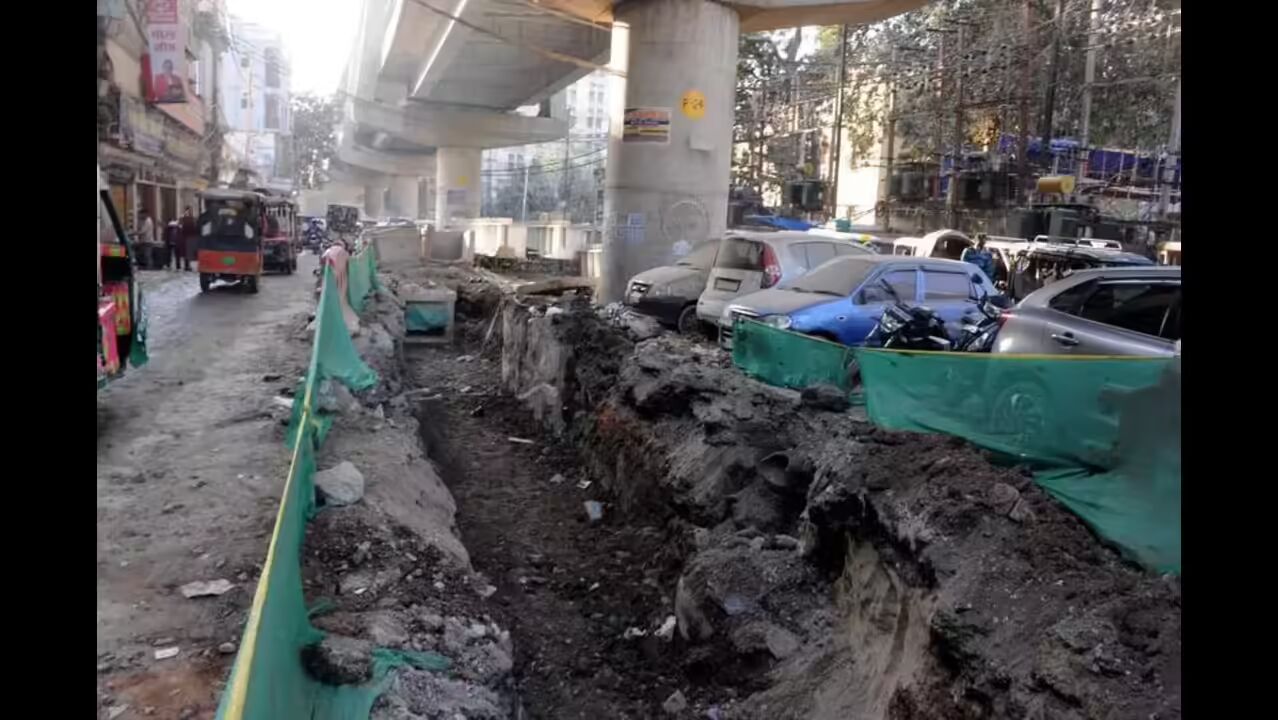
A fresh push to accelerate stalled and ongoing infrastructure works in Patna signals a renewed administrative focus on timely project delivery, as the state leadership has directed officials to fast-track critical urban developments across the city. The move comes at a time when rising population density and expanding city limits are placing increasing pressure on mobility, drainage, and public service infrastructure.
During a recent review of multiple sites, officials were instructed to compress timelines and improve coordination between departments to ensure faster execution without compromising quality. The directive reflects mounting concern over delays that have begun to affect everyday urban functioning, particularly in high-growth corridors and densely populated neighbourhoods. Key projects under review include road widening works, new connectivity corridors, and public space developments aimed at easing congestion and improving liveability. Inspections across western and central Patna highlighted the urgency of completing road upgrades and alternative routes that can redistribute traffic from overburdened arterial roads.
Urban analysts point out that Patna’s infrastructure expansion is entering a critical phase. With increasing vehicle ownership and rapid peri-urban growth, the city’s legacy road network is struggling to keep pace. Delays in project completion not only escalate costs but also prolong disruptions for residents, affecting commute times, local businesses, and access to essential services. The current review also underscores the importance of integrated planning. Projects such as canal-side roads, widened corridors, and improved drainage systems are being positioned as multi-functional assets—serving both mobility and climate resilience objectives. In flood-prone cities like Patna, aligning road construction with drainage upgrades is increasingly viewed as essential to prevent seasonal waterlogging and infrastructure stress.
There is also a growing emphasis on urban design elements within these projects. Officials have indicated that public spaces under development will include pedestrian pathways, recreational areas, and green buffers. Such features are gradually becoming standard in urban infrastructure, reflecting a shift toward people-centric planning rather than purely vehicular solutions. From a governance perspective, the directive to expedite works highlights a broader institutional challenge—ensuring coordination across agencies responsible for roads, water resources, and urban development. Experts note that fragmented execution often leads to repeated digging, inefficient resource use, and inconsistent project timelines.
The push for faster delivery is also tied to economic considerations. Infrastructure projects generate employment during construction and improve long-term productivity by reducing travel time and logistics costs. In a city like Patna, where informal and service-sector economies dominate, improved connectivity can directly influence income opportunities and access to markets. However, planners caution that speed must not come at the cost of durability. Ensuring adherence to construction standards, material quality, and environmental safeguards remains critical, particularly as climate variability increases stress on urban infrastructure systems.
As Patna continues its transition from a traditional administrative centre to a growing urban economy, the success of this accelerated infrastructure push will depend on sustained monitoring, transparent execution, and the ability to align short-term deadlines with long-term urban resilience goals.